
 Call Us!
Workers’ Compensation FAQ
What Is Workers’ Compensation in Colorado?
All businesses with employees operating in Colorado must have workers’ compensation insurance, regardless of the number of employees. This mandatory insurance program is purchased from an insurance agent and paid entirely by the employer.
Its purpose is to provide compensation benefits when an employee is injured at work or develops an occupational disease. Employers have several types of workers’ compensation insurance that they can purchase to cover employees.
Colorado’s workers’ compensation operates on a no-fault system. Therefore, an employee is covered, regardless of who caused the incident. An employee does not need to prove negligence to receive benefits.
The insurance covers:
- Reasonable and necessary medical expenses, such as doctor visits, hospital stays, prescriptions, medical equipment, rehabilitation, and mileage and parking-related expenses for medical visits.
- Lost wages (including temporary total and temporary partial disability benefits).
- Permanent disability (including permanent partial disability and permanent total disability).
- Compensation to dependents of a deceased worker when a work injury or occupational disease leads to death.
Who Is Eligible for Workers’ Compensation?
Almost all employees in Colorado are eligible for workers’ compensation. An employer is required to cover full-time employees, part-time employees, and family members upon hire.
The workers’ compensation insurance program excludes independent contractors. These are workers who are free from direction and control in the performance of their work and have an independent business doing that specific kind of work.
An employer must prove that someone is an independent contractor and not an employee to exclude them from workers’ compensation benefits.
Other workers who may be exempt from needing workers’ compensation coverage include:
- Domestic workers who work less than 40 hours per week and less than five days a week.
- Real estate brokers/agents operating under contract to work solely on commission.
- Workers engaged in casual farm/ranch labor or casual maintenance/repair workers whose total wages are less than $2,000 per year.
- Drivers under specific lease agreements with motor carriers that lease vehicles to or from them.
- Ski volunteers.
Special requirements can also apply to certain circumstances. For example, while officers of corporations and members of limited liability companies (LLCs) are considered the company’s employees, one can reject workers’ compensation coverage if:
- They own at least 10% of the company, and are the president, vice-president, secretary, treasurer, or chairman of the board for the corporation, or a member of the LLC.
Additionally, although a business that operates in the construction industry must cover every person on the construction site, corporate officers and LLC members owning at least 10% of the business can reject coverage. Also, contractors must ensure their subcontractors have coverage.
What Types of Injuries Are Covered?
Workers’ compensation insurance covers:
- Injuries sustained on the employer’s premises, for example, because of a slip-and-fall accident, machinery accident, or falling object.
- Injuries sustained outside the employer’s premises but within the course and scope of employment, for instance, during travel for work, when running company errands, or at a company-sponsored event, if attendance was mandatory.
- Illnesses arising out of and in the course of employment caused by prolonged exposure to harmful substances, hazardous working conditions, or repetitive, injurious tasks (occupational diseases).
- Pre-existing injuries or illnesses aggravated, worsened, or accelerated by work activities.
- Mental health issues caused by work-related traumatic events or injuries, such as post-traumatic stress disorder (PTSD), anxiety, and depression.
Some injuries that occur on the job may not be covered. These include self-inflicted injuries and injuries resulting from horseplay (rough/playful behavior that creates risks, such as fighting, racing, or operating machinery recklessly).
If injuries occur when an employee is under the influence of alcohol or drugs, non-medical benefits can be reduced. This can happen even when the employee uses medical marijuana.
How Do I File a Workers’ Compensation Claim?
You are required to notify your employer in writing within 10 days of the injury or awareness of an occupational disease. If you were injured more than 10 days ago, you should still report the injury and explain why you were unable to do so earlier, such as if you were hospitalized or physically/mentally incapable of providing a written notice.
Besides notifying your employer, it’s also recommended to report the injuries directly to the Division of Workers’ Compensation (DOWC) by submitting the Workers’ Claim for Compensation form (WC 15).
After notifying your employer, typically, they will provide you with a list of up to four doctors or clinics, from which you can pick one to see. In an emergency, you can get medical treatment at the closest emergency department. If your employer does not provide you with the designated provider list within seven days of you notifying them of the injury, you can choose your own doctor.
While receiving medical attention, your employer will generally investigate the incident to confirm the injury was work-related. This will then be followed by filing a First Report of Injury (FROI) with their insurer. FROI must be filed within 10 days of receiving an employee’s notice about an injury/occupational disease that results in more than three days/shifts of lost time.
It’s important to document the accident scene before leaving, if possible. Take photos and videos of the hazardous condition and your injuries and write down the names of the witnesses.
You should also keep a copy of the written report you gave to your employer, preserve your medical records, and have a personal journal detailing pain levels, physical limitations, and missed workdays.
Get more tips for workers’ compensation cases.





















How Long Does It Take To Get Benefits?
After the FROI is filed with the DOWC, an employer’s insurance company has 20 days to accept the claim by filing a General Admission of Liability (GAL) or deny it by filing a Notice of Contest. So, an injured worker can typically expect medical and wage-loss benefits within 20 days; that is, if their claim is accepted.
Do I Need a Lawyer for My Claim?
While hiring a lawyer when filing a workers’ compensation claim is not required, it is highly recommended to do so. An attorney can help you understand Colorado laws that govern the process, including strict deadlines and choosing a medical provider. In addition, your attorney can help you gather solid evidence.
Working with a lawyer also protects you from tactics the insurer may use against you. Furthermore, an attorney can help secure higher compensation than if you were an unrepresented claimant.
When your claim is delayed or denied, for instance, when the insurer disputes the severity of your injuries, your attorney will help build a strong case.
What Happens if My Claim Is Denied or Disputed?
When you receive a notice from your employer’s insurer informing you that your claim has been denied or disputed, carefully read it to understand the reason they are disputing or denying your claim. You can then gather relevant evidence and challenge the insurer’s decision by filing an Application for Hearing with the Office of Administrative Courts.
Our workers’ compensation lawyers are skilled at helping injured workers receive maximum compensation. Contact us for a free case evaluation.
Legal Support Across Colorado and Nationwide
Serving Clients Nationwide
Related Workers Compensation Resources






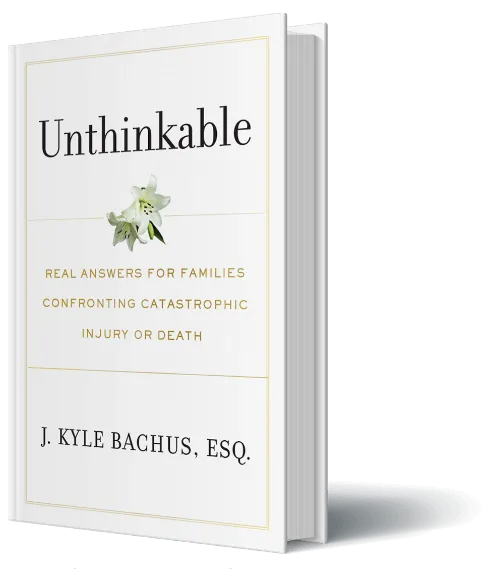
#1 Amazon Best Seller in the Legal Industry
Attorney Kyle Bachus knows first-hand how difficult it can be to suddenly lose a loved one in an accident. It’s also devastating when you or a family member suffers severe injuries that forever change your lives. Kyle wrote this book as a resource from his personal experience for families who have suffered a traumatic loss.
A Spanish edition of the book is also available, offering the same support and guidance to Spanish-speaking families.
You Deserve Fair Compensation
Don’t let the insurance companies intimidate you into accepting less than you deserve. We’re ready to fight for you.