
 Call Us!
Do I Have To Pay Taxes On A Workers’ Comp Payout?
If you receive a workers’ comp payout, or if you’re expecting one in the future, it’s important to start thinking about taxes, leading you to wonder if workers’ compensation payments are taxed.
It’s wise to think about how to protect yourself and take the right steps as far as taxes are concerned. But are they taxed? Here’s what you need to know from our Colorado workers’ compensation attorneys.
Do I Have To Report Workers’ Compensation On My Taxes?
In Colorado, you do not have to report workers’ compensation on your taxes, as the money received is not considered taxable income at the federal and state levels. However, if you are receiving Social Security (SSDI/SSI) offset benefits as well, those benefits could be taxable. Do I Have To Report Workers’ Compensation On My Taxes?In Colorado, you do not have to report workers’ compensation on your taxes, as the money received is not considered taxable income at the federal and state levels. However, if you are receiving Social Security (SSDI/SSI) offset benefits as well, those benefits could be taxable.
Do I Have To Pay Taxes On A Workers’ Comp Payout?
No, you do not have to pay taxes on a workers’ comp payout.
There are no:
- Federal taxes
- Colorado state taxes
However, even though workers’ comp payouts aren’t taxed, some other kinds of related payments might be taxed, including:
- SSDI
- SSI
- Workers’ comp interest payments
- Any income earned once you return to work with restrictions
Do Workers’ Comp Settlements Get Taxed?
No, workers’ comp settlements do not get taxed. Workers’ comp settlements are excluded from income under United States law and Colorado law. However, certain portions of your settlement might be taxable, as follows:
- Lump-sum payment that includes interest: The interest part of the lump-sum payment could be considered taxable income.
- Non-economic damages: If your settlement includes non-economic damages, not tied to your injuries, that compensation could be taxable.
- Punitive damages: If punitive damages are awarded to punish the defendant for their reckless behavior, you may have to pay taxes on the amount awarded.
- Lost wages not covered by workers’ comp: If you receive compensation for lost wages not covered by workers’ comp, they may be taxable.
Why Choose Our Workers’ Compensation Law Firm?
Bachus & Schanker is led by top-rated attorneys recognized among the best in Colorado. With decades of experience and thousands of cases handled within Colorado and nationwide, our team brings a proven track record of results to every case. They have represented injured workers in accident cases involving complex benefit structures and tax-related questions across Colorado and nationwide.
At our firm, hands-on case management and personalized attention are central to how cases are handled. Attorneys remain directly involved throughout the process, with a focus on responsiveness, attention to detail, and clear communication at every stage of the case.
The benefits of working with our legal team include:
- Workers’ compensation accident injury cases taken on a contingency fee basis – no legal fees unless we win your case
- Support of our victim advocates team
- Personalized attention from attorneys who understand workers’ compensation accident accidents law
- Proven track record of maximizing benefits while helping clients understand the financial implications of their settlements
- Experience handling cases in Colorado and across the United States
When you need experienced legal representation to protect your financial future after a workplace injury, choose Bachus & Schanker, recognized as some of the best workers’ compensation lawyers in Colorado.






















Are Lump-Sum Workers’ Compensation Payments Taxable?
Any lump-sum payment for an occupational sickness or injury is not taxable. For example, you injured your back at work and filed your workers’ comp claim. It took a month for your claim to be fully processed. You receive a lump-sum payment for the previous month. No taxes will be withheld from it.
Do They Take Taxes Out Of Workers’ Comp Checks?
Federal and state taxes are not taken out of workers’ comp checks. While your workers’ comp money is not taxable, other non-workers’ compensation taxable payments you receive could include:
- SSDI/SSI offset payments
- Workers’ comp interest payments
- Interest income
- Any wages earned while receiving benefits
Do You Receive A 1099 For Workers’ Compensation?
You will not get a 1099 for workers’ compensation payments for these reasons:
- Non-taxable income: Workers’ comp payments are considered non-taxable income.
- 1099s are for taxable income: 1099s are required for payments made to contractors, gig workers, and others, who do not work directly for a business.
What If I Receive A 1099 For Workers’ Compensation?
If you receive a 1099 form, you need to verify the source of the income, as it could be for non-workers’ compensation taxable compensation you received, such as interest payments.
Will I Receive A W2 For Workers’ Comp?
The difference between taxable wages and workers’ comp benefits is that taxable wages are earnings, such as from work or interest income. Workers’ comp payments are compensation for a work-related injury, not income you earned.
The payments you receive under your state workers’ comp system are not considered taxable income. Instead, it’s a reduced benefit that compensates you for income that you would have earned if you had been able to continue to work.
So, you will not receive a W2 for workers’ comp because you don’t have to pay taxes on workers’ comp funds.
Workers’ Compensation IRS Law — IRS Publication 907
IRS Publication 907 states that workers’ compensation income is not taxable under United States law. The publication classifies the payments as “other payments.” The IRS website says that payments for an occupational injury or illness are not taxable if the payments are made under a workers’ compensation program.
Are Workers’ Comp Survivor Benefits Taxable?
No, workers’ comp survivor benefits are also not taxable. If an occupational injury or illness results in wrongful death, the survivors of the victim may receive workers’ compensation benefits without paying taxes on the amount received. However, payment for non-workers’ comp is taxable, such as SS survivor benefits.
Workers’ Compensation And SSDI/SSI Taxes
While workers’ compensation is generally not taxable, there are some circumstances where workers’ comp payments can influence other disability payments and the way that they are taxed.
- SSDI/SSI offsets: If SSDI or SSI payments are reduced from receiving workers’ comp, the amount of the reduction is considered taxable income.
How The SSDI/SSI Offset Works
The offset reduces your SSDI/SSI benefits so that your ACE (average current earnings) is 80% or less. The reduced portion is the “offset,” and is considered taxable income.
Here is an example:
- Step 1 – Calculate your ACE and SSDI/SSI payment: Before your injury, your ACE was $4,000 a month. You would be eligible for $2,200 in SSDI/SSI monthly.
- Step 2 – Add your SSDI/SSI to your workers’ comp: Your workers’ comp payment is $2,000 plus your $2,200, for a total of $4,200.
- Step 3 – Calculate 80% of your ACE: 80% of your ACE would be $3,200.
- Step 4 – Calculate your SSDI/SSI benefits with workers’ comp: Since $4,200 exceeds $3,200, your SS benefits are reduced by $1,000.
- Step 5 – Calculate the reduction: $3,200 – $2,000 in workers’ comp is $1,200, your SS reduction.
- Step 6 – Calculate the offset: Your original SS payments were $2,200 – $1,200, so the offset would be $1,000.
For tax purposes, you have to pay taxes on the $1,200 reduced SS payment and the $1,000 offset amount.
- Form SSA-1099: You will receive a Form SSA-1099 with the total amount of SSDI/SSI payments received that you must claim on your tax return.
- Taxable income thresholds: If your total SSDI/SSI payments exceed $25,000 for single filers or $32,000 for married couples filing jointly, you will pay taxes on the amounts above the threshold.
How To Minimize Your SSDI/SSI Workers’ Compensation Offset
If you’re in a situation where a workers’ compensation offset may become taxable, there are things that you can do to minimize your tax liability. For example, you can include language in your workers’ comp lump sum settlement that treats the payment as though it is spread out over a period of months or years.
Although you still receive your payment as a lump sum, for tax purposes, the law treats it as though you are getting a little bit each month. The end result can be a lower tax burden for your workers’ comp payout.
Contact Our Colorado Workers’ Comp Attorneys
Do you have questions about your workers’ comp payout? Do you want to know whether your workers’ comp payment will be taxed? Or do you want to minimize your workers’ comp tax burden?
Our Colorado workers’ comp payout attorneys can help. We have locations throughout Colorado, including Denver, Fort Collins, Colorado Springs, Aurora, and Englewood. Our attorneys are ready to assist you and fight for the compensation you deserve. Call us today for a confidential consultation about your claim.
Legal Support Across Colorado and Nationwide
Serving Clients Nationwide
Related Workers Compensation Resources






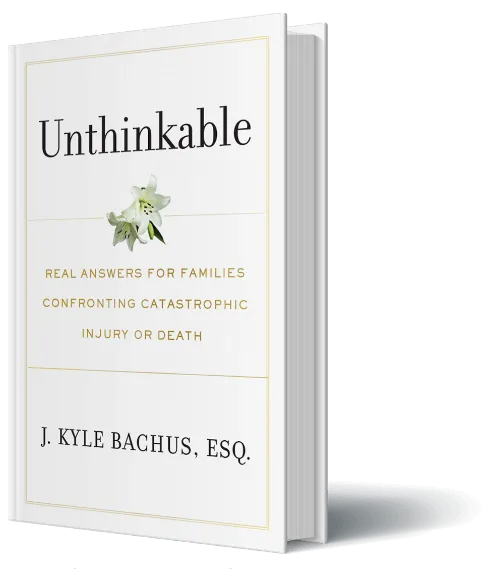
#1 Amazon Best Seller in the Legal Industry
Attorney Kyle Bachus knows first-hand how difficult it can be to suddenly lose a loved one in an accident. It’s also devastating when you or a family member suffers severe injuries that forever change your lives. Kyle wrote this book as a resource from his personal experience for families who have suffered a traumatic loss.
A Spanish edition of the book is also available, offering the same support and guidance to Spanish-speaking families.
You Deserve Fair Compensation
Don’t let the insurance companies intimidate you into accepting less than you deserve. We’re ready to fight for you.