
 Call Us!
Employment Law Attorneys
In legal terms, wrongful termination means an employee was fired for an unlawful reason. While Colorado is an at-will employment state, employers cannot legally terminate employees for certain protected reasons, such as reporting harassment, discrimination, or exercising other workplace rights.
If you believe you’ve been wrongfully terminated or are searching for “employment lawyers near me,” our experienced Colorado wrongful termination attorneys are here to help.
WHAT OUR CLIENTS SAY
·4.7 out of 5 · 2,650+ Google reviews
“Drew was well versed in the various issues with my employer and how they took advantage of its employees. He worked hard on my case to get me a fair settlement. Without him, I wouldn’t have recovered any money that I was owed.”
Christine H.
Google review
“Hands down the best. Sara Green was very professional and very knowledgeable in employment law! She was always available to answer questions whether by phone or email. I would definitely recommend them to anyone!”
Heather J.
Google review
“Drew and Mallory have been assisting me with an employment rights case and have maintained a professional yet friendly atmosphere. It felt as though I could reach out to them whenever I needed and get a speedy, informed response.”
Brittany G.
Google review
NOTABLE SETTLEMENTS
$50M
Medical malpractice
$38M
Hospital negligence
$20M
Car crash
$15M
Wrongful death
Past results do not guarantee future outcomes.
What Does an Employment Law Attorney Do?
A wrongful termination attorney represents employees who may have various legal issues with their employer. They see the case from the employee’s perspective, advocate for protecting their rights and prove wrongful termination. Wrongful termination cases can be complicated, and evidence of discrimination and retaliation is often circumstantial. Our labor relations attorney will consider the facts and seek information that tends to prove that your termination was unlawful. We will evaluate documentation, look for differential treatment, and any evidence that you were unlawfully terminated for reporting harassment and discrimination to bring forward a wrongful termination lawsuit.
Our Colorado wrongful termination lawyers do several things on behalf of our clients, including:
- Explaining your rights – Before doing anything, a worker needs to understand their rights. An employment law attorney explains the law so that the worker knows their legal options.
- Filing complaints and enforcement actions – Some employment rights may be enforced by making a complaint to the appropriate entity. For example, the Equal Employment Opportunity Commission (EEOC) may investigate some types of employment discrimination. An attorney assists their client to file an effective charge and know what to expect from the process.
- Litigation – When a worker’s rights have been violated, an attorney may assist them in filing the appropriate litigation. Most often, the victim seeks monetary compensation for the damages they have suffered because of the unlawful action against them.
- Compliance – Employers have a large body of laws and regulations to comply with when they hire and employ workers. An employment attorney can work with a company to ensure compliance with the myriad of laws that apply in the workplace.
Why Choose Our Employment Law Firm?
Bachus & Schanker is led by top-rated employment law attorneys recognized among the best in Colorado. With decades of experience and thousands of cases handled within Colorado and nationwide, our team brings a proven track record of results to every case. They have represented employees in cases involving workplace disputes and labor law violations across Colorado and nationwide.
At our firm, hands-on case management and personalized attention are central to how cases are handled. Attorneys remain directly involved throughout the process, with a focus on responsiveness, attention to detail, and clear communication at every stage of the case.
The benefits of working with our legal team include:
- Employment law injury cases taken on a contingency fee basis – no legal fees unless we win your case
- Support of our victim advocates team
- Personalized attention from attorneys who understand employment law accidents law
- Proven track record of maximizing settlements and verdicts for employees
- Experience handling cases in Colorado and across the United States
When you need experienced legal representation to protect your career and rights, choose Bachus & Schanker, recognized as some of the best employment lawyers in Colorado.















What Does Employment Law Cover?
When we talk about employment law, this practice area covers a wide range of topics and issues that employees may experience. If you’re searching for an ’employment attorney near me,’ remember that employees have rights in the workplace. When treated unfairly, you may have an employment law claim based on any of the following:
- Employment Contracts – When an employment contract exists, the employer must follow it. If they terminate employment in violation of an agreement, the worker may claim damages, including lost wages.
- Discrimination – An employer may not discriminate in the hiring, promotion, management, or termination of employees based on a protected class. There are many protected classes, including race, color, religion, sex, pregnancy, sexual orientation, national origin, age, and disability. Discrimination claims often come down to complex facts and witness testimony. An experienced attorney can effectively question witnesses and build the evidence to prove employment discrimination.
- Harassment – Like discrimination, a worker has the right to be free of harassment in the workplace, including sexual harassment. If you are the victim of harassment or a hostile work environment, you may take legal action.
- Retaliation – A worker has the right to fair treatment by their employer. They have the right to take advantage of employee programs like workers’ compensation and the Family Medical Leave Act (FMLA). If there is an investigation into unfair employment practices, a worker may cooperate without fear of retaliation. It is unlawful for an employer to retaliate against a worker for exercising their employment rights.
- Wage and Hour Disputes – If your employer is not paying you what is due, you may have a claim under the Fair Labor Standards Act (FLSA) or the Colorado Wage Act. If you are owed straight time or overtime pay, you may be entitled to more than just reimbursement for back wages. You may also be entitled to monetary penalties, as well as attorneys’ fees and costs.
Employers and employees are required to treat other workers fairly, equally, and with respect. When they fail to do this, employees may qualify to file a work-related lawsuit for compensation.
Understanding Wrongful Termination In Colorado
Colorado’s at-will employment means an employer can generally terminate employees without cause. However, this does not give employers the right to fire you for unlawful reasons, such as:
- Discrimination against a protected class
- Retaliation for reporting illegal activity or harassment
- Violating an employment contract
- Our wrongful termination lawyers can evaluate your case and help you seek compensation for unfair firing.
What Are Examples of Workplace Discrimination?
Employers cannot discriminate based on a protected class. Some examples of workplace discrimination include:
- Assigning customer-facing roles only to a specific gender
- Refusing to hire women with children
- Passing over employees for promotions due to race or national origin
- Denying reasonable accommodations for disabilities
- Ignoring reports of sexual harassment and retaliating against the employee
- Firing a pregnant employee under false pretenses
- Paying employees of different genders unequally for similar work
Workplace discrimination can take many forms. Of course, the employer is unlikely to admit that they’re guilty of discrimination. Investigating the situation can be difficult, but is necessary to get employment records and interview workers. Unfortunately, other employees may not always cooperate with an investigation.
Our experienced Colorado employment discrimination attorneys can help you build your wrongful termination claim or other work-related lawsuit and determine the appropriate remedy.
Wage And Hour Laws In Colorado
The Federal Labor Standards Act outlines the requirements that employers must meet regarding wages and hours. In addition, states have passed their own labor laws and related orders, such as the Colorado Overtime and Minimum Pay Standards order (COMPS or Order #37)
The Colorado Wage Act (C.R.S. § 8-4-101) – addresses factors such as bonuses, commissions, deductions from wages, pay periods, and pay statements. The Act requires Colorado employers to pay workers their earned wages in a timely manner.
The Equal Pay for Equal Work Act, requires employers to include compensation for all positions in job postings. It also requires that they notify all employees of promotional opportunities as well as keep job description and wage rate records on file.
Our experienced Colorado employment law attorneys can evaluate your situation and explain how the law applies to you. If your employer has violated state or federal wage and hour laws, we can fight for your rights and the compensation you deserve.
Laws Protecting Employees In Colorado
Federal law protects employees from unfair treatment, including:
- The Americans with Disabilities Act
- Title VII of The Civil Rights Act of 1964
- Family Medical Leave Act
- Pregnancy Discrimination Act
- The Age Discrimination in Employment Act
In addition, Colorado state laws like Colorado’s Anti-Discrimination Act, minimum wage and overtime laws, jury leave requirements, unemployment laws, nursing mother breaks, termination in violation of public policy, and pay for hours worked are just some of the many laws that protect workers in Colorado.
- Sexual Harassment In The Workplace
Sexual harassment is illegal under both federal and Colorado law. It includes unwanted sexual advances, inappropriate comments, quid pro quo situations (where job benefits are conditioned on sexual favors), and hostile work environments.
If you are a victim of sexual harassment, you have the right to legal recourse.
Other Types Of Wrongful Termination
Besides discrimination and retaliation, termination may be wrongful if:
- An express or implied contract exists preventing termination without cause
- The employer made promises of job security in writing or policy manuals
Our attorneys can help identify these situations and protect your rights.
How Can An Employment Law Attorney Help You?
Employment law cases can be complex and intimidating. Our attorneys provide:
- Clear explanations of your rights and options
- Guidance through complaint filings and legal processes
- Strong advocacy in negotiations or court
- Support to level the playing field against large employers
We aim to make your case an empowering journey toward justice.
Free Consultation – Colorado Employment Law Attorneys
Don’t delay your case. Employment law claims have strict deadlines. Contact our Colorado employment law team today for a free consultation. With offices across the state, we’re ready to fight for the compensation and justice you deserve.
Colorado Employment Law Frequently Asked Questions
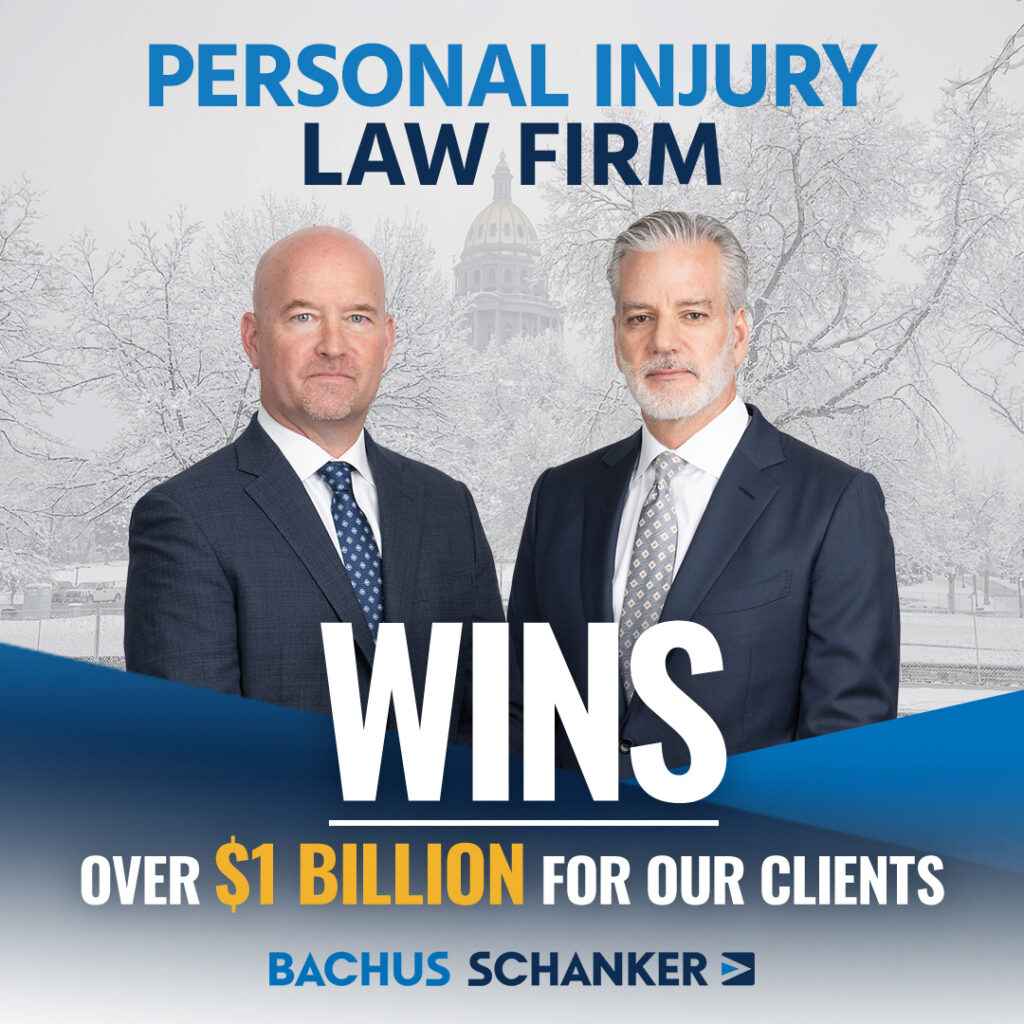
Kyle Bachus & Darin Schanker
Top-rated Colorado-based personal injury lawyers and co-founders of Bachus & Schanker, Kyle Bachus and Darin Schanker, have represented personal injury victims and families across Colorado for more than 30 years, earning a reputation as some of the best civil litigation attorneys for serious injury cases. The firm is structured to handle motor vehicle accidents, premises liability, catastrophic injuries, and wrongful death cases of all types and severities, with a team organized to provide focused support and guidance throughout the entire legal process. Kyle and Darin guide victims through the system with the support of a dedicated team of personal injury specialists and Victim Advocates, ensuring care and advocacy from start to finish so clients can stay focused on healing.
Their firm is widely recognized for legal excellence, ethics, and results. Bachus & Schanker has earned distinctions, including:
- Membership in the Million Dollar and Multi-Million Dollar Advocates Forum®, one of the most prestigious groups of trial lawyers in the United States.
- Top One Percent by the National Association of Distinguished Counsel.
- Top 10 Personal Injury Attorneys in Colorado by America’s Best Advocates.
- Extraordinary Attorneys for Personal Injury – 2025 by Law Leaders.
- Best of the Best: Top 10 Personal Injury Attorneys in Colorado – 2025.
- ColoradoBiz Media 2026 Colorado 500 Power List
Additional recognitions include honors from Super Lawyers, Lawdragon 500 Leading Plaintiffs’ Lawyers, 5280 Magazine Top Lawyers, Martindale-Hubbell AV ratings, Lead Counsel verification, American Association for Justice leadership, and A+ Better Business Bureau ratings across Colorado. Collectively, their attorneys have recovered over $1 billion for injury victims.
Beyond the courtroom, they support the Colorado community through the Bachus & Schanker Cares Foundation, which sponsors local nonprofits and initiatives. See Kyle Bachus and Darin Schanker on Super Lawyers.
Notable Settlement Results
$20 Million
$15 Million
$7 Million
Legal Support Across Colorado and Nationwide
Serving Clients Nationwide
Employment Law Legal Reviews
Related Employment Law Resources


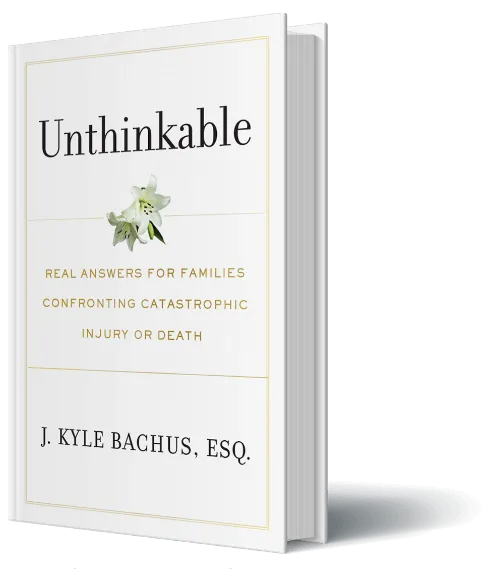
#1 Amazon Best Seller in the Legal Industry
Attorney Kyle Bachus knows first-hand how difficult it can be to suddenly lose a loved one in an accident. It’s also devastating when you or a family member suffers severe injuries that forever change your lives. Kyle wrote this book as a resource from his personal experience for families who have suffered a traumatic loss.
A Spanish edition of the book is also available, offering the same support and guidance to Spanish-speaking families.
You Deserve Fair Compensation
Don’t let the insurance companies intimidate you into accepting less than you deserve. We’re ready to fight for you.