
 Call Us!
Workers’ Compensation Back Injury Settlements in Colorado
If you sustain a back injury within the scope of your employment, or a pre-existing back injury is aggravated/worsened by work duties, you can be covered by workers’ compensation insurance.
Bachus & Schanker guides workers who sustain occupational diseases and injuries throughout the process of filing a workers’ compensation claim.
WHAT OUR CLIENTS SAY
·4.7 out of 5 · 2,650+ Google reviews
“I was injured on the job 3/22/22 and it took 3 years to get everything finished because of the poor job from the workmen’s comp insurance company. Michaela and Samuel did a fantastic job dealing with the issues. They kept me informed about everything that was going on throughout the whole process.”
John Zolman
Google review
“Thank you to Michaela for the great work that you did. I would recommend Bachus & Schanker for any of my workman comp needs. Can't ask for a better law firm when you need the help.”
Rudibaugh QuarterHorses
Google review
“They were there for me when I needed guidance most, keeping me informed throughout the case and making sure I understood each step. I really appreciated how responsive and supportive the team was from beginning to end.”
Lori J.
Client review
NOTABLE SETTLEMENTS
$50M
Medical malpractice
$38M
Hospital negligence
$20M
Car crash
$15M
Wrongful death
Past results do not guarantee future outcomes.
What Types of Back Injuries Qualify for Workers’ Compensation?
Any back injury that arises out of and in the course of your employment or is aggravated by job duties qualifies for workers’ compensation.
These include:
- Strains and sprains: Muscle/tendon strains and ligament strains caused by lifting/pulling/pushing heavy objects, repetitive tasks, and working in prolonged awkward postures, like bending or reaching above the shoulders.
- Fractured spine: A fracture in one or more of the 33 bones that form the spinal column (vertebrae) due to heavy lifting, falling from a height, slipping and tripping, or being struck by a falling object/ heavy equipment/vehicle.
- Herniated or bulging disc: When sudden force, heavy strain, or repetitive motion tears the tough outer wall of a spinal disc, the inner soft, jelly-like center can push through the tear and press on nearby nerves.
- Spinal cord injuries: Severe physical trauma, a heavy impact, or sudden overexertion can cause damage inside the spinal canal. A fracture in the vertebrae can also result in sharp pieces piercing into the spinal canal.
- Worsened conditions: Pre-existing back injuries, such as spinal stenosis (narrowing of the spaces inside your spine), nerve impingement (pinched nerve or nerve compression), or degenerative disc disease, can be aggravated/accelerated by duties, like heavy lifting and performing repetitive tasks.
Back injuries can be reported by a worker in any industry. However, they are heavily represented in construction, healthcare, warehousing, transportation, manufacturing, and other physically demanding occupations.
Workers’ compensation in Colorado is generally a no-fault system. It’s subject to statutory eligibility requirements, and you don’t need to prove negligence to receive benefits.
How Much Is a Workers’ Compensation Back Injury Settlement Worth in Colorado?
There is no single standard payout for workers who sustain a back injury at work. Settlement depends on several factors, which are:
- Injury severity: A worker who suffers a severe injury, such as a herniated disc or spinal cord injury, can claim higher compensation than someone who sustains minor strains and sprains.
- Economic damages: The total financial losses you suffer because of a work-related back injury play an integral part in determining your compensation.
- Medical proof: Workers’ compensation benefits depend heavily on medical proof. Medical documentation provided by an authorized doctor is an essential element for calculating workers’ compensation. Learn more about how to document a workplace injury and other workers’ compensation tips.
- Pre-existing condition: A pre-existing condition worsened by a job duty can result in the subtraction of the pre-existing percentage from the total percentage when it comes to permanent partial disability (PPD) ratings, potentially reducing the settlement.
What Workers’ Compensation Benefits May Be Available for a Back Injury?
When you file a workers’ compensation claim for a back injury, you can recover:
- Medical benefits: This benefit covers 100% of all reasonable, necessary, and authorized medical expenses.
- Temporary partial disability (TPD): If your authorized doctor allows you to return to work but with restrictions that prevent you from earning your normal pay or working your regular hours, TPD will cover the wage difference.
- Temporary total disability (TTD): Paid when your doctor says you cannot work at all or gives you restrictions that your employer cannot accommodate. It’s paid at two-thirds of your average weekly wage every two weeks.
- Permanent partial disability (PPD): If a back injury results in a lasting functional impairment after you reach maximum medical improvement (MMI), you can receive PPD. For example, a herniated disc may severely compress a nerve, causing permanent muscle weakness. PPD is calculated using a percentage of loss determined by your doctor and the Colorado State statute.
- Permanent total disability (PTD): PTD is paid for a lifelong duration when you are unable to earn any wages for the rest of your life at your determined TTD amount.
- Mileage reimbursement: Compensation for mileage and parking related to travel to authorized medical care, such as trips to your doctor’s office and pharmacies.
If a severe workplace back injury leads to a worker’s death, eligible dependents can then receive workers’ compensation benefits.
How Does Medical Treatment and Permanent Impairment Affect a Settlement?
Medical treatment is a primary determinant of a work-related back injury settlement. Conservative treatment, such as physical therapy, rest, and chiropractic care, and minimally invasive pain management procedures, like targeted injections, keeps valuations lower.
Serious injuries that require surgical intervention result in high medical costs and long recovery times. Thus, they can significantly increase a claim’s value.
In Colorado, when a doctor determines that an injured worker has reached MMI and has not returned to their pre-injury state (physically and/or mentally), they assign them a permanent medical impairment rating from 0% to 100%, using established procedures.
This rating is then used to calculate PPD benefits. Lower ratings result in lower benefit caps, whereas higher ratings have higher payout limits.
Can You Receive Workers’ Compensation for a Herniated Disc?
Yes, you can, provided the condition arose out of and in the course of your employment. Ensure you notify your employer in writing as soon as possible.
Can You Settle a Colorado Workers’ Compensation Claim and Still Receive Future Medical Care?
Your right to receive future medical care if your condition worsens depends on whether you sign a full and final settlement (compromise and release) or a stipulated arrangement. The former closes the claim permanently, while the latter stays open to pay for authorized, necessary care.
The payment methods you can choose for receiving settlement include a lump-sum settlement (a single, one-time lump-sum cash payment) or a structured settlement (settlement proceeds paid in guaranteed, periodic installments over time).



















How Long Does a Workers’ Compensation Back Injury Settlement Take?
So, how long does workers’ comp take to settle?
Typically, it can take anywhere from eight to 18 months from the date of the injury to complete. Minor injuries, like strains and sprains, can settle in a few months. Severe cases, such as those that need surgery, can take almost two years or more, since an injured worker is required to reach MMI before settling.
How Can a Colorado Workers’ Compensation Lawyer Help You Pursue Benefits?
A Colorado workers’ compensation lawyer can help you answer the question: What is workers’ compensation, and how does it work?
Additionally, they can help you navigate strict procedures, ensuring you report your injury correctly, fill out forms accurately, meet deadlines, and avoid costly mistakes. They will also determine the true value of your claim and communicate with insurance adjusters and authorized physicians.
If your claim is denied, your lawyer can represent you at mediations or formal hearings before an Administrative Law Judge (ALJ).
Legal Support Across Colorado and Nationwide
Serving Clients Nationwide
Related Workers Compensation Resources






Kyle Bachus & Darin Schanker
Top-rated Colorado-based personal injury lawyers and co-founders of Bachus & Schanker, Kyle Bachus and Darin Schanker, have represented car accident victims and families across Colorado for more than 30 years, earning a reputation as some of the best car accident attorneys for serious injury cases. The firm is structured to handle car accident cases of all types and severities, with a team organized to provide focused support and guidance throughout the process. Kyle and Darin guide victims through the legal process with the support of a dedicated team of car accident specialists and Victim Advocates, ensuring care and advocacy from start to finish so clients can stay focused on healing.
Both Kyle and Darin are nationally recognized for their trial skills and leadership in the legal community. They are members of the Million Dollar Advocates Forum, an exclusive group of attorneys who have achieved million and multi-million-dollar verdicts and settlements, a distinction earned by fewer than 1% of U.S. lawyers. In addition, they have been named Colorado Super Lawyers every year for nearly two decades, included in the Lawdragon 500 Leading Plaintiff Lawyers in America, named Top One Percent by the National Association of Distinguished Counsel, Top 10 Personal Injury Attorneys in Colorado by America’s Best Advocates, and recognized as top civil plaintiff attorneys by The National Trial Lawyers. Beyond the courtroom, they support the Colorado community through the Bachus & Schanker Cares Foundation, which sponsors local nonprofits and initiatives. See Kyle Bachus and Darin Schanker on Super Lawyers.
Notable Colorado Car Accident Settlement Results
$20 Million
$15 Million
$7 Million
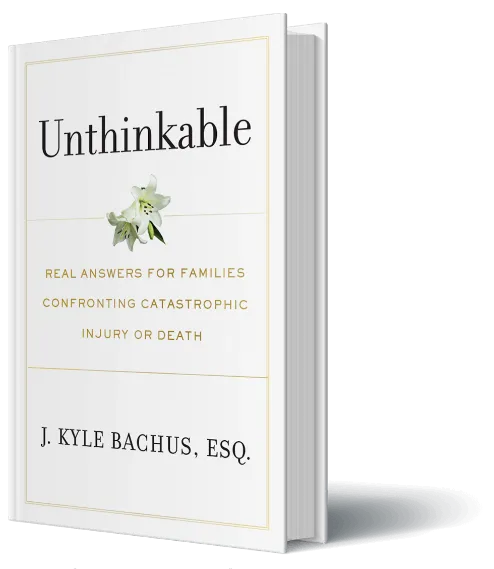
#1 Amazon Best Seller in the Legal Industry
Attorney Kyle Bachus knows first-hand how difficult it can be to suddenly lose a loved one in an accident. It’s also devastating when you or a family member suffers severe injuries that forever change your lives. Kyle wrote this book as a resource from his personal experience for families who have suffered a traumatic loss.
A Spanish edition of the book is also available, offering the same support and guidance to Spanish-speaking families.
You Deserve Fair Compensation
Don’t let the insurance companies intimidate you into accepting less than you deserve. We’re ready to fight for you.