
 Call Us!
Understanding Workers’ Compensation Settlement Amounts
After suffering a work-related injury or illness that requires you to seek medical care and keeps you from working, you may be entitled to workers’ compensation benefits. This lifeline can offer the financial support you need to address your losses, but it can be difficult to understand how much you may be able to receive.
Workers’ comp settlements are determined after your condition has stabilized and is no longer expected to improve. The amount you qualify for will depend heavily on the injuries you’ve sustained and the health complications they’ve left you with.
The experienced workers’ compensation lawyers at Bachus & Schanker can guide you through the process of filing for benefits and pursuing fair compensation. Learn what steps to take next and get a better sense of your potential payout.
Types of Compensation in Settlements
Workers’ compensation benefits are intended to address a number of losses, including:
- Medical expenses: You can receive coverage for emergency and follow-up care from authorized providers.
- Lost wages: Your benefits will also include lost wages, typically two-thirds of the difference between your pre- and post-injury wages.
- Temporary partial disability: You’ll qualify for partial wage replacement if you can return to work but can’t perform your usual duties or work your normal hours.
- Temporary total disability: This applies if you can’t work for a specified period of time, allowing you to receive two-thirds of your pre-injury wages.
- Permanent partial disability: If your injury causes long-term impairment, you stand to receive ongoing partial wage replacement.
- Permanent total disability: For employees who can’t return to work at all due to health issues, permanent total disability may be available.
- Death benefits: Survivors of deceased workers can receive death benefits to cover their loved one’s medical expenses, funeral arrangements, and lost wages.
When considering your potential payout, workers’ comp settlement charts and similar resources can give you a better sense of the benefits you might qualify to recover.
Settlement Structure
The settlement you receive could come in two forms — a lump sum or a structured settlement. So, what’s the difference between the two?
A lump-sum settlement is a one-time payment. This form gives you full control of the funds, which could be appealing if you’re facing mounting costs now and want to be able to draw up a long-term financial plan.
With this type of settlement, you don’t have to wait for the insurance company to keep issuing payments. That waiting can be a source of worry for many, especially if they’ll be receiving payments for many years.
Lump-sum settlements do have drawbacks, though. The biggest is that if you overspend or deplete your funds rapidly, you may not have any additional income to fall back on.
By contrast, a structured settlement involves periodic payments made on a schedule that you, your lawyer, and the insurer have agreed on. You’ll receive a guaranteed, steady infusion of funds with this option, which means less risk of mismanagement. As such, a structured settlement could be the best arrangement if you need long-term care.
That said, structured settlements also have their downsides. You won’t have access to a large pool of funds in the event of an emergency, and you’ll have to trust that the insurance company won’t go under or run into solvency issues.
Calculating Settlement Amounts
Many factors will inform the settlement you receive. The severity of your injuries and the level of care you’ll need are two major considerations. For example, if you require assistance for the rest of your life, your settlement will be significantly larger than if you’re expected to recover in a few weeks.
It’s also important to understand that Colorado imposes benefit caps. These limits don’t apply to medical expenses, but they do apply to lost wages.
For injuries that occurred between July 1, 2025, and June 30, 2026, the workers’ comp benefit caps are as follows:
- Temporary total/temporary partial/permanent total disability: $1,396.85 per week.
- Max weekly benefit rate: $1,396.85 per week.
- Disfigurement: $7,394.64 (in extreme cases, up to $14,786.65) per week.
- Death benefits: $1,396.85 per week.
Calculating these amounts can be complicated, so hiring an attorney to assist you is the best way to protect your rights and secure the financial support you need.






















Work With a Trusted Colorado Lawyer
The qualified workers’ compensation lawyers at Bachus & Schanker are ready to walk you through each step of the claims process from beginning to end.
Our knowledgeable team can answer questions like, “How long does workers’ comp take to settle?”, provide illustrative workers’ comp settlement examples, and negotiate aggressively for a fair payout on your behalf. Reach out today to get started.
Legal Support Across Colorado and Nationwide
Serving Clients Nationwide
Related Workers Compensation Resources






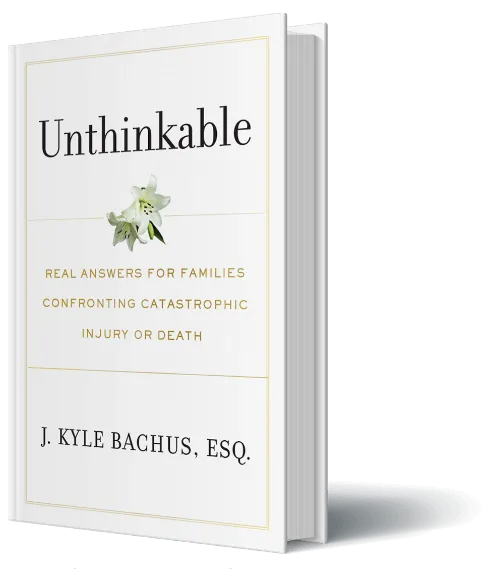
#1 Amazon Best Seller in the Legal Industry
Attorney Kyle Bachus knows first-hand how difficult it can be to suddenly lose a loved one in an accident. It’s also devastating when you or a family member suffers severe injuries that forever change your lives. Kyle wrote this book as a resource from his personal experience for families who have suffered a traumatic loss.
A Spanish edition of the book is also available, offering the same support and guidance to Spanish-speaking families.
You Deserve Fair Compensation
Don’t let the insurance companies intimidate you into accepting less than you deserve. We’re ready to fight for you.