
 Call Us!
How Much Will I Get For Pain And Suffering?
When you sustain an injury because of someone else’s negligence, you can recover pain and suffering damages as part of your compensation. Classified under non-economic damages, it includes physical pain and discomfort, and emotional and psychological harm.
It also compensates for the actual physical pain and discomfort caused by your injuries and the psychological impacts you experience because of the accident, such as anxiety, depression, and post-traumatic stress disorder (PTSD).
If you were injured in an accident because of someone else’s negligence, you can file a personal injury claim to recover pain and suffering damages.
How Is Pain And Suffering Compensation Calculated?
There isn’t a fixed formula for calculating pain and suffering in a car accident settlement. Insurance companies, attorneys, and courts usually negotiate based on evidence using certain tools. Typically, the two valuation methods used are the multiplier and per diem methods.
The multiplier method multiplies the total economic damages by a number between 1.5 and 5, based on the severity of the injury.
For example, if the total compensation for economic damages is $50,000 and a multiplier of 2 is used, which means you sustained a moderate injury, you can receive $100,000 for pain and suffering.
If you sustain a severe injury (an injury that has a significant impact on your daily life and activities), a higher multiplier can be used. If a multiplier of 5 is used, based on the $50,000 example, you can recover $250,000 in pain and suffering.
The per diem method assigns a specific dollar value to each day you suffer or are expected to suffer. The severity of your injury is used to determine a reasonable daily rate.
It’s also not uncommon for a person’s daily earnings to be used to determine the daily rate, as attorneys often argue that spending a day in pain, with restricted movement, and dealing with emotional distress is reasonably worth at least as much as a normal day’s work.
The assigned daily rate is multiplied by the number of days it takes to reach maximum medical improvement (MMI). This is the point at which a doctor determines that an injured person’s condition has stabilized and is unlikely to improve significantly with further treatment.
If a daily rate of $150 is assigned and it takes you 200 days to recover, you can receive $30,000 in pain and suffering compensation. If you sustain a severe injury and a daily rate of $250 is used, you can recover $50,000.
Besides the severity of your injuries and the time it takes to reach MMI, other factors that can affect the value of pain and suffering damages include the following:
- Degree of fault: If it’s determined you were partially at fault, Colorado’s comparative negligence law will be applied, reducing your compensation by your degree of fault.
- Available insurance: The at-fault party’s insurance policy limit determines how much you can get for pain and suffering. If your claim’s worth exceeds their insurance policy limits, you may need to pursue their personal assets in court.
- Emotional or psychological effects: If your injuries or the accident caused psychological effects, such as PTSD, anxiety, depression, or insomnia, emotional distress damages can be included in your compensation.
- Strength of your evidence: Your medical documentation and supporting evidence play a crucial role in determining the value of pain and suffering. You’ll need solid evidence to prove the severity of injuries.
What Evidence Can Help Support A Pain And Suffering Claim?
A combination of medical documentation, personal accounts, and witness and expert testimony strengthens a pain and suffering claim.
Medical documentation includes:
- Medical records from your doctors detailing your diagnosis, treatments, and recovery.
- Consistent notes from your doctors and nurses documenting pain levels, emotional distress, and other complaints. These include notes from your physical therapist detailing your daily struggles with movement and limitations in range of motion, and notes from your psychologist, psychiatrist, or counselor detailing your struggles with PTSD, anxiety, insomnia, or any other psychological effects.
- Prescription history documenting all medications prescribed for pain management, insomnia, or mental health issues.
Your personal documentation should include:
- A daily journal in which you detail your pain levels, emotional struggles, and ways the injury is affecting your normal daily activities. Consider using a scale when tracking this, for instance, a scale of 1 to 10.
- Photos and videos showing your injuries and their progression. You should also document recovery milestones. For example, when using mobility aids or when you manage to walk. Furthermore, compile photos and videos of your life before the accident, showing how you participated in activities you enjoy, and then contrast them with how your injuries limit you now.
When it comes to witness and expert testimony, you need:
- Signed statements from those who know you best, such as family, friends, or coworkers, detailing how your injuries have impacted your daily life, routines, mobility, relationships, mood, personality, and overall well-being.
- Testimony from experts, such as medical specialists, mental health professionals, and life care planners, quantifying how your physical injuries have affected your daily life and their long-term impacts on your life.
Can I Recover Compensation For Emotional Distress And Mental Anguish?
Yes, you can. Emotional distress and mental anguish are classified as non-economic damages. Psychological trauma that arises from the accident or your injuries can significantly impact your life. Thus, you can recover financial compensation for it.
You’ll need evidence that shows the other party acted negligently, that their negligence created an unreasonable risk of physical harm to you, that their negligence brought about emotional distress, and that you suffered damages/losses as a result.






















Are There Limits On Pain And Suffering Damages In Colorado?
Following the passage of House Bill 24-1472, the statutory cap for the total non-economic damages one can recover was increased to $1.5 million. Civil actions filed on or after January 1, 2025, use this new cap.
The $1.5 million includes all non-economic damages awarded in a case, including pain and suffering, emotional distress, the loss of enjoyment of life, inconvenience, etc.
If someone dies because of an accident caused by someone else’s negligence, their surviving family members can file a wrongful death claim. In such a civil action, the cap for total non-economic damages, including pain and suffering, is $2.125 million.
How Can Bachus & Schanker Help Maximize My Compensation For Pain And Suffering?
At Bachus & Schanker, we are committed to helping injured victims maximize compensation for pain and suffering. We do this by gathering and preserving solid evidence that demonstrates the severity of injuries and their impact on daily life. In turn, we can request a reasonable multiplier or dollar value for calculating pain and suffering compensation.
Additionally, our lawyers are skilled at negotiating with insurance companies. Besides building strong cases, we understand how insurers work. We know the tactics they use to reduce or deny payouts and the best ways to weaken them. This helps us ensure that an injured victim receives the true worth of their claim. If a fair settlement can’t be reached, we are always prepared to take a case to court.
Legal Support Across Colorado and Nationwide
Serving Clients Nationwide
Related Personal Injury Resources












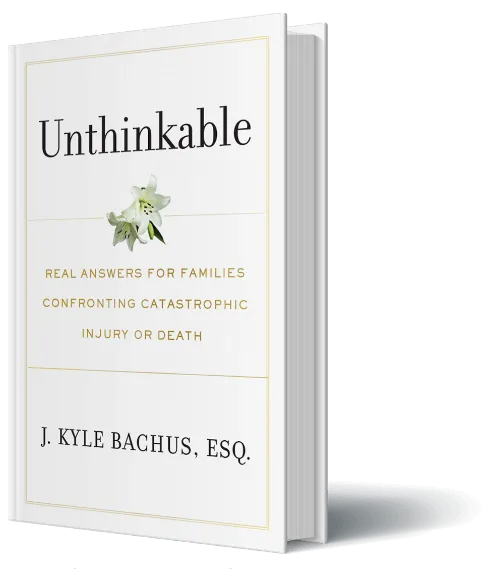
#1 Amazon Best Seller in the Legal Industry
Attorney Kyle Bachus knows first-hand how difficult it can be to suddenly lose a loved one in an accident. It’s also devastating when you or a family member suffers severe injuries that forever change your lives. Kyle wrote this book as a resource from his personal experience for families who have suffered a traumatic loss.
A Spanish edition of the book is also available, offering the same support and guidance to Spanish-speaking families.
You Deserve Fair Compensation
Don’t let the insurance companies intimidate you into accepting less than you deserve. We’re ready to fight for you.