
 Call Us!
Is Emotional Distress a Personal Injury?
Emotional distress is often derided as imaginary or a filler to pad an injury claim. However, anyone who has experienced a traumatic event knows their mental and emotional stress was real. Fortunately, Colorado law recognizes this distress, and allows victims to personal injury claim to pursue compensation for it.
The attorneys at Bachus & Schanker have decades of experience representing injured people against those responsible for harming them. We have successfully recovered over $1.5 billion in financial compensation for our clients. Our firm offers comprehensive assistance to clients whether they suffered physical injuries, emotional distress, or both.
WHAT OUR CLIENTS SAY
·4.7 out of 5 · 2,650+ Google reviews
“After my accident, I called Bachus and Schanker on the recommendation of a friend. They were always compassionate and understanding. My attorney explained the process to me. My calls and emails were promptly returned. We reached a substantial settlement.”
Susan Howell
Google review
“I am writing to express my sincere gratitude for the assistance I have received from Yvonne regarding my accident claim. She has kept me updated with any changes and has been incredibly professional.”
Jeramy King
Google review
“They handled my accident claim with care, kept me updated every step of the way, and made the entire process so much less stressful. Their communication was excellent, and I never felt left in the dark.”
Ajay
Google review
“Derek took my call and provided me with essential details of the processes involved with an accident injury case. After speaking with him, I felt a sense of genuine relief and did not feel confused about where to go from here.”
Sharon Bailey
Google review
NOTABLE SETTLEMENTS
$50M
Medical malpractice
$38M
Hospital negligence
$20M
Car crash
$15M
Wrongful death
Past results do not guarantee future outcomes.
What Is Emotional Distress?
Emotional distress encompasses the non-physical trauma caused by someone else’s actions. The following examples are often used to explain how emotional distress feels:

- Pain and suffering
- Mental anguish
- Sadness
- Depression
- Anxiety
- Embarrassment
- Fear
- Humiliation
- Indignity
- Public disgrace
- Reduction in the quality of life
Although these forms of distress are mental and emotional, they can produce physical effects, such as:
- Insomnia
- Fatigue
- Reduced immunity
- Increased blood pressure
- Headaches
- Pain
- Muscle tension
- Shortness of breath
- Memory difficulties
- Difficulty concentrating
- Emotional outbursts
- Post-traumatic stress disorder
- Anxiety attacks and flashbacks
When you pursue a claim that includes emotional distress, you can seek compensation for both the tangible and intangible effects of the condition. For example, your therapy bills and missed wages are economic losses from your emotional distress. Sleepless nights and chronic fatigue are non-economic losses from it.
Colorado law allows you to pursue both types of compensation, although it may cap the non-economic compensation you can recover.
Why Choose Our Personal Injury Law Firm?
Bachus & Schanker is led by top-rated personal injury attorneys recognized among the best in Colorado. With decades of experience and thousands of cases handled within Colorado and nationwide, our team brings a proven track record of results to every case. They have represented clients in accident cases involving severe emotional distress, psychological trauma, and non-economic damages across Colorado and nationwide.
At our firm, hands-on case management and personalized attention are central to how cases are handled. Attorneys remain directly involved throughout the process, with a focus on responsiveness, attention to detail, and clear communication at every stage of the case.
The benefits of working with our legal team include:
- Personal injury accident cases taken on a contingency fee basis – no legal fees unless we win your case
- Support of our victim advocates team
- Personalized attention from attorneys who understand personal injury accidents law
- Proven track record of maximizing settlements by documenting the full impact of emotional and mental suffering
- Experience handling cases in Colorado and across the United States
When you need experienced legal representation to recover compensation for both your physical and emotional injuries, choose Bachus & Schanker, recognized as some of the best personal injury lawyers in Colorado.






















Can You Sue For Emotional Distress?
Colorado law recognizes your right to sue for emotional distress in two contexts. First, emotional distress can accompany a physical injury. Thus, suing for emotional distress after car accident injuries falls into this category. In this situation, the emotional distress you experience will be tied to the mental impact of your injury.
For example, suppose you were involved in a car accident that resulted in a car fire. You might experience social anxiety after a disfiguring injury, like a serious burn to your arm. The distress, shame, and embarrassment you experience as you cope with your scars will qualify for compensation in your injury claim.
Specifically, the hospital bills for your burns will qualify you for an economic damage award, while the distress you experienced will qualify you for an additional non-economic damage award.
Second, emotional distress can occur without an accompanying physical injury. However, the law is somewhat skeptical of these losses. As a result, they often arise only in a few limited situations.
You may have the right to sue for emotional distress if you were within the zone of danger, even though you escaped physical injury. Thus, suppose you were inside your home when an electrical fire started, but you escaped without any physical injury.
You may be able to claim compensation for emotional distress in your lawsuit against the contractor who negligently wired your electrical system and caused the fire. Being in the zone of danger can support a claim for negligent infliction of emotional distress.
A related claim is called intentional infliction of emotional distress. It occurs when someone deliberately engages in extreme and outrageous conduct, resulting in emotional distress. For example, suppose your neighbor harasses you by placing threatening letters with graphic descriptions of violence in your mailbox. You may have a claim for intentional infliction of emotional distress.
Finally, you can seek non-economic losses in the absence of a physical injury in a wrongful death claim. In these cases, you can seek compensation for grief, mental anguish, and other forms of emotional distress.
Common Causes of Emotional Distress
Emotional distress can arise in any type of traumatic event caused by the negligent or intentional actions of others, including the following:
- Car Accidents
- Dog Bites
- Workplace injuries
- Explosions and fires
- Wrongful Death
Serious injuries almost always involve some distress. You worry about your health and how you will pay for your medical bills. You may have concerns about how your injuries will affect your career or schooling. You could also have anxiety about how your family will manage without your financial contributions.
Even if you do not suffer any injuries, witnessing a close loved one’s pain or death can traumatize you. Thus, you might have a claim against a drunk driver who injured your child in a pedestrian accident that occurred in front of you.
In this case, you do not necessarily need to be in the zone of danger. Colorado refers to this type of loss as “derivative non-economic loss or injury.” The state requires proof by clear and convincing evidence of the emotional distress if you were not injured.
Generally, Colorado imposes a two-year statute of limitations from the date of the traumatic event to sue for emotional distress.
Proving Emotional Distress
Emotional distress, by definition, is intangible. No one can look into your heart and mind and know the distress you suffered.
As a result, an insurance adjuster or jury needs evidence to properly evaluate the extent of your losses. Your Colorado personal injury lawyer might use the following forms of evidence to prove the existence and extent of your emotional distress:
- Medical records
- Therapy notes
- Your testimony about the distress you suffered
- Expert testimony about typical mental and emotional responses
Calculating compensation for emotional distress can be complicated. Since it has no price tag, jurors and insurers must use their conscience and sense of fairness to come to a fair number.
If you suffered a physical injury, your emotional distress is likely to increase with its severity. An amputation or permanent brain damage would justify greater compensation for emotional distress than a broken bone.
Hovering over this calculation are the damage caps imposed by Colorado law on non-economic damages. These caps vary depending on when the claim arose and their nature. A skilled attorney can review your case and let you know how you can prove your losses and the compensation you can recover.
Contact Bachus & Schanker To Discuss Your Claim for Emotional Distress
Emotional distress can erode your happiness and enjoyment of life. As a result, your losses, although intangible, affect every moment of your existence. Our attorneys have extensive experience handling claims involving emotional distress. We know Colorado law and the proof needed to support these claims. Contact us for a free consultation with a personal injury attorney to learn how we can help you.
Legal Support Across Colorado and Nationwide
Serving Clients Nationwide
Related Personal Injury Resources














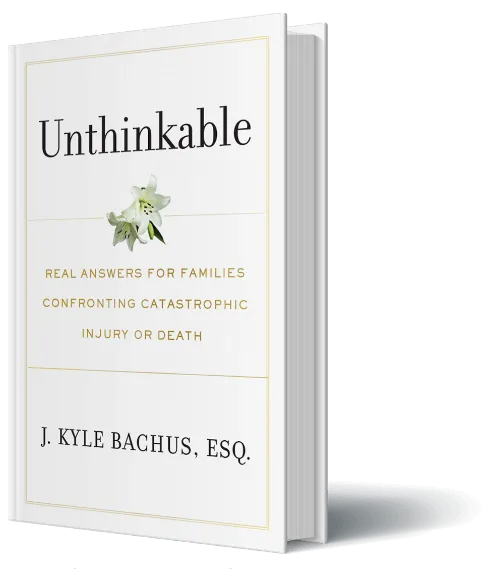
#1 Amazon Best Seller in the Legal Industry
Attorney Kyle Bachus knows first-hand how difficult it can be to suddenly lose a loved one in an accident. It’s also devastating when you or a family member suffers severe injuries that forever change your lives. Kyle wrote this book as a resource from his personal experience for families who have suffered a traumatic loss.
A Spanish edition of the book is also available, offering the same support and guidance to Spanish-speaking families.
You Deserve Fair Compensation
Don’t let the insurance companies intimidate you into accepting less than you deserve. We’re ready to fight for you.