
 Call Us!
Can I File a Personal Injury Claim in Colorado Without a Lawyer?
When you sustain an injury due to someone else’s negligence, Colorado law allows you to file a personal injury claim to hold the at-fault party responsible for your damages.
So, are you required to work with a lawyer to file a claim, or can you file a personal injury claim without an attorney in Colorado?
The state does not have a legal requirement to hire a lawyer for a personal injury claim. You have the right to represent yourself (pro se) throughout the process.
However, if you represent yourself, you are held to the same legal standards, rules of evidence and procedure, and timelines as a practicing, licensed attorney. You are also responsible for understanding the law and procedural rules that apply to your case.
Learn more about the process of receiving compensation from an at-fault party and how to file a personal injury claim without a lawyer.
WHAT OUR CLIENTS SAY
·4.7 out of 5 · 2,650+ Google reviews
“After my accident, I called Bachus and Schanker on the recommendation of a friend. They were always compassionate and understanding. My attorney explained the process to me. My calls and emails were promptly returned. We reached a substantial settlement.”
Susan Howell
Google review
“I am writing to express my sincere gratitude for the assistance I have received from Yvonne regarding my accident claim. She has kept me updated with any changes and has been incredibly professional.”
Jeramy King
Google review
“They handled my accident claim with care, kept me updated every step of the way, and made the entire process so much less stressful. Their communication was excellent, and I never felt left in the dark.”
Ajay
Google review
“Derek took my call and provided me with essential details of the processes involved with an accident injury case. After speaking with him, I felt a sense of genuine relief and did not feel confused about where to go from here.”
Sharon Bailey
Google review
NOTABLE SETTLEMENTS
$50M
Medical malpractice
$38M
Hospital negligence
$20M
Car crash
$15M
Wrongful death
Past results do not guarantee future outcomes.
What Steps Are Involved in Filing a Personal Injury Claim?
After sustaining an injury, it’s crucial to gather evidence. Take photos and videos of the accident scene and your injuries, exchange information with the other party, collect witness information, report the incident to law enforcement or a property/business owner, and get immediate medical attention. Don’t forget to preserve medical bills, receipts, and damaged personal property.
Immediately after taking the necessary steps to protect your health and document the incident, you should also notify your insurance company about the incident.
Then, contact the at-fault party’s insurer by phone or through their online claims portal. Provide basic information, including your name and contact information, the other party’s name and policy number, and a brief statement that their insured party caused an accident on a particular date, time, and location that led to you suffering injuries.
Typically, an adjuster from the company will contact you after reporting to get more information. Avoid admitting fault, giving recorded statements, or accepting a settlement.
It’s crucial to wait until you reach maximum medical improvement, also known as MMI (the point in time when your doctor determines your condition has become stable and no further treatment is reasonably expected to improve the condition), to send a formal demand letter to the at-fault party’s insurance company.
While the initial notice notified the insurer of the accident, a demand letter officially starts out-of-court settlement negotiations.
In the letter, you will include:
- Your information
- The at-fault party’s information
- The exact date, time, and location of the incident
- A statement stating that the letter serves as a formal demand for compensation
- A chronological narrative of the events leading up to and during the accident
- Why their insured party is legally responsible under Colorado law
- The injuries you sustained
- The economic and non-economic damages you have suffered
- The specific dollar amount to resolve the claim
- A deadline to respond
Don’t forget to include supporting evidence, such as:
- Copies of all medical records and bills
- Official incident/police reports
- Photos of the accident scene
- Signed written statements
- Pay stubs, tax returns, or a formal letter from your employer verifying missed work hours and lost wages
- Expert opinions, for instance, from an accident reconstructionist, medical specialist, financial professional, or vocational expert to provide more information about the accident and damages suffered
When the insurer receives your demand letter, an adjuster will inspect liability, review submitted evidence, and verify your losses. The company can then request additional information, accept your demand, make a counteroffer, or reject your claim.
If it agrees to pay the full requested amount, you will receive a Settlement Agreement and Release to close the case. If it makes a counteroffer, this will initiate back-and-forth negotiations until a fair settlement is reached.
If the company rejects your claim or a fair settlement can’t be reached, you can file a lawsuit to be fairly compensated in court.
You would then need to file your case in the appropriate court (the Small Claims Court, the County Court, the District Court, or the Federal District Court), depending on the amount of money you are seeking and the specifics of your case.
What Is Colorado’s Statute of Limitations for Personal Injury Claims?
The statute of limitations for general personal injury claims in Colorado is two years from the date of injury.
That of a personal injury claim arising from a motor vehicle accident is three years from the date of injury.
When filing a medical malpractice claim, you have two years from the date the injury is discovered or should have been discovered to recover damages. However, you cannot file a lawsuit more than three years after the date of the actual negligent act.
You must observe the statute of limitations to protect your eligibility to seek compensation.
What Types of Compensation Can You Seek?
When you file a personal injury claim or lawsuit, you can seek:
- Economic damages: These are measurable financial losses, such as medical expenses, lost wages, lost earning capacity, and property damage.
- Non-economic damages: These are subjective, non-financial impacts on your life, including pain and suffering, inconvenience, emotional stress, disfigurement, loss of enjoyment of life, and loss of consortium. It’s essential to keep a journal detailing daily personal struggles. Non-economic damages are capped under Colorado law.
- Exemplary/punitive damages: You can claim exemplary damages if the incident that resulted in your injuries involved circumstances of fraud, malice, or willful and wanton conduct. Exemplary damages cannot exceed the amount of actual damages awarded.
How Does Colorado’s Comparative Negligence Law Affect Your Claim?
Colorado’s comparative negligence law allows an injured person to be compensated even when they were partially at fault for an accident, provided such negligence was not as great as the negligence of the person against whom recovery is sought. Additionally, the injured party’s compensation will be reduced by their percentage of fault.
So, if it’s determined that you were 20% at fault for an accident and your compensation is $100,000, you will receive $80,000.






















When Should You Consider Hiring a Personal Injury Lawyer?
Self-representation in a personal injury case can allow you to save costs, as you avoid attorney contingency fees. You also retain direct control of your claim, regarding strategy, evidence submission, and so on.
However, it also has risks. For starters, Colorado courts will hold you to attorney standards. One mistake can severely damage your case.
Moreover, negotiating with insurance adjusters without experience can be challenging. They are trained to keep payouts as low as possible. If you can’t calculate the true value of your claim or stay grounded when they are applying different tactics, they may take advantage of that, resulting in a lower financial recovery.
Many pro se litigants also find it difficult to obtain expert opinions. It can also be expensive for them to access expert witnesses.
Working with an attorney ensures you build a strong case that protects your rights. If you are injured due to someone else’s negligence, consider hiring a personal injury lawyer as soon as possible. Ideally, do so after receiving initial medical treatment.
Legal Support Across Colorado and Nationwide
Serving Clients Nationwide
Related Personal Injury Resources













#1 Amazon Best Seller in the Legal Industry
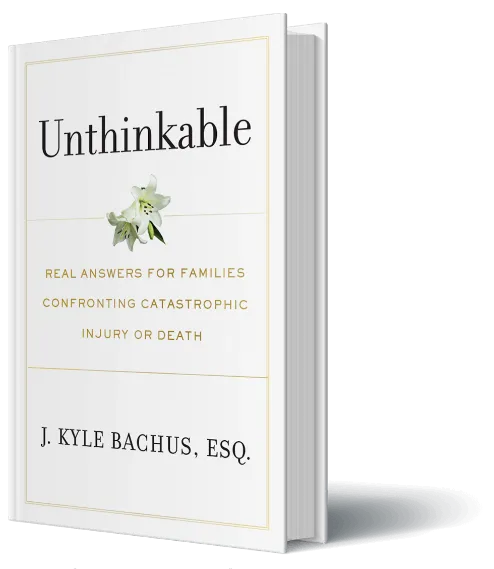
Attorney Kyle Bachus knows first-hand how difficult it can be to suddenly lose a loved one in an accident. It’s also devastating when you or a family member suffers severe injuries that forever change your lives. Kyle wrote this book as a resource from his personal experience for families who have suffered a traumatic loss.
A Spanish edition of the book is also available, offering the same support and guidance to Spanish-speaking families.
You Deserve Fair Compensation
Don’t let the insurance companies intimidate you into accepting less than you deserve. We’re ready to fight for you.