
 Call Us!
What Evidence Do You Need for a Strong Motorcycle Accident Injury Claim?
A motorcycle accident can result in injuries and losses that affect your life significantly. Filing a motorcycle injury claim allows you to receive compensation aimed at restoring your financial and physical state to your pre-accident condition. However, to receive compensation, you need solid evidence that supports your claim.
Besides establishing liability and proving losses, evidence in motorcycle cases helps overcome the inherent bias against riders. Motorcyclists are often unfairly blamed in accidents, as it’s assumed they speed, are reckless, and break traffic laws. Insurance adjusters typically exploit such stereotypes to undervalue a claim or deny liability.
This bias is even held by police officers and jurors. When the police arrive at a motorcycle accident, they may have a preconceived notion, which can lead to biased evidence gathering and an inaccurate police report.
When a motorcycle accident case goes to court, jurors may believe the rider must have done something that contributed to the accident. Additionally, they may believe that by choosing to ride a motorcycle, the rider “assumed risk of injury.” Such beliefs can lead to a disproportionate assignment of fault to the motorcyclist and a reduction of compensation.
Thus, strong evidence is critical in motorcycle cases. At Bachus & Schanker, we help injured motorcyclists gather all essential evidence to build a strong case.
WHAT OUR CLIENTS SAY
·4.7 out of 5 · 2,650+ Google reviews
“I was recommended to Bachus and Schanker due to being involved in a recent accident. They have been so helpful, professional, and I absolutely would recommend them.”
Heather K.
Google review
“I called them the day of my accident. The whole process I was informed of each step along the way. My attorney always kept in contact and was very attentive.”
Gunnar B.
Google review
“At the time of my accident I didn’t know what route to go. They were there for me until the end, very professional and always handling things in a timely matter.”
Geneva J.
Google review
“They handled my accident claim with care, kept me updated every step of the way, and made the entire process so much less stressful.”
Ajay
Google review
“The staff always explained everything very clearly and I felt that they cared about my needs and what had happened to me in my car accident.”
Stephen C.
Google review
NOTABLE SETTLEMENTS
$20M
Car crash
$15M
Car crash
$11.5M
Auto accident
$4.7M
Truck accident
Past results do not guarantee future outcomes.
Core Legal Elements
In a motorcycle accident case, you need to prove the elements of liability.
These are:
- Duty of care: Drivers in Colorado are required to operate their vehicles with reasonable care by following traffic rules and avoiding causing harm to others. You should establish the at-fault driver’s presence on a public road.
- Breach of duty of care: Negligent actions, such as speeding, distracted driving, failing to yield, unsafe lane changing, tailgating, driving under the influence of alcohol/other drugs, or running a stop sign, are examples of a breach of duty of care. You need evidence that shows how a driver acted negligently.
- Causation: You must establish a link between the breach of duty of care and your injury. Prove that the injury would not have happened “but for” the driver’s actions. Any evidence that shows your injury was a foreseeable result of the driver’s action is vital.
- Damages: Finally, you must prove that you suffered losses, such as medical expenses, lost wages, and property damage.
Most Important Types of Evidence
Any detail that proves the four core legal elements is crucial in a motorcycle injury claim.
This includes:
- The police report: A police report provides an official, comprehensive record with a description of the scene and damages, contact information of involved parties and witnesses, any violations of traffic laws noted by the officer, and essential accident details, such as date, exact time, and precise location. It provides crucial information for establishing fault.
- Medical records: Your medical records prove the existence and severity of injuries and directly link them to the accident. These are your emergency room reports, diagnostic imaging, prescription records, doctor’s notes, specialist reports, prognosis reports, physical therapy records, and medical bills.
- Photos and videos: Photos and videos of the accident scene and your injuries can help prove fault. You should take photos and videos of the vehicle’s and your motorcycle’s position, the road conditions, traffic signals, road signs, and weather conditions.
- Helmet/dash cam footage: If you have a helmet or bike-mounted camera, its footage will provide an objective view of the moments leading up to the accident and show how the crash happened. Helmet/dash cam video footage is invaluable in a motorbike injury claim.
- Witness statements: Witnesses provide independent accounts of how the accident occurred. They confirm your version of events. Thus, immediately after the accident, collect the names and contact information of witnesses, and, if possible, record brief statements using your phone.
- Bike damage and repair estimates: At the scene, take photos and videos of the bike, showing damage to the bike and your gear, such as a damaged helmet, jacket, or gloves. After leaving the scene, do not rush to repair the bike. Get repair estimates from a licensed motorcycle repair shop showing all damages and preserve the bike.
- Traffic/phone records: Traffic video footage and phone records can show if a driver was distracted at the time of the accident. For instance, if they were texting, on a phone call, or using an app.
Why Timing Matters
Evidence can disappear quickly. Surveillance footage from traffic cameras and nearby businesses can get deleted within days, skid marks on the road can fade within hours, debris can be removed from the road quickly, and so on.
Moreover, memories fade over time. A witness is more likely to forget certain details as time goes by. The at-fault driver may also repair or discard their vehicle.
Therefore, timing matters when it comes to gathering evidence. Making informed decisions quickly can protect your case substantially.
Steps To Take To Protect Evidence
- Call the police: Colorado law requires any accident involving bodily injury, death, or significant property damage to be reported to law enforcement immediately. So, call the police to notify them of the crash and to receive emergency care.
- Take photos: Document the scene by taking multiple photos and videos from different angles.
- Get witness info: Don’t forget to collect names and contact information from the witnesses.
- Seek medical care: Get a medical evaluation immediately after leaving the scene, even if you feel fine, to receive treatment and establish causation. Taking too long to visit a doctor creates a gap in treatment, which insurance adjusters can use to argue that your injuries were not caused by the crash or are not severe.
- Preserve your motorcycle: Avoid repairing or cleaning your bike. After taking photos and videos at the scene, ensure that it’s transported to a secure, private location, ideally your garage.
- Contact a lawyer early: Consider contacting an attorney as soon as possible, preferably immediately after receiving medical care.


















The Role of a Lawyer
A lawyer will benefit your case in several ways, including:
- Securing hard-to-get evidence: Securing surveillance footage from traffic cameras or nearby businesses, requesting a driver’s phone records, and obtaining a vehicle’s event data recorder data can be difficult without a lawyer. Your attorney will use their expertise to secure crucial evidence on time.
- Working with experts: Your motorcycle accident lawyer will work with other professionals, such as a medical expert, an accident reconstructionist, and a financial expert, to get more information on how the accident happened and determine the true value of your claim.
- Handling the insurance company: It’s important to have a lawyer handle the insurance company on your behalf. This includes communication and negotiations. Not only does this allow you to focus on recovery, but it also protects you from self-incrimination.
- Building a strong, clear claim: Lawyers are skilled at building strong, clear cases. Your attorney will help you build a case that secures maximum compensation.
Legal Support Across Colorado and Nationwide
Serving Clients Nationwide
Related Motorcycle Accidents Resources



#1 Amazon Best Seller in the Legal Industry
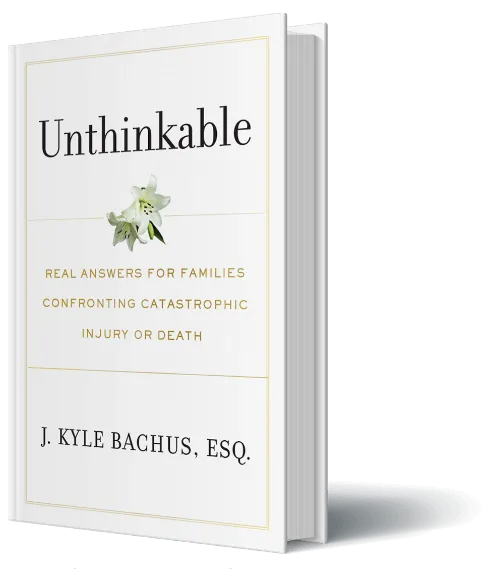
Attorney Kyle Bachus knows first-hand how difficult it can be to suddenly lose a loved one in an accident. It’s also devastating when you or a family member suffers severe injuries that forever change your lives. Kyle wrote this book as a resource from his personal experience for families who have suffered a traumatic loss.
A Spanish edition of the book is also available, offering the same support and guidance to Spanish-speaking families.
You Deserve Fair Compensation
Don’t let the insurance companies intimidate you into accepting less than you deserve. We’re ready to fight for you.