
 Call Us!
Colorado’s Medical Malpractice Caps
When a healthcare provider fails to follow the accepted standard of care when treating a patient, resulting in injury or death, the injured victim or their family can file a medical malpractice claim or a wrongful death claim to recover damages.
Common examples of medical malpractice are:
- Diagnostic errors: Misdiagnosis, delayed diagnosis, and failure to diagnose.
- Surgical mistakes: Wrong-site/wrong-patient/wrong-procedure surgery, anesthesia errors, leaving foreign objects in the body, and accidental punctures to organs/nerves.
- Medication errors: Prescribing or administering an incorrect dosage/wrong drug.
- Negligent aftercare/monitoring: Failure to monitor vitals, ignoring abnormal vital signs, premature discharge, and failure to follow up.
- Birth injuries: Failure to order a C-section on time, failure to diagnose maternal conditions during pregnancy, and misuse of delivery instruments.
When you are injured in any of these circumstances or more, you can recover damages from the negligent healthcare provider. You can claim economic and non-economic damages.
Economic damages are financial losses that can easily be calculated. These include past and future medical expenses (treatment, medications, hospitalization, rehabilitation costs, and medical equipment), lost wages, and lost earning capacity.
Non-economic damages are non-monetary losses that represent the subjective, emotional, and lifestyle impact of an injury. Examples include pain and suffering, emotional distress, permanent physical impairment, disfigurement, loss of companionship, and loss of enjoyment of life.
Typically, Colorado has no caps on economic damages, which means you can recover the full, proven financial loss. However, the state has caps on non-economic damages (pain and suffering).
In addition, the total amount (economic and non-economic damages) one can recover in a medical malpractice case in the state is generally limited to one million dollars. So, even though economic damages are not capped, the restriction on non-economic damages and the total amount can affect your compensation.
WHAT OUR CLIENTS SAY
·4.7 out of 5 · 2,650+ Google reviews
“They treated me with respect and made my case feel manageable. I always felt listened to, and they took the time to explain what was happening so I was never left confused about the process.”
Stacy C.
Client review
“They were there for me when I needed guidance most, keeping me informed throughout the case and making sure I understood each step. I really appreciated how responsive and supportive the team was from beginning to end.”
Lori J.
Client review
“They handled my accident claim with care, kept me updated every step of the way, and made the entire process so much less stressful. Their communication was excellent, and I never felt left in the dark.”
Ajay
Google review
NOTABLE SETTLEMENTS
$50M
Medical malpractice
$38M
Hospital negligence
$20M
Car crash
$15M
Wrongful death
Past results do not guarantee future outcomes.
What Are the Colorado Medical Malpractice Caps?
The Health Care Availability Act (HCAA), enacted in 1986, established caps on non-economic damages to control rising insurance costs for providers. The caps aim to provide fair compensation to victims, while preventing high malpractice insurance premiums.
The limit was generally set at $250,000 at the beginning. It was then adjusted to $300,000 in 2005, and this has remained in place for nearly two decades, until a major legislative change in 2024 (HB24-1472).
Effective January 1, 2025, Colorado House Bill 24-1472 significantly increased medical malpractice damages caps from $300,000 to $875,000, over the course of five years. This means medical malpractice cases filed on or after Jan 1, 2025, are subject to the increased caps. The cap will increase incrementally by $115,000 each year, until it reaches the $875,000 limit in 2029.
The bill also increased the medical malpractice wrongful death damages limitation to $1.575 million, over the course of five years. Thus, if you lost a loved one due to medical negligence and filed a case on or after Jan 1, 2025, you can recover damages up to this limit.
Will the Caps be Adjusted?
Starting January 1, 2028, these caps will be adjusted for inflation every two years. This ensures that as time goes by, the compensation injured victims receive retains its value against economic inflation.
Without adjustments, an injured party may receive compensation that seems fair on paper, but they may need to handle some expenses out of pocket, which has been a common case in previous years.
The unchanged $300,000 statutory cap did not keep pace with the rising cost of living. Many plaintiffs were left undercompensated.
Do Exceptions on Caps Apply?
The court may allow a plaintiff to exceed the overall $1 million cap if they show “good cause” and the court determines the present value of past and future economic damages would exceed such limitation and that the application of the limitation would be unfair.
An exception is often applicable when a victim sustains a catastrophic injury. For example, a birth injury that results in permanent, severe brain damage, requiring lifelong care. This happened in the Banner Health v. Gresser case.
The parents brought a medical malpractice claim against Banner North Colorado Medical Center on behalf of their minor daughter. The child suffered severe neurological injuries, developmental delays, a seizure disorder, and intermediate cerebral palsy, due to negligence during labor and postpartum care.
The jury initially awarded over $27 million in economic damages. Adding pre- and post-filing interest, the final award was $50 million, affirmed by the Colorado Supreme Court. This judgment significantly surpassed the $1 million overall cap.
Our law firm helped this family secure this just compensation, which, as of February 2026, is the largest medical malpractice verdict in Colorado history.






















Other examples of cases that can lead to an exception in caps include:
- A failure to diagnose that leads to permanent paralysis, for example, when a spinal condition is not diagnosed and treated on time.
- A surgical error that causes permanent organ damage. This can happen due to accidental puncture/cutting of an organ, leading to a permanent injury, or when a retained foreign object leads to severe bacterial infection and septic shock, resulting in irreversible organ failure.
- A traumatic brain injury caused by oxygen deprivation because of a surgical error, or when a misdiagnosis/delayed diagnosis of a brain infection causes severe brain damage.
- Amputations, which can occur when a surgeon operates on the wrong limb or accidentally severs major arteries or nerves, reducing blood flow to organs, leading to tissue death, and, in turn, necessitating an amputation.
Note that stricter caps apply when a claim involves a governmental entity or employee. If a healthcare provider is a public employee or a healthcare institution is a public entity under the “Colorado Governmental Immunity Act (CGIA),” caps may not be exceeded, regardless of the severity of injuries.
However, while this is the default, the CGIA can waive governmental immunity in a case that falls under specified areas, and the operation of any public hospital is one of them. So, you can still take a case against a government entity or employee to trial.
What About Exemplary Damages?
Colorado allows injured victims in civil cases to claim punitive/exemplary damages when a case involves circumstances of fraud, malice, or willful and wanton conduct. Thus, in a medical malpractice case, you can claim these damages if you have clear and convincing evidence. Exemplary damages are generally capped at an amount equal to the actual damages awarded.
Leaving a foreign object in the body after surgery, ignoring a patient’s crucial symptoms/test results, or performing surgery while intoxicated can be considered reckless disregard for safety or consequence. Hence, willful and wanton conduct. Altering or destroying medical records to hide negligence can be regarded as fraud, and so on.
Work With an Attorney To Understand Caps
It’s important to work with an attorney when filing a medical malpractice claim to understand how caps work and how they can affect your case. At Bachus & Schanker, we are committed to ensuring injured victims are adequately informed about their case and receive the compensation they deserve.
Legal Support Across Colorado and Nationwide
Serving Clients Nationwide
Related Medical Malpractice Resources





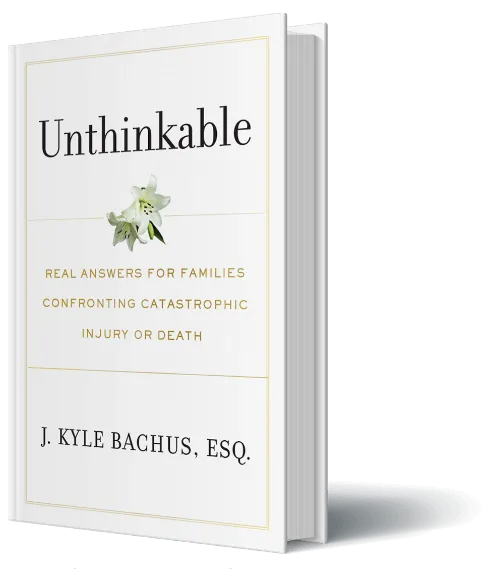
#1 Amazon Best Seller in the Legal Industry
Attorney Kyle Bachus knows first-hand how difficult it can be to suddenly lose a loved one in an accident. It’s also devastating when you or a family member suffers severe injuries that forever change your lives. Kyle wrote this book as a resource from his personal experience for families who have suffered a traumatic loss.
A Spanish edition of the book is also available, offering the same support and guidance to Spanish-speaking families.
You Deserve Fair Compensation
Don’t let the insurance companies intimidate you into accepting less than you deserve. We’re ready to fight for you.