
 Call Us!
Can I Sue For Workplace Discrimination In Colorado?
Workplace discrimination can make it impossible to do your job. An employer may even illegally terminate you or refuse to offer you a job in the first place based on a protected status. When you’re mistreated at work, you may rightfully wonder if you can sue for workplace discrimination.
Colorado has strong laws that protect victims of employment discrimination. Here’s how to know if you can sue for workplace discrimination in Colorado from our Denver wrongful termination lawyers.
WHAT OUR CLIENTS SAY
·4.7 out of 5 · 2,650+ Google reviews
“Drew was well versed in the various issues with my employer and how they took advantage of its employees. He worked hard on my case to get me a fair settlement. Without him, I wouldn’t have recovered any money that I was owed.”
Christine H.
Google review
“Hands down the best. Sara Green was very professional and very knowledgeable in employment law! She was always available to answer questions whether by phone or email. I would definitely recommend them to anyone!”
Heather J.
Google review
“Drew and Mallory have been assisting me with an employment rights case and have maintained a professional yet friendly atmosphere. It felt as though I could reach out to them whenever I needed and get a speedy, informed response.”
Brittany G.
Google review
NOTABLE SETTLEMENTS
$50M
Medical malpractice
$38M
Hospital negligence
$20M
Car crash
$15M
Wrongful death
Past results do not guarantee future outcomes.
Can I Sue for Workplace Discrimination in Colorado?
Yes, you can sue for workplace discrimination in Colorado if you are the victim of discrimination. You’re the victim of discrimination in Colorado if your employer takes an adverse action, makes the work environment unmanageable, or otherwise treats you differently because of a protected class. In Colorado, the protected classes include race, sexual orientation, and other groups. All Colorado employees have rights.
Does Colorado Have Anti-Discrimination Laws?
Yes, Colorado has anti-discrimination laws. It’s illegal for an employer to discriminate against any employee based on a protected characteristic. When an employee believes that they’re the victim of discrimination, the Colorado Civil Rights Division and the Equal Employment Opportunity Commission can step in to enforce the law. The victim may also receive damages in the form of financial compensation.
How To File A Workplace Discrimination Lawsuit In Colorado
If you believe you’ve been discriminated against at work in Colorado, you have the right to file a claim under state and federal law. Here’s how the process works and what you need to know:
- You have been discriminated against. Discrimination can be any kind of retaliation, disparate treatment, demotion, or firing. A hostile work environment can also be retaliation.
- The discrimination is based on a protected characteristic. Colorado and federal law both define protected categories. Employers can treat employees and applicants differently, but they can’t discriminate against them based on defined, protected characteristics.
- File with the Right Agency
If you believe you’ve been discriminated against at work, you can file a complaint with the appropriate agency:
- Colorado Civil Rights Division (CCRD): Colorado’s state law (CADA) applies to all employers, regardless of size, with a few limited exceptions. This means that even if your employer has fewer than 15 employees, you can still file with the CCRD. For full details, you can refer to the CADA guidelines.
- Equal Employment Opportunity Commission (EEOC): Federal law, including Title VII and the ADA, typically applies to employers with 15 or more employees (20 or more for age discrimination). If that applies to you, your complaint will go through the EEOC.
- File Within the Required Timeframe
Recent changes under HB 22-1367 have extended the time for filing certain employment discrimination claims with the Colorado Civil Rights Division (CCRD). As of this bill, the filing deadline is now 300 days from the date of the discriminatory act, aligning it with the federal timeframe. This change also includes adjustments to definitions (for example, employees now include domestic service workers).
- You now have 300 days to file with the CCRD, rather than the previous 180-day limit.
- For the EEOC, the filing deadline remains 300 days.
- Government Investigation and Notice of Rights
Once you file a complaint, the government agency will investigate your case. After completing the investigation, they will issue one of the following:
- Dismissal and Notice of Rights, or
- Notice of Right to Sue
This is a crucial step – without this notice, you cannot move forward with your lawsuit.
- Act Quickly After Receiving Your Notice
Once you receive your Dismissal and Notice of Rights or Notice of Right to Sue, you have 90 days to file your lawsuit in court. Be sure to act promptly to ensure you don’t miss this important deadline.
What Are the Protected Classes in Colorado?
The protected classes in Colorado are:
- Race
- Color
- Religion
- Creed
- National origin
- Ancestry
- Sex
- Age
- Sexual orientation
- Physical disability
- Mental disability
If you’re the victim of employment discrimination based on a protected class, you may file a complaint and bring a claim for compensation.
What Is Colorado’s Anti-Discrimination Act?
Colorado’s Anti-Discrimination Act (CADA), found in C.R.S. 24-34-401, prohibits discrimination in employment, housing, and public accommodations based on race, color, sex, disability, sexual orientation, gender identity, religion, age, and more.
- The Colorado Sexual Orientation Employment Discrimination Act, now part of CADA, specifically safeguards against discrimination based on sexual orientation and gender identity.
- Recent updates, like HB25-1239 (May 2025), strengthen protections and extend filing deadlines, particularly for individuals with disabilities.
- Additionally, federal laws, such as Title VII of the Civil Rights Act, the Americans with Disabilities Act (ADA), and the Age Discrimination in Employment Act (ADEA), also provide critical protections.
Recent Legal Updates On Employment Discrimination
It’s important to stay informed about the latest changes to employment discrimination laws. Below are some key updates:
- HB22-1367 (Effective August 10, 2022) The HB22-1367 bill, effective August 10, 2022, introduced several significant changes. These include extending the filing deadline for discrimination claims to 300 days, expanding the definition of “employee” to include domestic workers, and providing broader remedies, particularly in age discrimination cases. The bill also increased the time the Colorado Civil Rights Division (CCRD) has to investigate claims.
- HB25-1239 (Enacted May 2025) The HB25-1239 bill, enacted in May 2025, strengthens the Colorado Anti-Discrimination Act (CADA) by extending filing deadlines for public accommodation claims and advertising. It also consolidates remedies for individuals with disabilities and clarifies the types of damages available for discrimination claims.
- HB25-1312 (Signed in 2025, Effective October 1, 2026) – The HB25-1312 bill,signed into law in 2025 and set to take full effect on October 1, 2026, clarifies important aspects of gender expression rights in the workplace, including the right to use a chosen name and preferred pronouns.
Types of Employment Discrimination in Colorado
The types of employment discrimination in Colorado include:
- Intimidation
- Threats
- Harassment
- Coercion
- Blacklisting
- Damage
- Demotion
- Refusal to hire
- Termination
- Making life difficult at work
- Changing the schedule as a punishment
- Treating one employee different than others
What Constitutes a Hostile Work Environment in Colorado?
In Colorado, a hostile work environment is an environment that’s difficult or uncomfortable to work in. It might be intimidating or retaliatory. Whether a work environment is hostile depends on the specific situation. It’s a question of fact. The standard is whether a reasonable person would find the environment hostile.
Why Choose Our Employment Law Firm?
Bachus & Schanker is led by top-rated employment law attorneys recognized among the best in Colorado. With decades of experience and thousands of cases handled within Colorado and nationwide, our team brings a proven track record of results to every case. They have represented employees in cases involving workplace discrimination, wrongful termination, and violations of the Colorado Anti-Discrimination Act across Colorado and nationwide.
At our firm, hands-on case management and personalized attention are central to how cases are handled. Attorneys remain directly involved throughout the process, with a focus on responsiveness, confidentiality, and clear communication at every stage of the case.
The benefits of working with our legal team include:
- Workplace discrimination and employment law cases taken on a contingency fee basis – no legal fees unless we win your case
- Support of our specialized victim advocates team
- Personalized attention from attorneys who understand Colorado employment and civil rights law
- Proven track record of maximizing settlements by holding employers accountable for unfair and illegal workplace practices
- Experience handling complex litigation in Colorado and across the United States
When you need experienced legal representation to protect your career and secure justice for workplace mistreatment, choose Bachus & Schanker, recognized as some of the best employment lawyers in Colorado.




















What Can I Win In A Workplace Discrimination Case In Colorado?
In a Colorado workplace discrimination case, you may be entitled to several forms of compensation, depending on the facts of your case. These include:
- Economic Damages: These are meant to compensate you for lost wages, benefits, and other earnings you would have received had the discrimination not occurred. For more on economic damages, see the Colorado Civil Rights Division and how they apply to workplace discrimination.
- Non-Economic Damages: These are awarded for emotional distress, mental anguish, and other non-tangible losses. The amount awarded can vary, but Colorado law allows for the recovery of these damages depending on the severity of the discrimination. Learn more about what constitutes non-economic damages in Colorado law.
- Punitive Damages: In cases where the employer’s actions were especially malicious or reckless, the court may award punitive damages to punish the employer and deter future discriminatory conduct. There are caps on punitive damages, which depend on the size of the employer. Federal guidelines for these caps can be found through the EEOC.
Is It Always Workplace Discrimination to Treat Someone With a Disability Differently?
No, it’s not always workplace discrimination to treat someone with a disability differently in the workplace. If a disability prevents someone from doing the essential duties of the job, the employer doesn’t have to hire the person for the job. The employer must provide reasonable accommodations to enable a person with a disability to do a job, but they don’t have to employ someone who can’t perform the essential functions of a job even if it’s because of a disability.
Contact Our Colorado Attorneys for Wrongful Termination
Have you suffered from workplace discrimination or wrongful termination? Are you wondering what your legal rights are as an employee? At Bachus & Schanker, LLC, we’re Denver wrongful termination lawyers. We’re passionate about helping you exercise your rights.
If you think that you might be the victim of workplace discrimination, contact us right away. We’ll help you take all of the necessary steps to get the justice that you deserve. Your call is free and confidential. We are conveniently located at 5 Colorado locations near you in Denver, Fort Collins, Colorado Springs, Aurora, and Englewood. Our attorneys are ready to serve you and fight for the compensation you deserve. Call us today.
Legal Support Across Colorado and Nationwide
Serving Clients Nationwide
Related Employment Law Resources

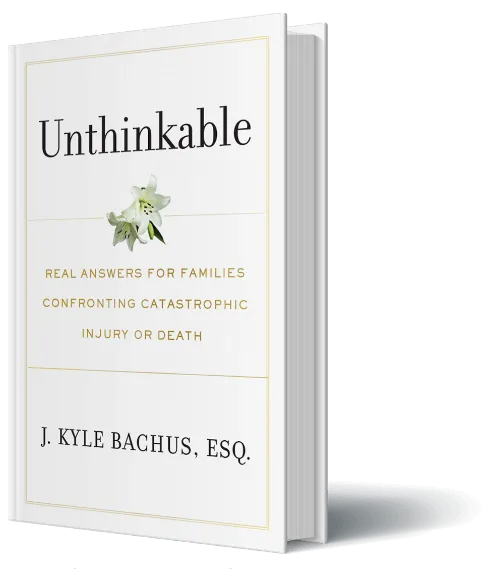
#1 Amazon Best Seller in the Legal Industry
Attorney Kyle Bachus knows first-hand how difficult it can be to suddenly lose a loved one in an accident. It’s also devastating when you or a family member suffers severe injuries that forever change your lives. Kyle wrote this book as a resource from his personal experience for families who have suffered a traumatic loss.
A Spanish edition of the book is also available, offering the same support and guidance to Spanish-speaking families.
You Deserve Fair Compensation
Don’t let the insurance companies intimidate you into accepting less than you deserve. We’re ready to fight for you.