
 Call Us!
Car Accidents In Colorado Springs: Most Common Locations And How To Stay Safe
Driving in Colorado Springs is generally safe. The city is actively implementing safety measures, which have resulted in a noteworthy decrease in the number of car accidents and fatalities over recent years. Nonetheless, there are still some areas that report high accident rates. Therefore, you need to be extra cautious when in such locations.
If a negligent driver hits you, causing you to sustain injuries, you can be eligible to file a claim against them. They may be required to compensate you for the damages you suffer.
At Bachus & Schanker, we help victims fight for their rights. If you are involved in a car accident, our Colorado Springs car accident attorney will help you obtain more information about the crash, and establish the best way to approach your case.
Most Common Locations Of Car Accidents In Colorado Springs
The following are roads and intersections that have reported an alarming number of car accidents over the years:
Woodmen Road
Running along the length of Colorado Springs’ northern side, Woodmen Road is considered one of the city’s busy roads connecting Interstate 25 (I-25) on the west, Academy Boulevard, Powers Boulevard, and US-24 on the east. Since it provides access to several residential subdivisions and businesses, the road has a problem of heavy congestion, especially during rush hours.
The high traffic volume can increase the risk of accidents, with a large number being recorded at the intersection of I-25. The high volume of traffic moving at high speeds in this location has been a primary cause of rear-end and sideswipe collisions.
A driver, particularly one unfamiliar with the area, can be confused and make a mistake, such as poor merging, causing an accident. Speeding, failing to yield, and distracted driving are also common causes of crashes on Woodmen Road.
Garden Of The Gods Road
Another area on I-25 that reports a high number of accidents is the exit for the Garden of the Gods Road. The high traffic volume on 1-25, with some vehicles entering the Garden of the Gods Road at high speeds, increases the chances of an accident occurring. Rear-end and sideswipe accidents have been reported in merge areas on this road.
Renowned for its scenic drive, the Garden of the Gods has various pinch points (narrow sections or bottlenecks on the road that restrict traffic flow, resulting in congestion). For instance, there is a pinch point in the area between Balanced Rock and Steamboat Rock. The area is known for having visitors stopping to take photos, which leads to congestion.
Drivers are also more likely to be distracted on this scenic drive. A driver around you may be staring at the natural features. If you are driving ahead of such a driver and slow down to let visitors cross, they may not see your brake lights. Consequently, they may end up crashing into your vehicle.
Other exit points on I-25 that can be dangerous include the intersections of I-25 with Cimmaron Street, S. Nevada Avenue/S. Tejon Street, and Lake Avenue/S. Circle Drive.
The I-25 has several construction projects to improve its safety. However, some of these projects have also increased the likelihood of crashes. For example, lane closures and changes are making it hard for drivers to navigate the roads. Lowered speed limits have also been reported to contribute to frustration in some drivers, leading to aggressive behaviors.
When driving on Woodmen Road, Garden of Gods Road, and the I-25 in general, you need to observe speed limits and pay attention to the road. When you want to exit I-25 at a merge point, signal your intention soon (at least 200-300 feet before the exit ramp). Maintain your speed as you approach the ramp, then merge smoothly. Be aware of your surroundings when moving toward the exit. Once on the exit ramp, adjust your speed to match that of the existing traffic.
When you want to enter the main highway, move to the proper lane on the on-ramp, signal your intention, and yield to vehicles already on the highway. When safe to enter, use the acceleration lane to adjust your speed to match that of other cars.





















Powers Boulevard
Also called Colorado Highway 21, Powers Boulevard, which extends from Colorado Highway 16 to Colorado Highway 83, is a major north-south thoroughfare. It allows access to numerous destinations, including commercial and residential ones.
This road functions as a bypass to reduce traffic congestion on I-25. However, with the population growth of the city, the road has heavy traffic volumes, especially the section from Airport Road to Mesa Ridge Parkway.
Congestion can reduce reaction time, particularly when drivers tailgate one another. If a leading driver suddenly slows down or stops, the following one may not have enough space or time to respond safely, which can result in a rear-end collision.
Construction projects are also not uncommon on Powers Blvd. And such projects always lead to a reduction of speed limits. For instance, during the Powers Boulevard and Research Parkway improvement project, the speed limit was reduced to 45 mph. While generally safe, reducing speed limits can create other hazardous conditions. Drivers may tailgate, increasing the risk of rear-end collisions, or wait until the last minute to change lanes in construction zones, creating confusion that can lead to sideswipe and rear-end collisions.
Further, the temporary changes to lane configurations and traffic flow can lead to human errors before drivers adapt.
Some intersections with Powers Blvd have also been identified as dangerous. These include intersections with Briargate Parkway, Palmer Park Boulevard, Woodmen Road, Research Parkway, Stetson Hills Boulevard, Barnes Road, Stetson Hills Boulevard, Constitution Avenue, Platte Avenue, and S. Carefree Circle.
Examples of factors that contribute to accidents in these areas are high traffic volume, complexity of intersection layout, speeding, failing to yield, and distracted driving. The common accidents reported in these areas are broadside (T-bone) and rear-end collisions.
You can avoid being involved in Colorado Springs traffic accidents when on Powers Blvd. Firstly, pay attention to the road and be aware of the surroundings. Moreover, maintain a safe following distance to have enough space and time to react safely. If you are not familiar with Powers Blvd, carefully plan your route to avoid potential delays that can endanger you.
On Powers Blvd, the lane farthest to the right is often used by slower-moving traffic, including larger vehicles. Thus, use it when entering or exiting the road and merging. Always yield to road users who have the right of way, and watch out for potential hazards, especially when in a construction zone.
How Can We Help You?
If you are injured in an accident in Colorado Springs, seeking legal guidance is critical in protecting your rights. You need to understand Colorado car accident laws to make informed decisions. For instance, not observing the statute of limitations can affect your eligibility for filing a claim.
Bachus & Schanker is dedicated to helping people hit by negligent drivers receive the compensation they deserve.
Legal Support Across Colorado and Nationwide
Serving Clients Nationwide
Related Car Accident Resources














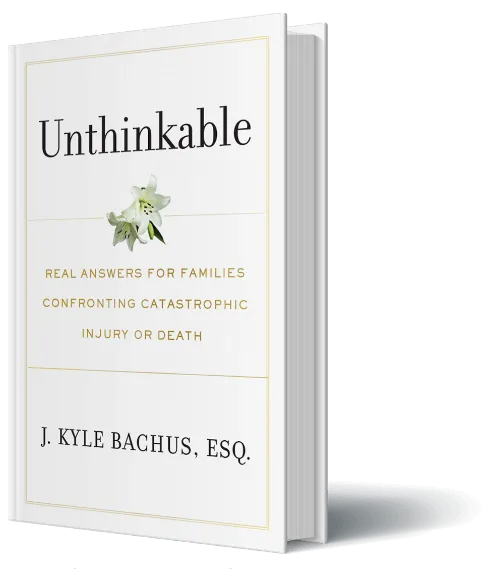
#1 Amazon Best Seller in the Legal Industry
Attorney Kyle Bachus knows first-hand how difficult it can be to suddenly lose a loved one in an accident. It’s also devastating when you or a family member suffers severe injuries that forever change your lives. Kyle wrote this book as a resource from his personal experience for families who have suffered a traumatic loss.
A Spanish edition of the book is also available, offering the same support and guidance to Spanish-speaking families.
You Deserve Fair Compensation
Don’t let the insurance companies intimidate you into accepting less than you deserve. We’re ready to fight for you.