
 Call Us!
Colorado Bicycle Helmet Laws
Bike riding is a popular activity for locals and tourists alike. From riding on mountain trails to navigating busy Denver streets, there are plenty of opportunities to enjoy the outdoors while riding bikes.
Even though there are currently no mandatory Colorado bicycle helmet laws, there are some exceptions, depending on where you are cycling. Even when a helmet is not required, it is still highly recommended to wear one to help reduce the severity of potentially severe injuries in a bicycle accident.
If you or a loved one has been injured in a bicycle accident, our Colorado bicycle accident lawyers can help answer your questions, provide sound legal advice, and make recommendations on how to proceed with filing your injury claim.
Are Bicyclists Required To Wear Helmets In Colorado?
Colorado’s bicycle laws do not require cyclists of any age to wear helmets when riding a traditional bicycle. However, different counties and cities can have their own requirements. For example, in Boulder, all bike riders under 18 are required to wear a helmet. While in Denver, bicycle safety tips recommend wearing a helmet, even though it is not mandatory.
Another exception is for riding Class 3 electric-assisted bicycles. There is a state law that requires anyone under the age of 18 operating or riding as a passenger to wear a helmet. The helmet must conform to the design and specification established by the U.S. Consumer Product Safety Commission. The individual must also secure and wear the helmet properly.
Do Different Helmet Rules Apply To Children And Adults?
As there is no Colorado bike helmet law, there are no differences between the rules for children and adults when riding a traditional bike, as helmets are not mandatory.
However, certain counties and cities, such as Boulder, require children to wear helmets, while adults do not.
Those aged 16 and 17 are required statewide to wear a helmet when operating or riding on a Class 3 electric-assisted bicycle, but again, adults are not.
What Are The Benefits Of Wearing A Bicycle Helmet?
Over 130,000 cyclists are injured annually, with the IIHS reporting 1,155 dying from bicycle accidents. 90% of bicycle fatalities in 2023 were people aged 20 or older.
According to the Cleveland Clinic, some of the benefits of wearing a helmet include:
- The single most effective way to prevent head and brain injuries.
- Reduces severe head injuries by 60%.
- Reduces TBIs (traumatic brain injuries) by 53%.
- Reduced the number of cyclist fatalities by 34%.
Other benefits gained when using a helmet are:
- Reduces the risk of facial injuries.
- Reduces the risk of mouth and jaw injuries.
- Reduces the risk of neck and spinal cord injuries.
How Can Helmet Use Affect A Bicycle Accident Claim?
Even though there is no Colorado bicycle helmet law, insurance companies are notorious for attempting to dispute injury claims when a helmet is not worn. They base their dispute on the fact that had the cyclist been wearing a helmet, their injuries would not have been as severe.
They also attempt to shift blame, claiming the cyclist was partially at fault under the state’s modified comparative negligence system because they chose not to wear a helmet.
If they can establish you were partially at fault for the accident, your total settlement is reduced.





















Can An Injured Cyclist Recover Compensation If They Were Not Wearing A Helmet?
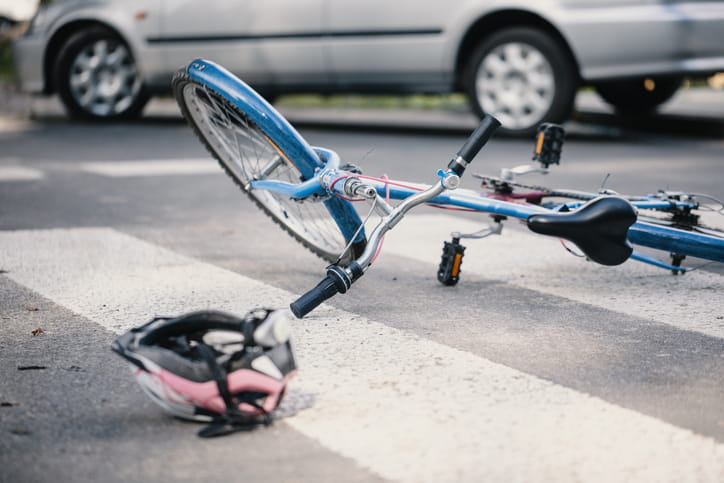
Since there are no mandatory bicycle helmet laws in Colorado, you can recover compensation for your injuries. When another person is responsible for the accident, you can file a claim against them and their insurance provider.
In cases where you injured yourself, like you ran into a parked car or fell off the bike, you can file a claim against your own auto or health insurance, depending on your coverage.
What Are The Most Common Injuries In Bicycle Accidents?
Some of the most common injuries experienced from bicycle accidents include:
- Road rash
- Cuts, scrapes, bruising
- Fractured and broken bones
- Neck injuries
- Soft tissue/muscle injuries
- TBIs
- Concusions
- Head and facial injuries
- Spinal cord injuries
- Internal injuries
How Is Fault Determined In A Colorado Bicycle Accident Case?
Fault is determined by reviewing the evidence in the accident, police reports, traffic laws, witness statements, personal property damage, and the extent of injuries. If there is a traffic cam or nearby security cam footage available, it is also used to help determine who was negligent.
Liability is not automatically applied to a vehicle driver, unless it can be clearly established that their actions were the cause of the crash and your injuries.
For example, you approach an intersection with a green light and intend to go through the intersection. A car is also approaching next to you, but the driver intends to turn right. Due to a lack of driver awareness, they fail to yield the right-of-way and hit you.
In this instance, the driver would be deemed at fault. However, if you saw them and had time to stop but did not, the insurance company could claim that you could be considered partially at fault.
What Steps Should You Take After A Bicycle Accident In Colorado?
After a bicycle accident, your priority is to ensure your safety and well-being. Depending on where you were hit and the extent of your injuries, you should:
- Call 911: Report the accident and request medical assistance.
- Prevent further injuries: If you are on the ground and severely injured, do not attempt to move. If your injuries are less severe, you should move out of traffic, but only if it will not make your injuries worse.
- Document the crash: Take pictures and videos of your injuries, the vehicle and license plate, the crash location, road conditions, and damage to your bike.
- Gather information: Exchange information with the driver, including their name, phone number, address, and insurance details.
- Obtain contact details from witnesses: Ask for their names and phone numbers.
- Never admit fault: Do not apologize for the accident or admit you were at fault.
- Take your injuries seriously: Do not downplay the seriousness of your injuries or refuse medical care.
- Preserve all evidence: Do not repair your bike. Keep all clothing and do not wash it. Keep your helmet if you were wearing one.
- Obtain legal advice: Contact a Colorado bicycle accident attorney for a free consultation before you speak to the insurance company to ensure you protect your rights.
How Can Bachus & Schanker Help Injured Cyclists Pursue Compensation After An Accident?
Bachus & Schanker has decades of experience helping injured cyclists in the state. Some of the reasons to consider our law firm include:
- Multiple office locations throughout the state.
- Free case evaluation and consultation.
- Cases taken on a contingency fee basis, meaning there are no legal fees owed until after we win your case.
- Personalized attention beyond legal representation.
- Proven track record of maximum settlements.
- Actual trial experience with positive verdicts for our clients.
- Free access to our Victim’s Advocates team for catastrophic and wrongful death claims.
- Dedicated lawyer and legal team assigned to your case.
Find out your legal rights, options, and potential compensation with a free case evaluation today.
Legal Support Across Colorado and Nationwide
Serving Clients Nationwide
Related Bicycle Accident Resources




#1 Amazon Best Seller in the Legal Industry
Attorney Kyle Bachus knows first-hand how difficult it can be to suddenly lose a loved one in an accident. It’s also devastating when you or a family member suffers severe injuries that forever change your lives. Kyle wrote this book as a resource from his personal experience for families who have suffered a traumatic loss.
A Spanish edition of the book is also available, offering the same support and guidance to Spanish-speaking families.

You Deserve Fair Compensation
Don’t let the insurance companies intimidate you into accepting less than you deserve. We’re ready to fight for you.