
 Call Us!
Colorado Best Truck Accident Lawyers
Accidents with semi-trucks can be life-changing. If you were injured in Colorado, our top-rated truck accident attorneys are here for you. We are available 24/7 and can meet anywhere. With offices in Denver, Fort Collins, Aurora, Englewood, and Colorado Springs, we help injury victims pursue the compensation they deserve.
WHAT OUR CLIENTS SAY
·4.7 out of 5 · 2,650+ Google reviews
“I was recommended to Bachus and Schanker due to being involved in a recent accident. They have been so helpful, professional, and I absolutely would recommend them.”
Heather K.
Google review
“I called them the day of my accident. The whole process I was informed of each step along the way. My attorney always kept in contact and was very attentive.”
Gunnar B.
Google review
“At the time of my accident I didn’t know what route to go. They were there for me until the end, very professional and always handling things in a timely matter.”
Geneva J.
Google review
“They handled my accident claim with care, kept me updated every step of the way, and made the entire process so much less stressful.”
Ajay
Google review
“The staff always explained everything very clearly and I felt that they cared about my needs and what had happened to me in my car accident.”
Stephen C.
Google review
NOTABLE SETTLEMENTS
$20M
Car crash
$15M
Car crash
$11.5M
Auto accident
$4.7M
Truck accident
Past results do not guarantee future outcomes.
What Is A Truck Accident Claim?
Here at Bachus & Schanker, we understand that motor vehicle accidents, especially truck accidents, can be a traumatic and stressful experience for all victims involved. Not only do victims have to worry about recovering from their physical injuries, but they also have to worry about handling the legal aspects of a truck accident, such as holding the negligent driver liable and recovering financial damages.
A truck accident claim is a legal process for determining who is at fault for a truck accident. The legal system decides who should pay damages for the accident and what they should pay. Victims who believe they deserve compensation bring the claim to ask for an award of financial payment for injuries, pain, and suffering.
Remember, you don’t have to do this alone. Our legal team is eager to provide legal expertise to ensure you achieve financial compensation and legal justice for your truck accident claim, allowing you to focus all your energy on your recovery and medical treatment. Having a semi-truck accident lawyer on your side can help you get the maximum settlement for your claim.
How Can Our Colorado Semi Truck Accident Lawyers Help?
The Colorado truck accident attorneys at Bachus & Schanker are dedicated to helping injured individuals exercise their rights and receive the compensation they deserve.
We provide complete support and legal representation to successfully bring your claim, including:
- Investigation: Our attorneys conduct a thorough investigation of your truck accident, during which we collect all of the relevant evidence necessary to build a strong legal argument on your behalf.
- Documentation: Due to our extensive legal experience, our attorneys understand all of the necessary documentation required to move through the Colorado judicial process. From filing your initial summons and complaint with the court to filing proper motions against the opposing parties, let us handle all legal documentation related to your claim.
- Valuation of damages: As experienced personal injury attorneys, we understand how to properly calculate damages for each individual case. Damages can be confusing and difficult to calculate, so having an expert do it on your behalf will ensure you are seeking proper compensation for your injuries.
- Claims processing: The legal process can be daunting for anyone not familiar with how it works. Our attorneys will handle any necessary claims processing on your behalf, so you don’t have to.
- Settlement negotiation: Having an experienced attorney represent you in settlement negotiations with the opposing counsel and insurance companies is essential to your success.
After any vehicle accident, you should never let the insurance companies intimidate you into accepting less than you deserve. Let us handle your legal claim so you can focus on healing.
Why Choose Our Truck Accident Law Firm?
Bachus & Schanker is led by top-rated truck accident attorneys recognized among the best in Colorado. With decades of experience and thousands of cases handled within Colorado and nationwide, our team brings a proven track record of results to every case. They have represented clients in complex commercial vehicle collisions and catastrophic truck accidents across Colorado and nationwide.
At our firm, hands-on case management and personalized attention are central to how cases are handled. Attorneys remain directly involved throughout the process, with a focus on responsiveness, attention to detail, and clear communication at every stage of the case.
The benefits of working with our legal team include:
- Truck accident injury cases taken on a contingency fee basis – no legal fees unless we win your case
- Support of our victim advocates team
- Personalized attention from attorneys who understand truck accidents law
- Proven track record of maximizing settlements and verdicts for clients
- Experience handling cases in Colorado and across the United States
When you need experienced legal representation to hold trucking companies accountable, choose Bachus & Schanker, recognized as some of the best truck accident lawyers in Colorado.


















What Are The Common Causes Of Truck Accidents?
According to the Federal Motor Carrier Safety Administration (FMCSA), driver error is the leading cause of truck accidents, accounting for 87% of crashes. Vehicle defects account for another 10% of crashes, and environmental factors lead to 3% of truck crashes.
While there are plenty of different ways in which a truck accident can be caused, certain causes of accidents are more common than others. Common causes of truck accidents include:
- Speeding
- Driving too fast for the conditions
- Weather
- Heavy, unsecured load
- Debris
- Drunk driving, driving under the influence
- Failing to yield; improper lane change
- Careless driving, reckless driving
- Texting while driving; distracted driving
- Inadequate sleep, fatigue
- Poor training to drive a large truck
- Running a stop sign or stoplight
- Vehicle manufacturing defect
- Failing to maintain the truck in a safe condition
Most crashes can be traced to negligence or driving error. Negligence is defined by Nolo as the failure to use reasonable care, resulting in injury or property damage to another. Negligence is a common cause of personal injury cases such as motor vehicle accidents and truck accidents. If a truck accident victim can establish that the truck driver was negligent, they will likely be successful in their truck accident claims.
In order to be successful in establishing negligence, the plaintiff must establish that the truck driver owed a duty of care to the plaintiff, the truck driver breached that duty, the plaintiff was injured, and the truck driver’s negligence was the cause of the plaintiff’s injury.
Given that truck drivers have a duty to exercise reasonable care in order to avoid a truck accident, if a plaintiff can show that their injuries were the result of the driver’s failure to exercise such reasonable care, they will likely be successful in their truck accident claim.
Big rig drivers are at a high risk of fatigue because they spend long hours on the road. However, federal regulations limit truck drivers’ drive time to prevent distracted driving and potential tractor-trailer or semi-truck accidents.
A victim who suffers injury due to the accident may claim financial compensation for their damages.
What Should You Do Following A Truck Accident?
Like any motor vehicle accident, there are certain steps that the victims should take following a truck accident. These specific steps ensure that the victim is not only safe but also setting themselves up to have a successful legal claim against the negligent truck driver.
Following a truck accident, you should:
- Make sure you’re out of harm’s way — move off the roadway
- Call 911 — injuries may be severe even if you don’t realize it yet
- Check on others and help with first aid until someone with more experience can take over
- Receive medical attention for your injuries
- Take photographs and video — record the accident scene, damage to the vehicle, debris, and injuries
- Get the information for the other driver, including name, address, phone number, license plate, and vehicle information; also get their insurance policy information and their employer details
- Record names, addresses, and phone numbers of other witnesses
- Don’t admit fault or say too much at the accident scene — you don’t have all the information just yet
- Continue to receive medical care as directed
Victims should also speak with an attorney as soon as possible. A truck accident lawyer can take over right away with reporting the accident to insurance, providing information, and starting your claim.
What Are Common Types Of Truck Accident Injuries?
Common truck accident injuries include:
- Broken bones
- Traumatic brain injury/concussion
- Spinal cord injury
- Paralysis
- Whiplash
- Organ damage/internal injuries/seat belt injuries
- Cuts/lacerations
- Bruising/rib damage
- Wrongful death
Truck accident injuries are different from car accident injuries in their severity. Standard passenger motor vehicles are no match for multi-ton semi-trucks, big rigs, or trailer sway accidents.
Truck drivers may have limited visibility, making it difficult for them to see and evade dangers on the road. This may result in crashes involving more weight and higher speeds than car accidents.
What Damages Can You Recover In Truck Accident Cases?
In personal injury cases such as truck accident cases, economic damages, as well as non-economic damages, are almost always available to the victim. These damages are nearly precisely as they sound — economic damages consist of any financial damages a victim has incurred due to the truck accident. In contrast, non-economic damages constitute damages that are not measurable by a dollar amount.
Some of the most common economic and non-economic damages that you can recover in a truck accident case include:
- Medical bills
- Prescription medication
- Medical devices
- Mental health care
- Burial expenses
- Lost income, short-term and long-term losses
- Pain and suffering
- Emotional anguish
- Costs for hiring help around the house
- Vehicle and other personal property damage
- Punitive damages (in some cases)
The damages a victim receives reflect their individual losses, including economic and non-economic ones.
Financial losses include bills, lost income, and property damage caused by the accident. Pain and suffering compensation depends on the severity of injuries. To receive damages, the victim must identify and value them and then make a legal claim.
Who Is Responsible For A Commercial Truck Accident?
The truck driver may be responsible for a commercial truck accident. But they aren’t the only party that may be liable to pay damages. Others who may be held accountable for the truck crash may include:
- The truck driver’s employer
- The trucking company that owns the truck
- The vehicle manufacturer
- The government entity responsible for designing and maintaining the road
To confidently determine the responsible party for a commercial truck accident, it’s essential to retain an attorney to analyze the case. Once the responsible party is established, you can move forward with seeking compensation and justice for your damages. In some situations, there may be multiple responsible parties, in which case your attorney will likely have to calculate to what extent each defendant has contributed to your damages.
Fault can be a complex question. Don’t make assumptions about liability or your right to a financial recovery without speaking to a Denver truck accident attorney. Let our team help you fully investigate to see who is at fault and determine the best path to claiming monetary compensation.
Support For Victims Of Truck Accidents
Whether you have some experience with personal injury claims or this is the first legal situation you have ever experienced, our skilled Colorado truck accident attorneys at Bachus & Schanker will be able to provide you with all the tools you need for success. Not only are our legal skills unmatched, but we have a deep passion for ensuring our clients receive justice for these traumatic truck accident claims.
Regardless of the extent of your injuries and damages, our legal team puts the same level of energy, passion, and care into each case that comes to our firm. We understand that being involved in a semi-truck accident is a difficult experience regardless of the aftermath, and we encourage you to seek our advice during a free legal consultation.
Let us guide you to legal success so you can put your time and energy into healing, as the road to recovery can often be a long and difficult one in and of itself.
After a trucking accident, we know you have questions: How will I pay my bills? Can I sue the responsible party? Is there a truck accident lawyer near me I can trust?
We’ve built our entire law firm to help people like you. It’s our goal to handle everything that needs to be done so that you receive the financial compensation you deserve. Our truck accident lawyers specialize in truck accident claims, and we have the resources to fight for justice for you.
Free Consultation – Colorado’s Best Truck Accident Attorney
If you were injured in a truck accident our victims advocacy team and truck accident specialists are here to guide you every step of the way. We are available 24/7 and can meet wherever is most convenient for you at your home, virtually, in the hospital, or at any of our Colorado offices including Denver, Fort Collins, Aurora, Englewood, and Colorado Springs. Your consultation is always free and focused on helping you understand your legal options, pursue the compensation you deserve, and begin your recovery with trusted support.
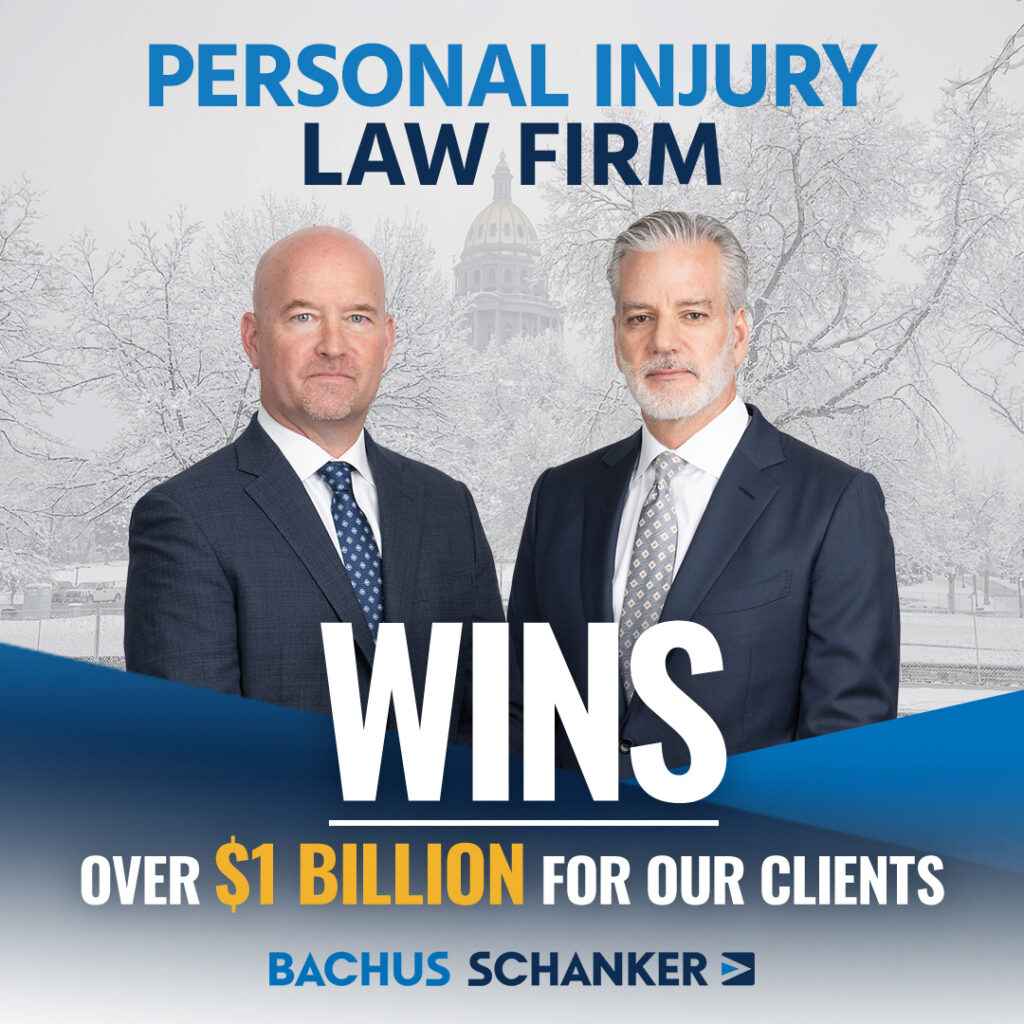
Kyle Bachus & Darin Schanker
Top-rated Colorado-based personal injury lawyers and co-founders of Bachus & Schanker, Kyle Bachus and Darin Schanker, have represented personal injury victims and families across Colorado for more than 30 years, earning a reputation as some of the best civil litigation attorneys for serious injury cases. The firm is structured to handle motor vehicle accidents, premises liability, catastrophic injuries, and wrongful death cases of all types and severities, with a team organized to provide focused support and guidance throughout the entire legal process. Kyle and Darin guide victims through the system with the support of a dedicated team of personal injury specialists and Victim Advocates, ensuring care and advocacy from start to finish so clients can stay focused on healing.
Their firm is widely recognized for legal excellence, ethics, and results. Bachus & Schanker has earned distinctions, including:
- Membership in the Million Dollar and Multi-Million Dollar Advocates Forum®, one of the most prestigious groups of trial lawyers in the United States.
- Top One Percent by the National Association of Distinguished Counsel.
- Top 10 Personal Injury Attorneys in Colorado by America’s Best Advocates.
- Extraordinary Attorneys for Personal Injury – 2025 by Law Leaders.
- Best of the Best: Top 10 Personal Injury Attorneys in Colorado – 2025.
- ColoradoBiz Media 2026 Colorado 500 Power List
Additional recognitions include honors from Super Lawyers, Lawdragon 500 Leading Plaintiffs’ Lawyers, 5280 Magazine Top Lawyers, Martindale-Hubbell AV ratings, Lead Counsel verification, American Association for Justice leadership, and A+ Better Business Bureau ratings across Colorado. Collectively, their attorneys have recovered over $1 billion for injury victims.
Beyond the courtroom, they support the Colorado community through the Bachus & Schanker Cares Foundation, which sponsors local nonprofits and initiatives. See Kyle Bachus and Darin Schanker on Super Lawyers.
Notable Settlement Results
$20 Million
$15 Million
$7 Million
Legal Support Across Colorado and Nationwide
Serving Clients Nationwide
TRUCK ACCIDENTS LEGAL REVIEWS
Related Truck Accidents Resources



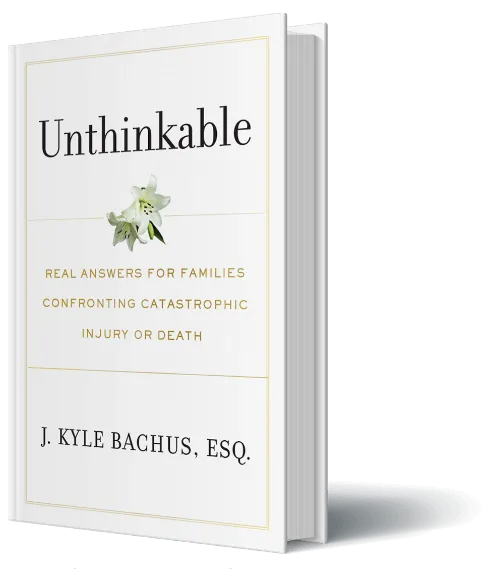
#1 Amazon Best Seller in the Legal Industry
Attorney Kyle Bachus knows first-hand how difficult it can be to suddenly lose a loved one in an accident. It’s also devastating when you or a family member suffers severe injuries that forever change your lives. Kyle wrote this book as a resource from his personal experience for families who have suffered a traumatic loss.
A Spanish edition of the book is also available, offering the same support and guidance to Spanish-speaking families.
You Deserve Fair Compensation
Don’t let the insurance companies intimidate you into accepting less than you deserve. We’re ready to fight for you.