Call Us!
Unthinkable: Police Psychology With Dr. Miller
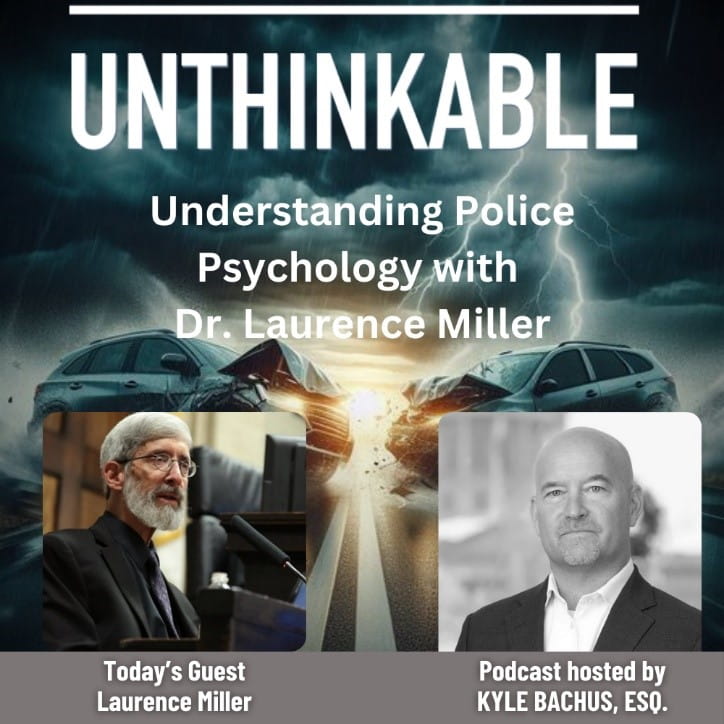
Understanding Police Psychology with Dr. Laurence Miller
In this compelling episode of Unthinkable, personal injury attorney Kyle Bachus sits down with Dr. Laurence Miller, a neuropsychologist specializing in police and forensic psychology. Dr. Miller offers a rare glimpse into the split-second decisions law enforcement officers face, the mental pressures they endure, and the psychological factors influencing use-of-force incidents.
Dr. Miller explains the difference between excessive and deadly force, highlighting how good officers can sometimes make tragic errors under stress. He also discusses the importance of ongoing mental health training and early intervention when warning signs appear in police behavior. Listeners gain valuable insight into what happens behind the badge, including how bodycams and public interactions shape perceptions of policing.
Key Insights:
- Excessive vs. Deadly Force: Understanding the legal and psychological distinctions between necessary force and excessive actions.
- Split-Second Decisions: How training and perception influence officers’ rapid choices in life-threatening situations.
- Officer Stress and Competence: Why even well-trained officers can falter under pressure and how agencies can identify risks early.
- Mental Health and De-escalation: The critical role of training to reduce conflicts and improve outcomes.
- What Civilians Should Know: Best practices for interacting safely during police stops and encounters.
- The Limits of Bodycams: While helpful, video footage can’t fully capture an officer’s mindset during tense moments.

FAQ – Police Psychology and Use of Force
What’s the difference between excessive force and deadly force?
Excessive force is any use of physical action that goes beyond what’s necessary to control a situation. Deadly force is legally permitted only when an officer reasonably believes it’s necessary to stop an immediate threat to life.
Why do officers sometimes overreact in high-stress situations?
Stress, perception, and personality traits all play a role. Officers may misjudge a threat or act based on fear, not malice—especially if not properly trained or supported.
Can psychological screening predict which officers might use force improperly?
Initial screenings help filter out major mental health concerns, but they often miss nuanced traits like impulsiveness, aggression, or poor judgment under pressure.
How important is de-escalation training in policing?
Crucial. Officers who receive training in mental health response and de-escalation are better equipped to handle volatile situations without resorting to force.
What should civilians do during a police stop to stay safe?
Remain calm, avoid sudden movements, comply respectfully, and ask clear questions like, “Am I being detained?” You have rights—but how you exercise them matters.
Do bodycams always show the full story?
Bodycams are helpful tools, but they only capture visuals—not what the officer was thinking or feeling at the time. Context and perception still matter in legal reviews.
Subscribe to our podcast