
 Call Us!
Is There a Statute of Limitations on Sexual Assault?
Cases of sexual assault are some of the most under-reported crimes, not just in Colorado but throughout the nation. It’s estimated that 63% of all sexual assaults are never reported, with children being the most vulnerable group of victims not likely to report the crime.
Despite this under-reporting, cases of sexual assault continue to be some of the most rampant crimes in the nation. It’s estimated that one in five women and one in 71 men will be the victim of a rape at some point in their life. If you are the victim of sexual assault, we are so sorry that it’s happened, and please remember you are not alone in this.
A critical component of the healing journey is filing a civil claim against your abuser and any other liable party. But before you take action, it’s important to understand the statute of limitations on Colorado sexual assaults.
At the law office of Bachus & Schanker, our sexual assault lawyers understand the complexities of sexual assault cases. If you have been the unfortunate victim of a sexual assault, our team of attorneys are here to help. We can ensure your interests are represented to the fullest extent of the law.
WHAT OUR CLIENTS SAY
·4.7 out of 5 · 2,650+ Google reviews
“They treated me with respect and made my case feel manageable. I always felt listened to, and they took the time to explain what was happening so I was never left confused about the process.”
Stacy C.
Client review
“They were there for me when I needed guidance most, keeping me informed throughout the case and making sure I understood each step. I really appreciated how responsive and supportive the team was from beginning to end.”
Lori J.
Client review
“They handled my accident claim with care, kept me updated every step of the way, and made the entire process so much less stressful. Their communication was excellent, and I never felt left in the dark.”
Ajay
Google review
NOTABLE SETTLEMENTS
$50M
Medical malpractice
$38M
Hospital negligence
$20M
Car crash
$15M
Wrongful death
Past results do not guarantee future outcomes.
What Is the Legal Definition of Sexual Assault?
The term sexual assault refers to any sexual contact or behavior that a victim is subjected to without explicit consent. In Colorado, the term sexual assault is used as a general umbrella term that covers a variety of unwanted sexually charged behavior, including physical, psychological, verbal, and emotional violations that are sexual in nature.
Colorado state law breaks sexual assault law into two categories: sexual assault as defined by C.R.S. 18-3-402 and unlawful sexual contact as defined by C.R.S. 18-3-404.
The Colorado Revised Statutes details that acts, including the following, fall under the broad umbrella term of a sexual assault:
- Sexual penetration of a victim against the victim’s will. This includes circumstances where a victim is intoxicated, mentally impaired, or otherwise unable to give consent.
- An actor who is in a position of power and uses their authority to force a victim to submit to sexual acts.
- A victim is in custody of law enforcement and is subject to sexual misconduct.
- Sexual misconduct on a victim less than fifteen years of age, and the actor is at least four years older.
- Unwanted touching.
- Sexual harassment that escalates into more.
This is not a fully inclusive list of all conduct that can be considered sexual assault.
How Does Colorado Respond to Cases of Sexual Assault?
Colorado sexual assault law aims to protect victims of sexual assault through the state’s comprehensive legislation. The Division of Criminal Justice works alongside other agency partners to defend the rights of victims. If a case of sexual assault is reported to authorities, prosecutors can take criminal action against an abuser to hold them criminally responsible.
Prosecutors can choose to pursue the case in criminal court, but this is not a given. If there isn’t enough evidence, the prosecutor may not feel confident about taking on the case, which is why it’s essential to report the assault as quickly as possible. The sooner you do so, the better the chances are that there will be enough evidence to pursue a criminal case.
One statewide resource is Colorado’s SANE/SAFE Project, which helps provide medical forensic exams, educational outreach, and other support for victims and the community.
The law in Colorado has one focus — protecting victims.
Why Choose Our Sexual Assault Law Firm?
Bachus & Schanker is led by top-rated attorneys recognized among the best in Colorado. With decades of experience and thousands of cases handled within Colorado and nationwide, our team brings a proven track record of results to every case.
We have represented survivors in cases involving sexual assault, civil justice, and strict legal filing deadlines across Colorado and nationwide.
At our firm, hands-on case management and personalized attention are central to how cases are handled. Attorneys remain directly involved throughout the process, with a focus on responsiveness, attention to detail, and clear communication at every stage of the case.
The benefits of working with our legal team include:
- Sexual assault and personal injury cases taken on a contingency fee basis, meaning there are no legal fees unless we win your case.
- Support from our Victim’s Advocates team.
- Personalized attention from attorneys who understand sexual assault and survivor-centered law.
- Proven track record of maximizing settlements and meeting critical legal deadlines for survivors.
- Experience handling cases in Colorado and across the United States.
When you need experienced legal representation to seek justice and ensure your claim is filed within the statute of limitations, choose Bachus & Schanker. We are recognized as some of the best sexual assault lawyers in Colorado.
Is Sexual Assault a Felony?
Sexual assault in Colorado is a class four felony. However, there are certain circumstances where a sexual assault can rise to a more serious charge, such as a class three or class two felony.
Sexual Assault Class Four Felony
A sexual assault can fall under a class four felony when an actor rapes a victim, but there was no use of force.
Sexual Assault Class Three Felony
Class three felonies constitute sexual assaults where a victim was raped, and the following factors were present:
- The threat or use of physical force or violence.
- A victim was drugged, and a sexual assault occurred without their consent.
- There was a believable threat of imminent death, extreme pain, or serious bodily injury if they did not engage with the perpetrator’s demands.
- There was a believable threat of retaliation against the victim by the perpetrator or anyone else related to the victim.
Sexual Assault Class Two Felony
A class two felony occurs when there is a sexual assault such as a rape, and the rapist was aided or abetted by another individual or multiple individuals.
Class three felonies will include actions such as:
- One or more individuals engaged in the rape (gang rape).
- The perpetrator was armed or appeared to be armed with a deadly weapon.
- A victim suffered a bodily injury.




















What Is the Punishment for Sexual Assault in Colorado?
The punishments for sexual assault in Colorado are outlined in Colorado Code 18-3-402.
Generally, the following guidelines apply to the different charges:
- Sexual assaults that are classified as class four felonies carry with them prison sentences between two to eight years and/or fines ranging between $2,000 and $500,000.
- A sexual assault that is done by force or involves drugs, as with a class three felony, carries with it four to 16 years in prison and/or fines ranging from $3,000 to $750,000.
- Class two felonies carry with them between eight and 24 years behind bars and/or fines ranging from $5,000 to $1 million.
Additionally, if an individual is found guilty of a charge as low as a class four felony, they must register as a sex offender.
What Is the Lowest Charge of Sexual Assault?
The lowest charge of a sexual assault in Colorado is a class one misdemeanor and is typically classified as an act of sexual battery.
Acts of sexual battery can include:
- Unwanted touching of an individual’s genital area, including breasts.
- Forcing a victim to touch an intimate part of an offender’s body.
- Other sexual acts inflicted on a victim without their consent.
A few different factors will be considered when the state decides to charge the perpetrator. One of these factors is the defendant’s age, and another is the relationship that the person had with the victim.
Is There a Statute of Limitations on Sexual Assault That Is Considered a Misdemeanor?
In Colorado, misdemeanors, like sexual battery, have a deadline of 18 months from the date that the offense occurred. The exact charges that the perpetrator faces will impact the timeline.
Sexual Assault Statute of Limitations in Colorado
As with all crimes, there are prosecution restraints for sex crimes in Colorado.
Under Colorado law (CRS 18-3-402), the statute of limitations on sexual assault is:
- 20 years from the date of an alleged sexual assault.
- 20 years from the moment the victim turns 18 (for underage victims).
- No statute of limitations (in some cases).
There are instances where prosecutors can bring sexual assault charges, regardless of the statute of limitations. Charges can be brought forward if the assault was reported to law enforcement within 20 years of the date of the assault or if there is DNA evidence that points to a suspect.
Gathering evidence as quickly as possible and speaking with an attorney right after the assault can be one of the most important things you do for your case.
It can make the difference between a prosecutable case and one that the state may choose not to pursue.
Unlawful Sexual Contact Statute of Limitations in Colorado
Violations of unlawful sexual contact bring with them their own statute of limitations. If the violation is a felony-level charge of unlawful sexual contact, the statute of limitations is limited to 10 years from the date of the incident.
If the victim was 15, 16, or 17 at the time of the incident, the 10-year deadline starts when the victim turns 18. For all other victims aged 15 and under, there is no statute of limitations.
Misdemeanor charges also have their own statute of limitations of five years. The statute of limitations extends to eight years and six months after the incident for victims aged 15 and younger.
Civil Statutes of Limitations for Sexual Assault in Colorado
Individual victims can also seek restitution by filing a civil lawsuit following their sexual assault. A civil case differs from a criminal case because only prosecutors can bring forward criminal charges. Individuals can take their own legal action via a sexual assault lawsuit to hold their abuser accountable.
Colorado amended their laws so that starting January 1, 2022, victims do not have a statute of limitations they must adhere to if they want to bring forward a lawsuit. Before this amendment, the statute of limitations was as little as one year in some circumstances.
Even though there is no statute of limitations for sexual assault lawsuits in Colorado, you still do not want to delay taking action. The more you wait, the less likely it is that you will have access to strong evidence.
Civil cases have a lower standard of proof than criminal ones, but you must still establish that the defendant was liable by a preponderance of evidence.
We understand this is a difficult time, but the sooner you take legal action against your perpetrator, the stronger your case can be. We’re here to help you in any way we can.
Speak With an Experienced Colorado Sexual Assault Lawyer

At the law office of Bachus & Schanker, we understand the complexities of navigating a sexual assault case, let alone taking legal action. We’re sorry you’ve been put in this position. Please know you’re not alone.
Our attorneys are committed to representing you to the fullest extent of the law. One way we do this is through our Victim’s Advocates team. This highly specialized team of professionals works alongside victims of sexual assault to help provide you with the specialized legal counsel you need.
Legal Support Across Colorado and Nationwide
Serving Clients Nationwide
Related Sexual Assault Resources
















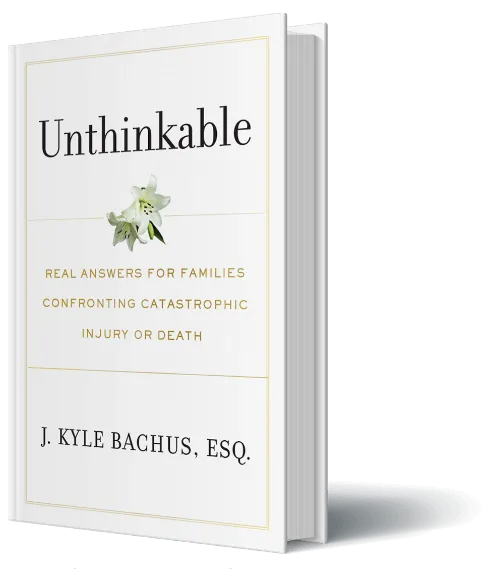
#1 Amazon Best Seller in the Legal Industry
Attorney Kyle Bachus knows first-hand how difficult it can be to suddenly lose a loved one in an accident. It’s also devastating when you or a family member suffers severe injuries that forever change your lives. Kyle wrote this book as a resource from his personal experience for families who have suffered a traumatic loss.
A Spanish edition of the book is also available, offering the same support and guidance to Spanish-speaking families.
You Deserve Fair Compensation
Don’t let the insurance companies intimidate you into accepting less than you deserve. We’re ready to fight for you.