
 Call Us!
What Is PIP Insurance in Colorado?
If you were involved in a motor vehicle accident and are wondering how you will cover medical expenses and lost wages, you may have come across PIP insurance.
So, what exactly is PIP car insurance?
Personal injury protection (PIP) insurance, also known as no-fault insurance, is an auto insurance coverage that pays a policyholder’s medical bills, lost wages, and related expenses, regardless of who caused the crash. It generally covers a policyholder, their passengers, and their resident family members.
In no-fault auto insurance states, injured victims usually turn to their own insurance companies for coverage of:
- Immediate medical bills
- Ongoing medical expenses
- Lost wages
- Rehabilitation costs
- Costs for help with essential/household tasks they cannot perform due to injuries
If an accident results in a death, PIP also covers funeral and burial expenses. An injured victim does not need to prove fault to be covered.
WHAT OUR CLIENTS SAY
·4.7 out of 5 · 2,650+ Google reviews
“Just want to leave a message thanking Ryan Guerin and Hugh O'Sullivan for taking the time to meet and answer questions during intake at the rehabilitation center my mother is being treated at. My mom was in a severe motor vehicle accident and hasn't been able to walk. Both Ryan Guerin and Hugh O'Sullivan arrived on time, prepared, and listened with empathy and precise data gathering.”
Karen Wold
Google review
“I was victim of a car accident on I-25, hit by three other vehicles. Jennifer Kilpatrick and her paralegal Trina took my case and that was the best thing that could have happened. They fought for me and got me the best result.”
Priscilla Hochschild
Google review
“I was recommended to Bachus and Schanker due to being involved in a recent accident. They have been so helpful, professional, and I absolutely would recommend them.”
Heather K.
Google review
NOTABLE SETTLEMENTS
$20M
Car crash
$15M
Car crash
$11.5M
Auto accident
$4.7M
Truck accident
Past results do not guarantee future outcomes.
Is PIP Insurance Required in Colorado?
Colorado was a no-fault state before 2003, operating under the Colorado Auto Accident Reparations Act. Motorists were required to carry PIP coverage to cover their own medical bills, lost wages, and rehabilitation.
However, the state’s no-fault law expired under a sunset clause via House Bill 03-1188 on July 1, 2003. This moved Colorado to an at-fault system. Since then, when a car accident occurs, the driver who is found at fault pays for the damages suffered.
Consequently, Colorado does not require PIP insurance, as injured victims are allowed to pursue claims directly against the at-fault driver’s insurance company.
The state also replaced the old system with a compulsory liability scheme. Car owners are required to carry liability insurance with the following minimum coverages:
- $25,000 for bodily injury or death to any one person in an accident.
- $50,000 for bodily injury or death to all persons in any one accident.
- $15,000 for property damage in any one accident.
Liability insurance covers other people and property when a policyholder is at fault for an accident.
What Is the Difference Between PIP and MedPay Insurance?
To replace one of PIP’s functions, which was to cover immediate medical bills, Colorado required insurance companies to offer medical payments (MedPay) coverage as an optional addition to an auto insurance policy. It pays for reasonable and necessary medical expenses resulting from an auto accident, regardless of who caused the crash.
The difference between PIP and MedPay coverage is that PIP car insurance applies in a true no-fault system. MedPay covers immediate medical bills while the injured party pursues compensation from the at-fault party.
Additionally, PIP is broader than MedPay. In states where it exists, it covers medical bills, lost wages, rehabilitation costs, household services, and other related expenses. MedPay only covers reasonable and necessary medical expenses.
Under C.R.S. 10-4-635, auto insurance companies are required to offer at least $5,000 of MedPay coverage with every policy. A policyholder can only decline or waive the coverage in writing, meaning you need to sign a written waiver/written rejection form if you don’t want the coverage.
Your insurer must also keep the written rejection as proof that you don’t have MedPay coverage. If, after an accident, the company can’t produce the signed, written waiver proving that you affirmatively opted out, your insurance contract will be automatically reformed under Colorado law. Your policy will be treated as though the $5,000 MedPay limit was present from day one, even if you never paid the premium for it. This is why insurers are strict when it comes to MedPay.
Another optional coverage in the state is uninsured/underinsured motorist (UM/UIM) coverage. This coverage pays for bodily injury losses caused by a hit-and-run driver, a driver with no automobile insurance, or a driver whose insurance policy limits are lower than the damages the injured party sustains.
Insurers are required to offer UM/UIM coverage with every policy unless a policyholder rejects it in writing. Moreover, the coverage limit must be an amount equal to the insured’s bodily injury liability limits.
UM/UIM coverage covers bodily injuries (medical expenses), lost wages, and pain and suffering. It protects you, your passengers, and resident relatives.
Other optional coverages a motorist can purchase include collision (pays to repair or replace your own vehicle after a crash) and comprehensive (pays for damage to your car from non-collision events, such as vandalism, theft, and fire).
How Can You Seek Compensation After a Car Accident in Colorado?
If you are involved in a car accident, it’s critical to take the right steps. You’ll need to call the police to report the accident, document the scene, exchange information with the other driver, collect witness information, and get immediate medical attention. If you have MedPay coverage, it starts paying benefits from your first doctor’s visit.
Then, within typically 24 to 72 hours of the accident, notify your insurance company and that of the other driver. Do not give a recorded statement or admit fault when giving notice.
It’s also vital to wait until your medical treatment is complete or stabilized (when you reach maximum medical improvement, also known as MMI) to submit a formal demand letter to the at-fault driver’s insurer.
This letter outlines the involved parties, details how the crash happened, establishes liability, shows the damages suffered, provides supporting evidence, states a specific dollar amount to settle the claim, and sets a deadline for responding.
When the insurer receives it, they can accept your request, make a counteroffer, or reject your claim. If it makes a counteroffer, back-and-forth negotiations begin until a fair settlement is reached.
If the company rejects your claim or a fair settlement can’t be reached, you can file a lawsuit to be compensated in court.



















What Evidence Can Help Establish Fault in a Car Accident Claim?
To recover compensation for a car accident claim in Colorado, you must prove the other driver acted negligently, causing the accident. Several key types of evidence can help you establish fault.
These are:
- Official police reports and traffic citations issued by responding officers at the scene.
- Photos and videos of the accident scene, documenting the positions of the cars, vehicle damage, skid marks, road conditions, weather conditions, road signs, traffic lights, and so on.
- Dashcam recordings and footage from traffic cameras or cameras from nearby buildings.
- Witness statements.
- Digital and electronic data, such as GPS records, event data recorder (EDR)/black box data, and phone records.
- Reports from experts, such as an accident reconstructionist or a medical expert.
Solid evidence helps you build a strong case, which is integral to receiving the compensation you deserve.
How Can a Car Accident Lawyer Help You Recover Compensation?
A car accident lawyer can help you in various ways. They will investigate the crash, gather critical evidence before it disappears, help you navigate Colorado laws to make informed decisions, handle communications with insurance adjusters while you focus on recovery, and negotiate fair compensation.
If a fair settlement can’t be reached, your attorney will take your case to court to protect your rights. Bachus & Schanker is committed to helping injured victims receive maximum compensation.
Related Car Accident Resources





















Legal Support Across Colorado and Nationwide
Serving Clients Nationwide
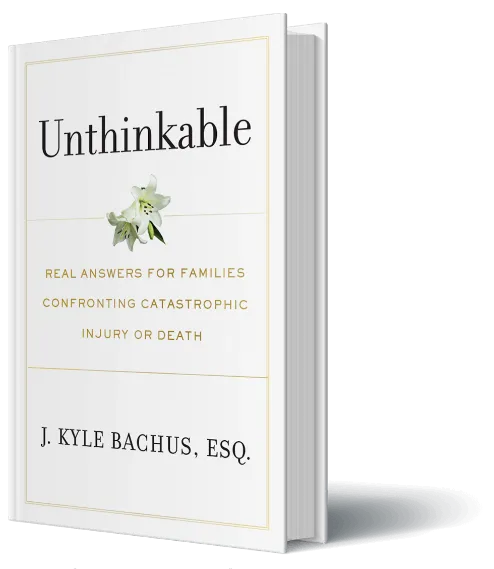
#1 Amazon Best Seller in the Legal Industry
Attorney Kyle Bachus knows first-hand how difficult it can be to suddenly lose a loved one in an accident. It’s also devastating when you or a family member suffers severe injuries that forever change your lives. Kyle wrote this book as a resource from his personal experience for families who have suffered a traumatic loss.
A Spanish edition of the book is also available, offering the same support and guidance to Spanish-speaking families.
You Deserve Fair Compensation
Don’t let the insurance companies intimidate you into accepting less than you deserve. We’re ready to fight for you.