Call Us!
Knee Injury From A Car Accident
Being involved in a car accident can lead to different injuries, including a knee injury. If you suffer a knee injury in a crash, your mobility can be affected, which means you may be unable to go to work or perform daily activities.
Bachus & Schanker is passionate about helping people injured in car accidents protect their rights. We help our clients fight for the compensation they deserve that will allow them to regain the life they had before the accident.
WHAT OUR CLIENTS SAY
·4.7 out of 5 · 2,650+ Google reviews
“I was recommended to Bachus and Schanker due to being involved in a recent accident. They have been so helpful, professional, and I absolutely would recommend them.”
Heather K.
Google review
“I called them the day of my accident. The whole process I was informed of each step along the way. My attorney always kept in contact and was very attentive.”
Gunnar B.
Google review
“At the time of my accident I didn’t know what route to go. They were there for me until the end, very professional and always handling things in a timely matter.”
Geneva J.
Google review
“They handled my accident claim with care, kept me updated every step of the way, and made the entire process so much less stressful.”
Ajay
Google review
“The staff always explained everything very clearly and I felt that they cared about my needs and what had happened to me in my car accident.”
Stephen C.
Google review
NOTABLE SETTLEMENTS
$20M
Car crash
$15M
Car crash
$11.5M
Auto accident
$4.7M
Truck accident
Past results do not guarantee future outcomes.
How Knee Injuries Happen In A Car Accident
Several circumstances can cause a knee injury in a car accident. Firstly, it can be caused by a direct impact. If your knee is struck by the dashboard (dashboard knee injury), steering wheel, glove compartment (if you are a passenger), car door (in a side-impact collision), or any other component, it might get injured.
Another instance that can lead to a knee injury is when the force of a collision causes the knee to twist. The sudden, forceful movements, or awkward positioning of the body during a collision can force the knee into unnatural twisting motions, injuring it without a direct impact.
Common Types Of Knee Injuries Caused By A Car Accident
You can sustain different types of knee injuries after a car accident.
Here are the common types:
Disclocations
When the knee forcefully strikes a car component, the thigh bone (femur) and shin bone (tibia) can be forced out of their normal alignment. The tibia might shift in front of, behind, or to the side of the femur. It might also move inward or outward relative to the femur.
Another way a knee dislocation can happen is when the kneecap (patella) moves out of its normal groove on the femur. Even though it’s related to the knee, a kneecap dislocation is a separate injury from knee injuries.
A knee dislocation usually disrupts the joint’s structure, causing the ligaments that stabilize the knee to tear or rupture. The major ligaments supporting the knee joint include the anterior cruciate ligament (ACL), posterior cruciate ligament (PCL), medial collateral ligament (MCL), and lateral collateral ligament (LCL). At least three out of these ligaments are typically torn in a knee dislocation.
Meniscus Tear
The meniscus is a C-shaped piece of fibrocartilage found in the knee joint. It acts as a shock absorber and stabilizer. Each knee has two menisci.
When the knee is subjected to forceful impact or is twisted beyond its normal range of motion, the meniscus can tear.
Fractures
A direct blow to the knee can cause a broken bone in the knee. The common bones that break are the kneecap, the top of the shin bone (the tibial plateau), and the thigh bone just above the knee joint (distal femur fracture).
Cases of bones in the knee breaking into multiple pieces have been reported in severe cases. Open fractures, where a bone breaks in a way that fragments pierce the skin, like the open patella fracture, are also not uncommon.
Soft Tissue Injuries
Besides damage to ligaments, a car accident can also result in damage to the tendons and muscles surrounding the knee joint. They can be strained or torn. Soft tissue injuries in the knee include sprains, contusions, and strains, which can range from minor to severe.
Symptoms Of Knee Injuries
After a car accident, a few symptoms can help you recognize if you have a knee injury.
They include:
- Pain: It can range from mild discomfort to severe pain.
- Swelling: It can be accompanied by bruising or discoloration.
- Instability: You should be alarmed if your knees are unstable when trying to walk; basically, the knee has difficulty bearing your weight.
- Limited range of motion: It is difficult to bend or straighten the knee.
- Warmth: Due to increased blood flow to the injured area, you may feel an increased temperature in the knee area, which is a sign of inflammation.
- Clicking sound: If you hear a clicking or popping sound in the knee, you might be injured.
- Locking: The knee getting stuck in a bent or straight position (locking), preventing full range of motion, is a key indicator of an injury.
Some of these symptoms may not appear or be noticed immediately. It can take hours for you to notice pain because immediately after the accident, you will be experiencing an adrenaline rush that might mask pain. You may only start to feel pain when adrenaline subsides.
Additionally, the development of swelling and inflammation can be gradual. It can take days for your knee to swell.
By the time you notice these symptoms, the underlying injury might have worsened. So, if you were wondering when to see a doctor after a car accident, it’s immediately after the crash, whether or not you have visible injuries. A doctor should examine you to identify and treat your injuries before they result in more complications.
How Serious Are Knee Injuries?
A car accident knee injury can be serious. It can affect your life significantly. While minor injuries can be treated by the RICE protocol (rest, ice, compression, elevation) and medications, severe ones may require physical therapy, surgery, and bracing (using braces to protect, support, or stabilize the knee joint).
It can take months or even years for a serious knee injury to heal, and in some cases, one may deal with long-term impacts, such as persistent pain, development of osteoarthritis, limited range of motion, increased risk of future injuries, and psychological impacts, like fear of driving, depression, anxiety, and post-traumatic stress disorder (PTSD).
What To Do To Protect Yourself
Since a knee injury can substantially impact your life, you should hold the at-fault driver liable. They acted negligently, causing the accident that led to your injury. To build a strong case, it’s vital to work with a car accident attorney in Colorado. You should speak to the attorney immediately after the accident to gather crucial evidence and avoid mistakes that can affect your case.
Your lawyer will guide you on the evidence to gather at the scene and afterward to strengthen your claim. These include photos and videos of the accident scene and your injuries, witness statements, the police report, and your medical records.
They can also help you obtain access to other professionals, including an accident reconstructionist to gather more details about how the accident happened, a medical expert to assess your injuries and their potential impact on your life, and a financial specialist to evaluate and quantify the economic losses resulting from the accident.
Bachus & Schanker has experience handling car accident claims. We have helped many injured victims receive fair knee injury car accident settlements.
Our personal injury attorney in Colorado will ensure you obtain more information about your case to make informed decisions.
We will also handle communications with the involved insurance companies, allowing you to focus on recovery. Our law firm operates in several locations, which allows us to help victims throughout the state.
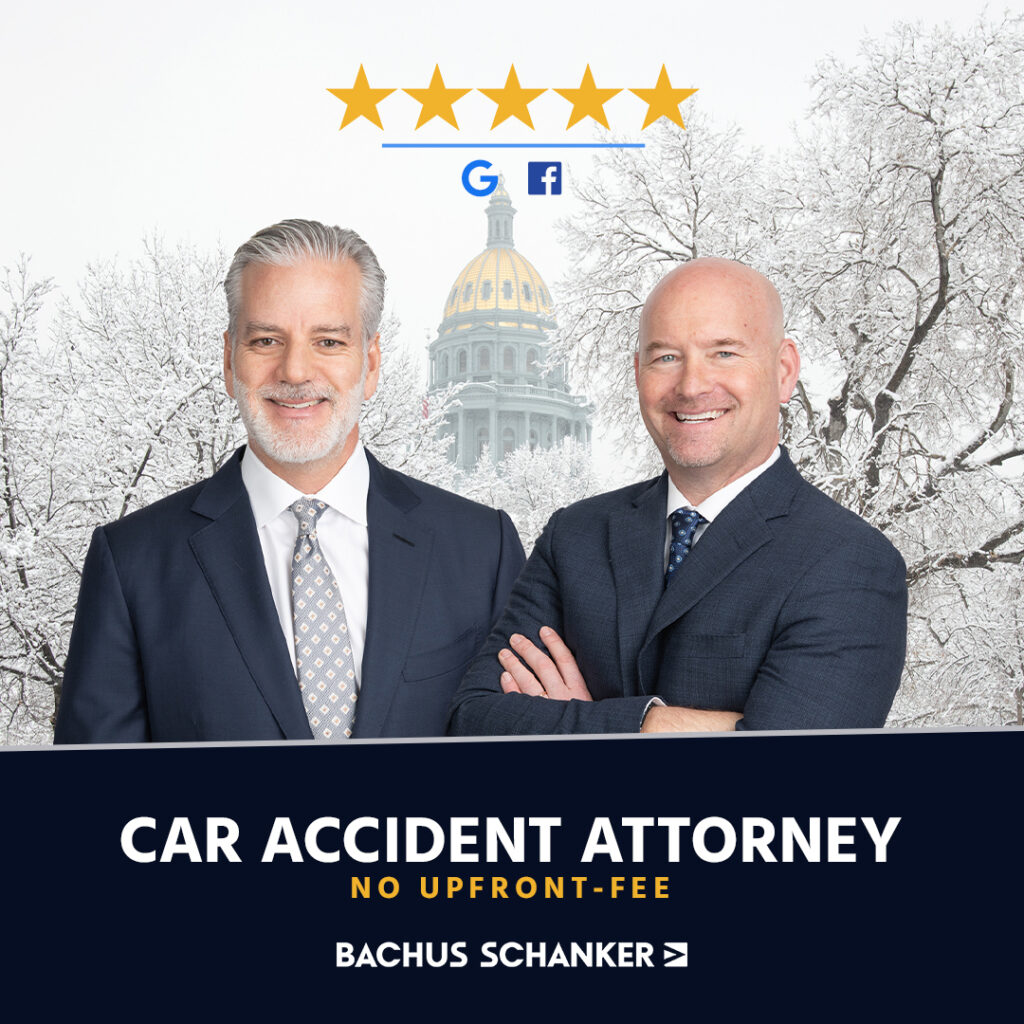
Kyle Bachus & Darin Schanker
Top-rated Colorado-based personal injury lawyers and co-founders of Bachus & Schanker, Kyle Bachus and Darin Schanker, have represented car accident victims and families across Colorado for more than 30 years, earning a reputation as some of the best car accident attorneys for serious injury cases. The firm is structured to handle car accident cases of all types and severities, with a team organized to provide focused support and guidance throughout the process. Kyle and Darin guide victims through the legal process with the support of a dedicated team of car accident specialists and Victim Advocates, ensuring care and advocacy from start to finish so clients can stay focused on healing.
Both Kyle and Darin are nationally recognized for their trial skills and leadership in the legal community. They are members of the Million Dollar Advocates Forum, an exclusive group of attorneys who have achieved million and multi-million-dollar verdicts and settlements, a distinction earned by fewer than 1% of U.S. lawyers. In addition, they have been named Colorado Super Lawyers every year for nearly two decades, included in the Lawdragon 500 Leading Plaintiff Lawyers in America, named Top One Percent by the National Association of Distinguished Counsel, Top 10 Personal Injury Attorneys in Colorado by America’s Best Advocates, and recognized as top civil plaintiff attorneys by The National Trial Lawyers. Beyond the courtroom, they support the Colorado community through the Bachus & Schanker Cares Foundation, which sponsors local nonprofits and initiatives. See Kyle Bachus and Darin Schanker on Super Lawyers.
Notable Colorado Car Accident Settlement Results
$20 Million
$15 Million
$7 Million
Legal Support Across Colorado and Nationwide
Serving Clients Nationwide
Related Car Accident Resources












#1 Amazon Best Seller in the Legal Industry
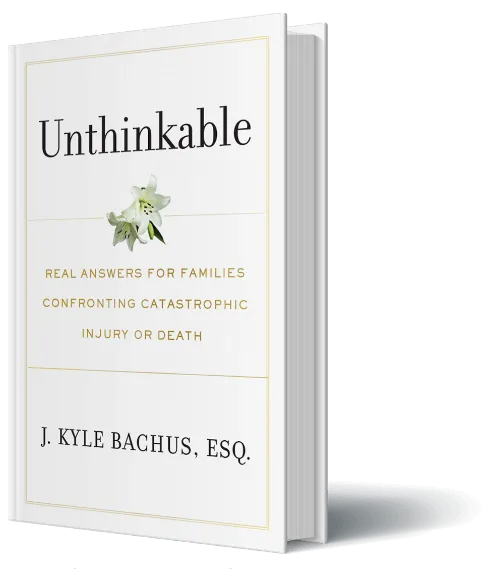
Attorney Kyle Bachus knows first-hand how difficult it can be to suddenly lose a loved one in an accident. It’s also devastating when you or a family member suffers severe injuries that forever change your lives. Kyle wrote this book as a resource from his personal experience for families who have suffered a traumatic loss.
A Spanish edition of the book is also available, offering the same support and guidance to Spanish-speaking families.
You Deserve Fair Compensation
Don’t let the insurance companies intimidate you into accepting less than you deserve. We’re ready to fight for you.