
 Call Us!
If Your Airbags Deploy, Is Your Car Totaled?
If you were in a car accident and your airbags deployed, your first thought might be that your vehicle is now totaled. You’re not alone, as that’s what most people think too. However, that’s not always the case.
If your airbag is deployed in a car accident, there are certain sets of rules and guidelines insurance companies use to determine whether your vehicle is in fact a total loss or not. Understanding how these guidelines work can help you get a better sense of your losses and how to navigate the aftermath of a car accident.
At Bachus & Schanker, our attorneys can help you assess financial losses, while helping you understand your legal rights and options after your airbags are deployed in a car accident.
WHAT OUR CLIENTS SAY
·4.7 out of 5 · 2,650+ Google reviews
“I was recommended to Bachus and Schanker due to being involved in a recent accident. They have been so helpful, professional, and I absolutely would recommend them.”
Heather K.
Google review
“I called them the day of my accident. The whole process I was informed of each step along the way. My attorney always kept in contact and was very attentive.”
Gunnar B.
Google review
“At the time of my accident I didn’t know what route to go. They were there for me until the end, very professional and always handling things in a timely matter.”
Geneva J.
Google review
“They handled my accident claim with care, kept me updated every step of the way, and made the entire process so much less stressful.”
Ajay
Google review
NOTABLE SETTLEMENTS
$20M
Car crash
$15M
Car crash
$11.5M
Auto accident
$4.7M
Truck accident
Past results do not guarantee future outcomes.
If My Airbags Deploy, Is My Car Automatically Totaled?
No. Just because your airbags deploy after a car accident does not mean your vehicle is automatically considered a loss. A total loss is usually declared when the threshold of the cost of repairing your vehicle exceeds the actual cash value (ACV) of your vehicle.
Every state has its own threshold to determine total loss, and it doesn’t necessarily boil down to whether airbags are deployed or not.
How Does Airbag Deployment Affect the Value of a Vehicle?
There are two main ways in which a vehicle airbag deployment affects its value: the repair costs and its market value.
After an airbag is deployed, the entire airbag module must be replaced or reset. Repair also extends to other parts of the vehicle, like the seatbelt pretensioner (the mechanisms that lock up a seatbelt during the crash), the dashboard, steering column, interior panels, and other components in the front and sides of your vehicle. The cost for all these repairs can run anywhere from $2,000 to upward of $10,000.
Additionally, even if your vehicle is fully repaired after an airbag deployment, the vehicle’s Carfax or AutoCheck report will show that your vehicle has been in a collision where the airbags were deployed, and this can reduce the overall resale value of your vehicle.
Why Can Airbags Be Expensive To Replace?
A single airbag replacement runs anywhere from $1,000 to $3,000, and it’s not uncommon for multiple airbags to be deployed in an accident.
If your car crash deployed side airbags, then those systems can be more complex to repair, costing anywhere from $2,000 to $5,000.
What Other Damage May Cause a Car To Be Declared a Total Loss?
Airbags are not the only factor that can cause your vehicle to be declared a total loss after a car accident. There are other issues that an insurance company may consider factors for a vehicle to be totaled.
- Structural damage is the most serious type of damage and occurs when your vehicle’s crumple zones are crushed because of the impact of the collision.
- If your vehicle was submerged in water or otherwise sustained flood damage, this can be equally devastating. Electrical wiring, engine parts, and other components can all be damaged to a point of excessive cost that is not worth the vehicle’s actual cash value.
- Fire and severe weather damage can also fall under the territory of total loss.
How Is the Value of a Totaled Car Determined?
There are standard total loss thresholds formulas that determine whether your vehicle is a total loss or not. Most states will use one of two methods. The fixed percentage method and the total loss formula.
- The fixed percentage method is when the repair cost exceeds a set percentage of a vehicle crash value. Colorado uses a 100% fixed percentage threshold as outlined by C.R.S. § 42-6-102, meaning that a vehicle is considered a total loss when the repair costs reach or go over 100% of the car’s ACV.
- Under the total loss formula, all repair costs are added to the total cost of your vehicle’s salvage value (your vehicle’s worth if it’s sold for parts or scrap). If this sum is equal or exceeds the actual cost value, then your vehicle is considered totaled.
How Do Insurance Companies Decide if a Car Is Totaled?
Insurance companies follow the same methodology when determining whether your vehicle is totaled after your car accident. Insurance companies inspect the vehicle, review photos, and take estimates from repair shops to determine what the repair cost is. From there, they will compare it to your vehicle’s actual cash value.
There are also other factors that insurance adjusters will take into consideration, as well as to determine whether your vehicle is a loss or not. These factors include the age of your vehicle, how many miles are on your vehicle, the trim level, and what the sale price of comparable vehicles are in your local market.
If you think your vehicle’s assessed value, according to the insurance adjusters, is much lower than it should be, having documentation, like maintenance records, upgrades, and data related to comparable listings, support your claim that your vehicle should be worth more.
What Happens After an Insurance Company Declares Your Car a Total Loss?
Once your vehicle is determined to be a total loss, your insurance company will pay you out the actual cash value, minus your deductible. If your vehicle has a lease or a loan, this payment will typically go to your lending or leasing company first. Any remaining balance will then go to you.
You’ll also need to remove any of your personal belongings from the vehicle, return the license plates, and your vehicle will either be towed away to a junk yard or to an auction company.






















Can You Keep or Repair a Car That Has Been Declared Totaled?
In many states, you are allowed to keep your vehicle; however, the insurance company will only pay you out your vehicle’s actual cash value minus the salvage value (the cost that it’s worth if sold for parts or scraps).
If you keep the vehicle, it will now have a salvaged title. Salvage titles indicate that the vehicle was previously declared a total loss. In order to legally drive the vehicle again, you must repair it, have it pass a state inspection, and you must apply for a rebuilt title.
This can be a good avenue to explore if you have the time, money, and energy to rebuild a vehicle. However, salvaged vehicles that now have rebuilt titles are often harder to sell and insure. Plus, many lenders won’t provide finance support for a vehicle that has a rebuilt title.
How Can Bachus & Schanker Help After a Car Accident?
If your insurance company has determined that your vehicle is a total loss, you may have grounds to push back with the right legal support. The attorneys at Bachus & Schanker understand how insurance companies evaluate total loss claims, how they calculate ACV, and the tactics they use to minimize claims.
Our attorneys can review whether your valuation is fair, whether the repair estimate is complete, and, most importantly, whether you’re being offered the compensation you deserve.
If you’ve also suffered a personal injury in the collision as well, our attorneys can help you navigate the nuances of your case, so you get the full compensation you might be entitled to.
Legal Support Across Colorado and Nationwide
Serving Clients Nationwide

Kyle Bachus & Darin Schanker
Top-rated Colorado-based personal injury lawyers and co-founders of Bachus & Schanker, Kyle Bachus and Darin Schanker, have represented car accident victims and families across Colorado for more than 30 years, earning a reputation as some of the best car accident attorneys for serious injury cases. The firm is structured to handle car accident cases of all types and severities, with a team organized to provide focused support and guidance throughout the process. Kyle and Darin guide victims through the legal process with the support of a dedicated team of car accident specialists and Victim Advocates, ensuring care and advocacy from start to finish so clients can stay focused on healing.
Both Kyle and Darin are nationally recognized for their trial skills and leadership in the legal community. They are members of the Million Dollar Advocates Forum, an exclusive group of attorneys who have achieved million and multi-million-dollar verdicts and settlements, a distinction earned by fewer than 1% of U.S. lawyers. In addition, they have been named Colorado Super Lawyers every year for nearly two decades, included in the Lawdragon 500 Leading Plaintiff Lawyers in America, named Top One Percent by the National Association of Distinguished Counsel, Top 10 Personal Injury Attorneys in Colorado by America’s Best Advocates, and recognized as top civil plaintiff attorneys by The National Trial Lawyers. Beyond the courtroom, they support the Colorado community through the Bachus & Schanker Cares Foundation, which sponsors local nonprofits and initiatives. See Kyle Bachus and Darin Schanker on Super Lawyers.
Notable Colorado Car Accident Settlement Results
$20 Million
$15 Million
$7 Million
Related Car Accident Resources






















#1 Amazon Best Seller in the Legal Industry
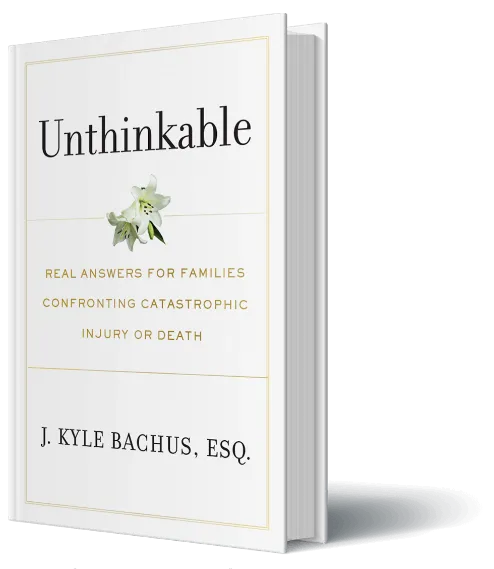
Attorney Kyle Bachus knows first-hand how difficult it can be to suddenly lose a loved one in an accident. It’s also devastating when you or a family member suffers severe injuries that forever change your lives. Kyle wrote this book as a resource from his personal experience for families who have suffered a traumatic loss.
A Spanish edition of the book is also available, offering the same support and guidance to Spanish-speaking families.
You Deserve Fair Compensation
Don’t let the insurance companies intimidate you into accepting less than you deserve. We’re ready to fight for you.