
 Call Us!
Colorado Window Tint Laws
Car owners often tint windows to block UV rays, reduce sun and headlight glare, reduce interior heat buildup, and increase privacy. While tinting is generally an investment, it can also cause significant safety hazards. Due to this, Colorado has laws regulating car window tinting to ensure driver visibility and police safety.
WHAT OUR CLIENTS SAY
·4.7 out of 5 · 2,650+ Google reviews
“I was recommended to Bachus and Schanker due to being involved in a recent accident. They have been so helpful, professional, and I absolutely would recommend them.”
Heather K.
Google review
“I called them the day of my accident. The whole process I was informed of each step along the way. My attorney always kept in contact and was very attentive.”
Gunnar B.
Google review
“At the time of my accident I didn’t know what route to go. They were there for me until the end, very professional and always handling things in a timely matter.”
Geneva J.
Google review
“They handled my accident claim with care, kept me updated every step of the way, and made the entire process so much less stressful.”
Ajay
Google review
“The staff always explained everything very clearly and I felt that they cared about my needs and what had happened to me in my car accident.”
Stephen C.
Google review
NOTABLE SETTLEMENTS
$20M
Car crash
$15M
Car crash
$11.5M
Auto accident
$4.7M
Truck accident
Past results do not guarantee future outcomes.
Can I Tint My Windows in Colorado?
Yes, you can tint your car’s windows in Colorado, provided you follow the state’s strict guidelines, which are measured by visible light transmission (VLT). VLT is the percentage of visible light that passes through a car’s window glass and tint film.
A lower VLT means a darker tint. Thus, less light gets in. A higher VLT means a lighter tint. Hence, more light passes through.
So, what’s the legal tint in Colorado? Read on to learn more.
What Are Colorado’s Window Tint Laws?
Colorado window tint laws under CRS 42-4-227 and House Bill 19-1067 include:
- Motor vehicles registered in Colorado must transmit at least 70% of light through the windshield and 27% of light through other windows (front side windows, rear side windows, and the rear window).
- Vehicles registered outside Colorado but operated in Colorado must transmit at least 20% of light through windows other than the windshield.
- The rear side windows and the rear window can transmit less than 27% of light, if the front side windows and the windshield have at least 70% VLT.
- A nontransparent tint strip may be applied along the top four inches of a vehicle’s windshield. However, the material cannot be red or amber. Also, it cannot affect the perception of primary colors or contain lettering that distorts/obstructs vision. Full windshield tinting is prohibited, regardless of how light the tint is.
- No material that presents a metallic or mirrored appearance shall be used on any window of a motor vehicle. Mirrored and metallic window tint films reflect sunlight. Consequently, they can create hazardous glare and blind other drivers. A highly reflective tint increases the risk of accidents.
Typically, unmodified car windows have a VLT ranging from 70% to 85%. This must be considered when calculating legal limits for an aftermarket tint.
With the provided VLT limits, Colorado ensures drivers can see cyclists, pedestrians, and other vehicles at all times, including at night and during harsh weather. Restricting overly dark tints also allows law enforcement officers to see inside a vehicle during a traffic stop, maintaining their safety.
Moreover, emergency responders, such as firefighters and paramedics, can quickly do visual assessments after a car accident when they can see inside. They can tell if a car’s occupants are trapped/conscious and respond accordingly. Extremely dark tint prevents quick assessments, which can delay rescue.
Currently, Colorado does not have a law that allows medical exemptions for special or darker window tints. Some states allow drivers with certain medical conditions to have darker window tints if a licensed physician certifies that a darker tint is medically necessary. However, all vehicles operated on Colorado roads must comply with the state’s VLT limits.
Are Certain Color Tints Not Allowed in Colorado?
Certain colored tints, specifically red and amber, on the windshield, side windows, or rear window are not allowed in Colorado. These colors can create confusion with brake lights, taillights, turn signals, traffic signals, and emergency vehicle markings.
A driver may also have a distorted perception of primary colors, as these colors can filter out the standard colors of road signs and stoplights. A red or green traffic light viewed through a red- or amber-tinted windshield or window may appear distorted. This can impair a driver’s ability to identify signals correctly.
Additionally, colored tints can deceive surrounding traffic into pulling over or yielding unnecessarily since emergency cars often use red and amber warning lights. Furthermore, red and amber hues from a car can mislead other drivers into believing the car is braking, turning, or slowing down. This can lead to unexpected traffic reactions.
What Is the Fine for Violating Colorado’s Window Tint Law?
Any person (a vehicle owner or driver) who violates the general Colorado tinting laws commits a Class B traffic infraction. Having illegal or excessively dark window tinting is a civil penalty that carries a fine ranging from $50 to $100, plus a surcharge. This infraction does not add points to a driver’s license and requires no jail time.
Any person who installs, covers, or treats a windshield or window so that the windshield or window violates Colorado legal requirements commits a class A traffic infraction. This infraction results in fines, plus a surcharge. It can also carry points against a driver’s license, which can count toward suspension thresholds.
An excessively dark/blatantly dangerous tint or repeated citations within a short period may lead to a misdemeanor charge, which carries a heavy fine.
How Can Illegal Window Tint Affect a Car Accident Claim?
An illegal tint alone does not make a driver at fault for an accident. In a car accident claim, investigators evaluate whether reduced visibility was a factor in the crash. Typically, they will measure the VLT of the vehicles involved to confirm whether they meet the state’s standards.
If a car’s tint film is unlawful, the investigator checks whether it contributed to the crash. They review the scene, lighting, and weather conditions, examine photos of the vehicles and the scene, conduct an accident reconstruction analysis, and interview witnesses to determine this aspect.
If they conclude that the dark tint impaired a driver’s ability to see other road users and hazards, the tint can be considered a contributing factor. Accordingly, the driver may be held liable for the accident.
If more than one vehicle involved in the accident has an illegal tint, it must be determined whether each contributed to the crash due to reduced visibility. In turn, Colorado’s modified comparative negligence system will apply.
Other parties that may be found responsible for an accident caused by reduced visibility due to illegal tint include a tint installer and a vehicle owner if the driver is not the owner. These parties can share responsibility with the driver.







What Compensation May I Recover After a Window Tint-Related Crash?
If you are injured in a window tint-related crash, you may be eligible for compensation.
You can recover compensation for:
- Current and future projected medical expenses
- Lost wages
- Loss of earning capacity
- Property damage
- Non-economic damages, such as pain and suffering, mental anguish, disfigurement, and loss of enjoyment of life
- Punitive or exemplary damages to punish the at-fault party for outrageous or egregious behavior
How Can a Personal Injury Lawyer Help With a Window Tint-Related Accident?
It’s vital to work with a personal injury lawyer when you sustain an injury in a window tint-related accident. At Bachus & Schanker, we assist injured victims in several ways. This includes investigating the crash, examining tint legality, gathering and preserving evidence, dealing with insurers, calculating the true value of a claim, and pursuing fair compensation.
Contact Bachus & Schanker After a Window Tint-Related Accident
Contact our auto accident lawyers today for a free consultation to understand your options after a window tint-related accident.
Legal Support Across Colorado and Nationwide
Serving Clients Nationwide
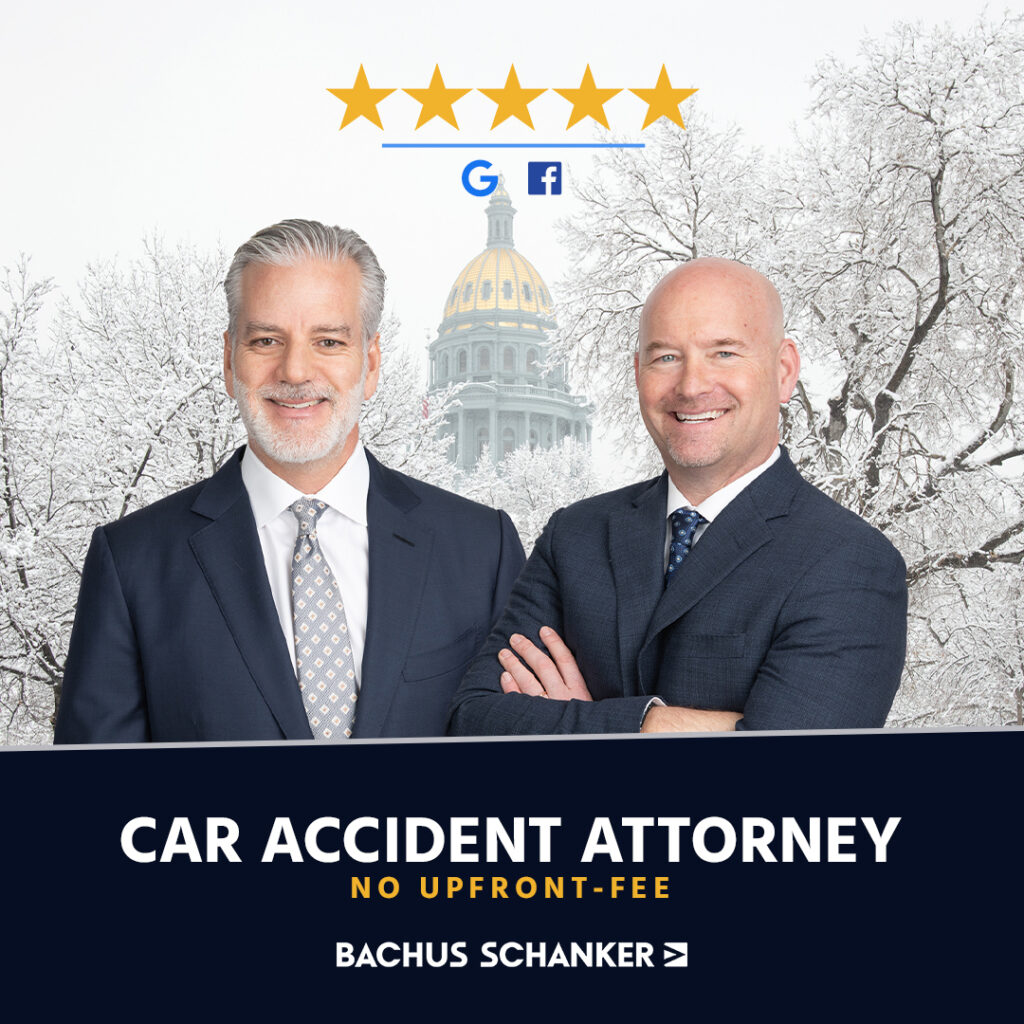
Kyle Bachus & Darin Schanker
Top-rated Colorado-based personal injury lawyers and co-founders of Bachus & Schanker, Kyle Bachus and Darin Schanker, have represented car accident victims and families across Colorado for more than 30 years, earning a reputation as some of the best car accident attorneys for serious injury cases. The firm is structured to handle car accident cases of all types and severities, with a team organized to provide focused support and guidance throughout the process. Kyle and Darin guide victims through the legal process with the support of a dedicated team of car accident specialists and Victim Advocates, ensuring care and advocacy from start to finish so clients can stay focused on healing.
Both Kyle and Darin are nationally recognized for their trial skills and leadership in the legal community. They are members of the Million Dollar Advocates Forum, an exclusive group of attorneys who have achieved million and multi-million-dollar verdicts and settlements, a distinction earned by fewer than 1% of U.S. lawyers. In addition, they have been named Colorado Super Lawyers every year for nearly two decades, included in the Lawdragon 500 Leading Plaintiff Lawyers in America, named Top One Percent by the National Association of Distinguished Counsel, Top 10 Personal Injury Attorneys in Colorado by America’s Best Advocates, and recognized as top civil plaintiff attorneys by The National Trial Lawyers. Beyond the courtroom, they support the Colorado community through the Bachus & Schanker Cares Foundation, which sponsors local nonprofits and initiatives. See Kyle Bachus and Darin Schanker on Super Lawyers.
Notable Colorado Car Accident Settlement Results
$20 Million
$15 Million
$7 Million
Related Car Accident Resources











#1 Amazon Best Seller in the Legal Industry
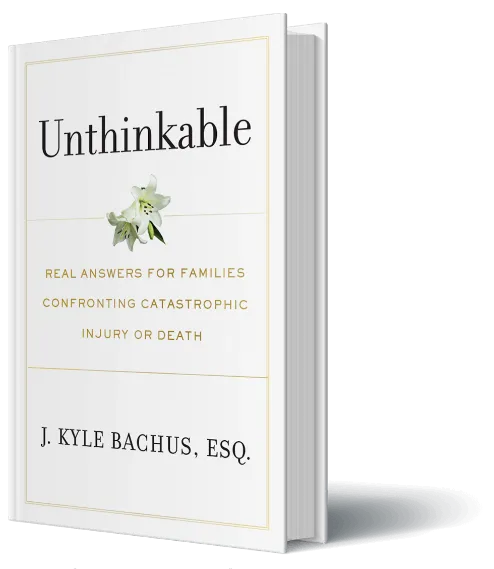
Attorney Kyle Bachus knows first-hand how difficult it can be to suddenly lose a loved one in an accident. It’s also devastating when you or a family member suffers severe injuries that forever change your lives. Kyle wrote this book as a resource from his personal experience for families who have suffered a traumatic loss.
A Spanish edition of the book is also available, offering the same support and guidance to Spanish-speaking families.
You Deserve Fair Compensation
Don’t let the insurance companies intimidate you into accepting less than you deserve. We’re ready to fight for you.