Call Us!
The Heart Of Advocacy: Alyssa Dransfield On Helping Victims Rebuild
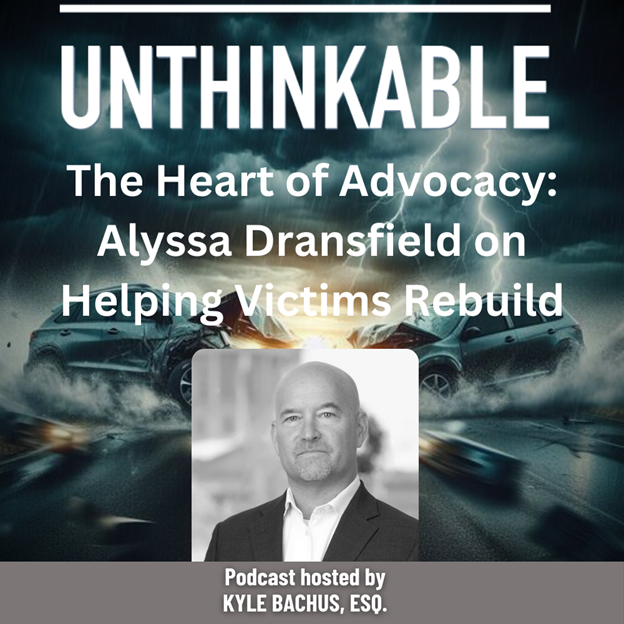
The Heart of Advocacy with Alyssa Dransfield
In this compassionate episode of Unthinkable, personal injury attorney Kyle Bachus sits down with Alyssa Dransfield, a seasoned victim advocate, to explore the vital role of emotional support and legal strategy in civil justice. Alyssa shares how her team supports victims through grief, criminal proceedings, and complex civil litigation, offering more than just legal help—they offer hope and direction.
From navigating the difficult intersection of criminal and civil law to urgently preserving evidence in dram shop cases, Alyssa reveals what really happens behind the scenes when tragedy strikes. Her insights shine a light on why early action, advocacy, and strategic thinking can make or break a victim’s road to recovery.
Key Insights:
- Holistic Advocacy: Legal action is just one piece—Alyssa’s team helps with everything from funeral planning to court support.
- Criminal Charges Can Affect Civil Recovery: Pursuing lesser charges (like vehicular homicide over murder) can preserve a victim’s ability to recover through insurance.
- Dram Shop Claims Require Speed: Surveillance footage and receipts disappear quickly—advocates act fast to preserve evidence.
- Restitution Isn’t Enough: Criminal restitution rarely covers actual losses—civil cases are essential to secure meaningful compensation.
- UM/UIM Coverage Is Critical: Uninsured motorist coverage can save families financially—but many people unknowingly opt out.
- Life Beyond the Lawsuit: Alyssa helps victims rebuild—from resumes to relocation—making sure the support doesn’t stop when the case ends.

FAQ
What’s the difference between a victim advocate and an attorney?
A victim advocate provides emotional, logistical, and practical support throughout a legal case. They are not attorneys but work closely with legal teams to ensure victims are informed, supported, and empowered.
Why would a prosecutor avoid filing murder charges after a fatal crash?
Because many insurance policies exclude coverage for “intentional acts.” Filing lesser but still serious charges (like vehicular homicide) helps preserve the victim’s right to recover civil damages.
What is a dram shop case?
It’s a legal claim against a bar or restaurant that served alcohol to an obviously intoxicated person who later caused harm. These cases are time-sensitive and require quick evidence preservation.
How soon should victims act after a drunk driving crash?
Immediately. Surveillance videos, receipts, and witness memories fade quickly. Victim advocates send preservation letters and dispatch investigators to secure key evidence.
What Does UM/UIM Coverage Do?
Uninsured/underinsured motorist coverage protects you if the at-fault driver has little or no insurance. It’s one of the most important but overlooked policies—and it follows you, not just your car.
Is criminal restitution enough to cover damages after a tragedy?
Almost never. Incarcerated or low-income defendants often can’t pay. Civil claims are critical for real financial recovery.
Subscribe to our podcast