Call Us!
Unthinkable: Navigating Estate Planning And Probate Law With Aaron Evans
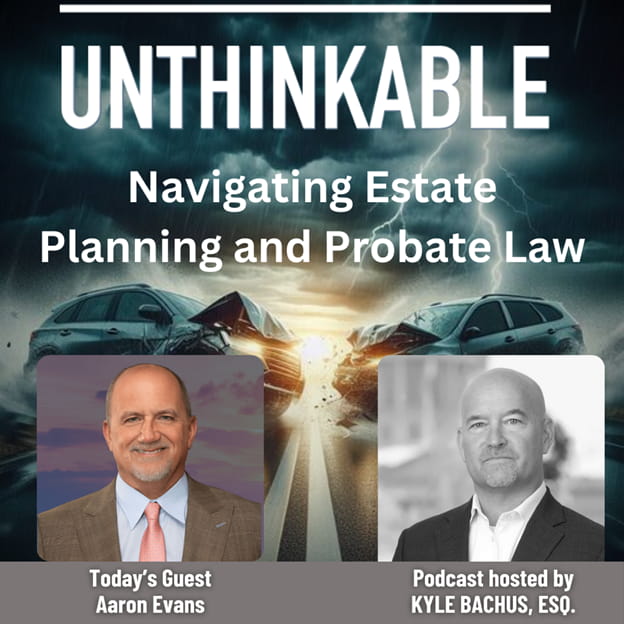
Navigating Estate Planning and Probate Law with Aaron Evans
In this episode of Unthinkable, personal injury attorney Kyle Bachus speaks with Aaron Evans, a probate and estate planning expert. They cover essential information about wills, trusts, and the probate process in Colorado that families need to know when preparing for life’s uncertainties.
Evans explains the types of wills, how probate works, and legal tools to protect minor children and digital assets. He emphasizes the importance of regularly updating beneficiary designations and how trusts and small estate affidavits can simplify the legal process after a loved one’s passing. This episode offers valuable guidance to help families navigate complex estate planning decisions with confidence.
Key Insights:
- Wills Explained: Understanding self-proving, holographic, and informal wills in Colorado law.
- Protecting Children: Testamentary trusts and conservatorships for managing minors’ inheritances.
- Safe Storage: Importance of securing wills and login credentials for timely access.
- Probate Simplified: Small estate affidavits streamline probate for estates under $84,000.
- Avoiding Probate: How trusts, POD, and TOD accounts help bypass court processes.
- Beneficiary Overrides: Why life insurance and retirement account designations trump wills.
- Debt and Probate: Heirs are not personally liable; creditors file claims against the estate.
- Estate Planning Tips: Start with a simple will and keep documents and accounts updated.

FAQ – Estate Planning and Probate Law
What’s The Difference Between a will and a trust?
A will takes effect after death and goes through probate; trusts can manage assets before and after death and avoid probate.
How do small estates avoid probate?
Colorado allows estates under $84,000 to use an affidavit process that skips court probate.
What happens if parents die without a will and leave minor children?
Courts appoint conservators to manage the children’s inheritance; wills can create trusts with controlled distributions.
Why update beneficiary designations regularly?
Because they override wills and outdated info can cause unintended asset transfers.
Are heirs responsible for the deceased’s debts?
No. Debts are paid from the estate’s assets, not from heirs’ personal funds.
Subscribe to our podcast