
 Call Us!
Birth Injury: Intraventricular Hemorrhage (IVH)
Intraventricular hemorrhage (IVH) is a condition that affects around 12,000 premature babies every year in the U.S. While some of them will recover completely, others may experience extensive brain damage and possibly cerebral palsy. While it’s unclear exactly why IVH occurs in many cases, problems in labor and delivery sometimes play a significant part. The necessary procedures and ongoing medical care could get quite costly for your infant. In these cases, it’s important to contact a birth injury lawyer to find out whether negligence on the part of your medical staff had something to do with the cause.
What Is Intraventricular Hemorrhage (IVH)?
IVH is a serious condition where blood vessels in the brain rupture, causing bleeding in the ventricular system. It’s most common in very premature babies because of the fragile blood vessels in their brains. If a baby is going to develop IVH, it will usually happen within the first few days after birth. After that, the chances decrease drastically.
There are different grades of IVH, and the more severe the grade, the more chance there will be complications. Grade one is where there’s only a small amount of blood in a small portion of the ventricles. The grades get more intense as they progress, with grade four being where blood leaks into the brain tissue around and inside the ventricles. Grades three and four are the more severe diagnoses and will often present more long-term effects.
Timing When IVH Appears
IVH occurs most commonly in premature newborns born more than ten weeks early. The more premature the infant, the higher the risk. This is because their brains are not fully developed and are still very fragile. It’s also most common in preemies with blood pressure problems, respiratory distress syndrome, or other similar conditions.
Premature infants are usually monitored closely for this condition for a while because it most commonly presents itself within the first few days of life. After a month of age, it becomes much less common, even in babies who were born prematurely.
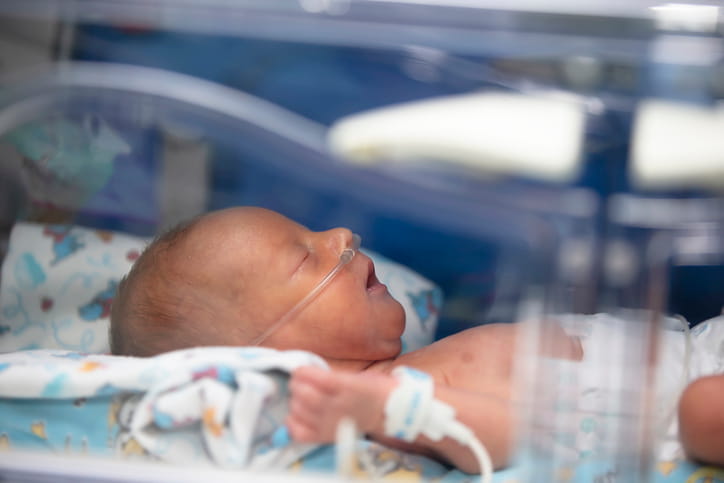
What Are Common Causes Of Intraventricular Hemorrhage?
Intraventricular hemorrhage causes are somewhat unclear, but most professionals believe it has a lot to do with a lack of oxygen to the brain. This can be caused by complications before or shortly after delivery. The fragile state of the baby’s brain at such early stages makes it easier for the blood vessels to rupture.
What Are Symptoms Of Intraventricular Hemorrhage?
Some babies have little to no symptoms of IVH, but the most common ones are:
- Apnea (breathing stops and heart rate lowers)
- Weak suck
- Seizures
- Swollen soft spot
- Anemia
- Excessive sleeping





















How Is Intraventricular Hemorrhage Diagnosed?
IVH is diagnosed with an ultrasound of the baby’s head. They’ll often routinely conduct these tests when the baby is born early, has a difficult delivery, or has symptoms of IVH.
How Is Intraventricular Hemorrhage Treated?
While there is no specific treatment for the condition itself, an IVH newborn will be closely monitored for symptoms. They’ll often stay in a neonatal intensive care unit (NICU) for an extended period of time so that their symptoms can be treated. Since these babies are more at risk for cerebral palsy, hydrocephalus, and seizures, they’ll be monitored in case extra care, such as a shunt or spinal tap, is needed.
The Different Severity Ratings For IVH
IVH is characterized in grades from one to four. Grades one and two are milder versions of the condition where there is very little blood present, or it’s only present in a small area of ventricles. Most babies recover from these grades with very little trouble or lasting difficulties.
Grades three and four are more severe and can result in long-term brain injury. Grade three is characterized by enlarged ventricles. Grade four means that there is a lot more blood, and it is present in the brain tissue surrounding the ventricles.
Can I Sue If My Newborn Develops IVH?
Some cases of IVH happen to premature infants through no fault of anyone involved. However, in many cases, it can happen because of a traumatic birth where a doctor or staff member did not take the proper precautions during delivery. If you believe your infant developed IVH due to medical malpractice and negligence, you may be able to obtain legal compensation. Keep in mind that the statute of limitations on these claims varies from state to state, so it’s essential to act as quickly as possible.
Why You Need An Experienced IVH Birth Injury Lawyer
When your child experiences a birth injury, it can be enough of a challenge to face their medical needs. You may also be dealing with the legalities of medical malpractice or negligence. That is where the birth injury lawyers at Bachus & Schanker can help.
Although it is often considered a civil case, medical malpractice is not always a criminal case. There are times, however, when the case may be considered criminal based on the circumstances. Seeking the advice of a knowledgeable attorney is crucial. The victim advocates at Bachus & Schanker are here for victims of crime every step of the way. We will guide you through the process of your case so you can focus on your family.
Visit Our Office Locations Across Colorado
Serving Clients Nationwide
#1 Amazon Best Seller in the Legal Industry
Attorney Kyle Bachus knows first-hand how difficult it can be to suddenly lose a loved one in an accident. It’s also devastating when you or a family member suffers severe injuries that forever change your lives. Kyle wrote this book as a resource from his personal experience for families who have suffered a traumatic loss.
A Spanish edition of the book is also available, offering the same support and guidance to Spanish-speaking families.

You Deserve Fair Compensation
Don’t let the insurance companies intimidate you into accepting less than you deserve. We’re ready to fight for you.