
 Call Us!
Rideshare Accident Attorneys
Rideshare companies have been around for less than 20 years, but in that relatively short time, they’ve had a transformative effect on travel. Finding a ride is often faster, easier, and less expensive than hiring a taxi, and Uber and Lyft can be found in busy cities and quiet rural areas alike.
However, these services have their downsides, too. Rideshare drivers often work long hours and navigate unfamiliar areas, so they’re at an increased risk of causing accidents. When these accidents happen, determining liability is frequently far more complex than you might think.
At Bachus & Schanker, we’ve helped countless injured people like you receive the Compensation They Deserve And Move On With Their Lives.
How Common Are Rideshare Accidents?
Uber and Lyft both prepare and publish safety transparency reports. These reports include car accident fatalities, sexual assaults, and fatal physical assaults. However, neither company publishes data on the number of car accidents that involve their drivers.
Because safety reports aren’t released immediately, the most recent data available is for 2022. Notably, the way Uber and Lyft release safety reports makes it difficult to compare the companies side by side. Uber’s safety reports cover two-year periods, while Lyft’s reports cover three-year periods.
Car Accident Fatalities
Lyft’s 2020–2022 Safety Transparency Report breaks down car accident fatalities by year:
- 2020: 25 (0.68 per 100 million miles, 0.000006% of trips)
- 2021: 36 (0.86 per 100 million miles, 0.000008% of trips)
- 2022: 50 (1.02 per 100 million miles, 0.000009% of trips)
Uber’s U.S. Safety Report for 2021–2022 records car accident fatalities in two-year periods:
- 2019 – 2020: 101 (0.62 per 100 million miles, 0.000005% of trips)
- 2021 – 2022: 153 (0.87 per 100 million miles, 0.000008% of trips)
Although Uber has a larger user base (and therefore a larger number of fatalities), the fatality rates between the two services are fairly similar.
Sexual Assaults
Lyft reported the following sexual assaults:
- 2020: 899 (0.00021% of trips)
- 2021: 714 (0.00016% of trips)
- 2022: 1,038 (0.00019% of trips)
Uber reported sexual assaults at fairly similar rates:
- 2019 – 2020: 3,824 (0.0002% of trips)
- 2021 – 2022: 2,717 (0.0001% of trips)
Although Uber’s reported sexual assaults are fortunately declining, rates of sexual assault in Lyft vehicles showed a worrying spike from 2021 to 2022.
Physical Assault Fatalities
Lyft reported the following physical assault fatalities:
- 2020: 7 (0.0000017% of trips)
- 2021: 10 (0.0000022% of trips)
- 2022: 6 (0.0000011% of trips)
Uber’s rates of physical assault fatalities were somewhat close:
- 2019 – 2020: 20 (0.000001% of trips)
- 2021 – 2022: 36 (0.000002% of trips)
Both drivers and passengers have been killed during physical assaults. However, drivers were the most common target of violence for both companies.
Colorado’s Uber And Lyft Laws
Colorado was the first state to establish its own laws regulating rideshare services, also called “on-demand transportation network companies,” or TNCs. Colorado’s Uber and Lyft laws are found in the Transportation Network Company Act (TNCA). The Act covers rideshare companies that use a digital app to connect drivers and passengers. The TNCA does not include taxi services, but it is the exclusive law for ridesharing in Colorado.
The TNCA itself is a lengthy piece of legislation, but here’s a rundown of the main regulations it imposes on Uber, Lyft, and other rideshare companies:
- They must have at least $1 million in liability coverage for accidents with a passenger in the vehicle.
- Vehicles must be inspected before being approved.
- Once approved, vehicles must be inspected at least every year.
- All drivers must carry personal insurance acknowledging their status as a rideshare driver.
- Rideshare companies must obtain a driving history and criminal history reports on all drivers.
- They must prohibit drivers with certain kinds of felony convictions or moving violations.
- They must prohibit drivers under 21.
To verify that they comply with the law, all rideshare companies must file a certificate of insurance with the Colorado Public Utilities Commission (PUC). Inspections of rideshare vehicles must also be conducted using forms provided by the PUC.
Drivers Cooperative Colorado: A New Colorado Rideshare Company
Uber and Lyft are the only available rideshare services in many parts of the country. However, a new statewide rideshare service called Drivers Cooperative Colorado launched in 2024. The company was founded to offer higher pay to drivers and lower fares to customers.
Drivers Cooperative Colorado exclusively operates in the state, and it’s still fairly new, which could pose unique challenges to anyone involved in a crash.
However, the team at Bachus & Schanker stays up to date on new developments in the rideshare industry. We’re ready to assist Drivers Cooperative Colorado drivers and passengers who have been injured in accidents.
Types of Rideshare Accidents We Handle
Rideshare companies can offer considerable benefits to the community, but rideshare-related accidents can also cause significant harm. At Bachus & Schanker, we represent clients injured in many kinds of rideshare incidents, including the following:
Passenger Injuries
Most Uber or Lyft trips are uneventful. However, if you’re a passenger involved in a crash, you could find yourself dealing with serious injuries, steep medical bills, and lost wages. Our lawyers can handle the logistics of your case so you can focus on healing.
Bicycle and Pedestrian Accidents
Being hit by a vehicle as a cyclist or pedestrian can lead to devastating injuries. Recovering compensation can be challenging in any situation, but the unique insurance considerations of rideshare accidents make them especially complex. Our team will identify all liable parties and fight to recover the compensation you deserve.
Sexual Assault
Sexual assaults are unfortunately common in the rideshare industry. Companies worry that reports of sexual assault could hurt their bottom lines, so they often try to minimize or dismiss complaints. Our team isn’t afraid to hold offenders and rideshare companies accountable.
Third-Party Accidents
Many rideshare accidents involve other drivers who are at fault. If your car was struck by a rideshare driver, we may be able to help you recover compensation. We can also represent you if you’re a rideshare driver injured by another negligent motorist.
Why Choose Our Rideshare Accident Law Firm?
Bachus & Schanker is led by top-rated rideshare accident attorneys recognized among the best in Colorado. With decades of experience and thousands of cases handled within Colorado and nationwide, our team brings a proven track record of results to every case. They have represented clients in complex Uber and Lyft accident cases involving specific rideshare insurance laws across Colorado and nationwide.
At our firm, hands-on case management and personalized attention are central to how cases are handled. Attorneys remain directly involved throughout the process, with a focus on responsiveness, attention to detail, and clear communication at every stage of the case.
The benefits of working with our legal team include:
- Rideshare accident cases taken on a contingency fee basis – no legal fees unless we win your case
- Support of our victim advocates team
- Personalized attention from attorneys who understand rideshare accidents law
- Proven track record of maximizing settlements and verdicts for clients
- Experience handling cases in Colorado and across the United States
When you need experienced legal representation regarding Colorado Uber and Lyft laws, choose Bachus & Schanker, recognized as some of the best rideshare accident lawyers in Colorado.






















Who Is Liable In A Rideshare Crash?
It’s not always easy to determine who’s at fault for a rideshare accident. Depending on the circumstances, one or more of these parties could be at fault:
The Rideshare Driver
Rideshare drivers typically have lots of experience behind the wheel. However, they have to deal with distractions that most other drivers don’t, including unfamiliar passengers and the rideshare app itself.
The Rideshare Company
Rideshare drivers are categorized as independent contractors, not employees. That means the rideshare company generally can’t be held responsible for their actions, though there are some exceptions.
If our investigation finds that the company’s negligence contributed to the crash, you may be entitled to compensation from the company itself.
For instance, Uber and Lyft are responsible for screening drivers. If you’re injured by a drunk rideshare driver who was allowed on the app despite previous DUIs, the rideshare company could be liable.
Another Driver
Rideshare drivers aren’t automatically at fault for crashes. In some cases, an Uber or Lyft driver could be hit by a negligent third-party driver.
Another Third Party
In rare instances, third parties not present at the accident scene could be partially liable. For example, if a vehicle or parts defect were to cause an accident, the manufacturer could be at fault.
What To Do After An Uber Or Lyft Accident
In any car accident claim, you must be able to prove that someone was acting negligently, that their negligence caused your injury, and that you have damages to collect as a result of that injury. Here are the steps to take if you’re hurt in a rideshare accident:
- Check to see if everyone is okay.
- Call 911 if there are injuries or property damage.
- If police fill out an accident report, save the report number.
- Exchange contact, driver’s license, and insurance information with everyone involved.
- Photograph the general accident scene and damage to all vehicles.
- Report the accident to the rideshare company.
Drivers and passengers can both report accidents through the rideshare app; other road users can submit a third-party incident notice.
Once you’ve sought medical attention, reach out to our rideshare accident attorneys for advice. Never accept a hasty settlement offer without first consulting a lawyer. If an insurer thinks you may have a valuable claim, it may try to convince you to accept a too-low settlement.
Why Documentation Matters
Your first priority after any accident should be getting to safety and seeking medical attention. However, documenting the accident scene (and collecting further documentation, like medical bills and proof of lost income) can improve your chances of recovering compensation.
Documentation is an essential part of proving your case to the insurance companies and courts. It may help prove the following:
The Driver’s Responsibility for the Accident
In order to recover compensation, you and your lawyer must be able to show that the at-fault driver caused the crash.
If the accident was caught on a traffic camera or dashcam, proving fault could be relatively easy. However, if it wasn’t, police reports, photos of the accident scene, witness statements, and other kinds of evidence will become even more important.
Your Various Losses
When you file an insurance claim after an accident, you must be able to substantiate the losses you’ve suffered. Our team can help you seek both economic damages (compensation for monetary losses like medical bills) and non-economic damages (compensation for intangible effects like pain and suffering).
Many rideshare accident claims include the following damages:
- Medical expenses
- Lost income
- Cost of travel to medical appointments
- Loss of earning capacity
- Cost of future medical care
- Loss of enjoyment of life
- Property damage
- Pain and suffering
Adding up your damages and determining the value of your claim can be complicated. Our attorneys handle cases like yours on a daily basis, and we can help you understand what your case might truly be worth.
Do Rideshare Drivers Need Special Insurance In Colorado?
Rideshare accidents can be confusing from an insurance standpoint. It’s generally recommended that drivers have a rideshare endorsement on their policy to ensure complete coverage. However, rideshare companies offer insurance that protects passengers and other accident victims if a driver is uninsured.
Which policy applies depends on the rideshare driver’s status within the app.
Logged Out
If a driver isn’t logged into the rideshare app, only their personal auto insurance applies.
Logged In And Waiting For A Fare
At this point, the driver’s personal policy is the primary coverage. However, the rideshare company’s contingent liability insurance also applies.
This policy has the following limits:
- $50,000 bodily injury/person
- $100,000 bodily injury/accident
- $25,000 property damage/accident
This means that if you’re hurt in a collision with a rideshare driver who’s waiting for a ride, you would generally need to file a claim against their personal insurance. If their coverage is insufficient, you would then need to file a claim against the rideshare company’s contingent liability policy.
On The Way Or Transporting A Passenger
Uber and Lyft frequently advertise their $1 million insurance policies. However, the $1 million policy is only in effect once the driver has accepted a fare. When the driver is on the way to pick up a passenger or is transporting one, the $1 million liability policy serves as primary coverage.
How A Rideshare Accident Lawyer Can Help
Many people see the words “$1 million liability insurance” and assume that recovering compensation after a crash will be easy. Unfortunately, that’s seldom the case. Insurance companies tend to do whatever they can to delay, minimize, and deny insurance claims, and the insurers that cover rideshare companies are no different.
If you’ve been hurt in a rideshare crash, the best way to improve your chances of obtaining fair compensation is to contact the skilled rideshare accident lawyers at Bachus & Schanker.
Here’s how we can help you pursue fair compensation:
- Investigate your accident.
- Identify all potentially liable parties.
- Gather documentation.
- Interview witnesses.
- Consult expert witnesses.
- Prepare and file insurance claims.
- Negotiate with insurance companies.
- Take your case to court if needed.
Many people who have been injured in car accidents are already dealing with mounting medical bills and other financial challenges. As such, you might understandably be concerned about the cost of working with a lawyer. However, there’s no monetary risk when you work with us.
Your first consultation is free and comes with no obligations. If we agree to represent you, you’ll pay nothing up front. With our contingency arrangement, we’ll claim a fixed percentage of any compensation we recover for you. In the unlikely event that we’re unable to win your case, you’ll owe us nothing.
Contact Our Colorado Rideshare Attorneys
If you’ve been in an accident involving a rideshare company, turn to Bachus & Schanker. We can help you resolve your case efficiently, and in a way that protects your rights.
We have multiple offices in cities throughout Colorado and beyond, including:
Any car accident, especially one with all the complexities of a rideshare accident, can be upsetting, disorienting, and even life-altering. We are ready to serve you and fight for the compensation you deserve.
In Colorado, the statute of limitations for a car accident lawsuit is three years. However, you shouldn’t wait until the statute of limitations has nearly expired to get in touch. It takes time to gather evidence and build a strong case, so the sooner you reach out to us, the sooner we can go to work for you.
Resources For Rideshare Accidents In Colorado
Here are some resources available for rideshare accident victims to help navigate the legal options following an accident:
- Colorado Public Utilities Commission | Transportation Network Company (TNC) Rules: These rules cover subject areas, including safety, civil penalties, insurance, and other TNC rules.
- A Comparison of the Cell Phone Driver and the Drunk Driver: This study from the University of Utah delves into the relationship between driving and cellphone usage. The study finds that “the impairments associated with using a cell phone while driving can be as profound as those associated with driving while drunk.”
At Bachus & Schanker, We’re Here For You
Being involved in a rideshare vehicle accident is never a positive experience. However, we hope that by answering your questions, helping you understand your options, and guiding you through the often-complex legal system, we’ll make a traumatic experience even slightly easier for you.
You only pay us if we are able to recover compensation for you. You have nothing to lose and everything to gain.
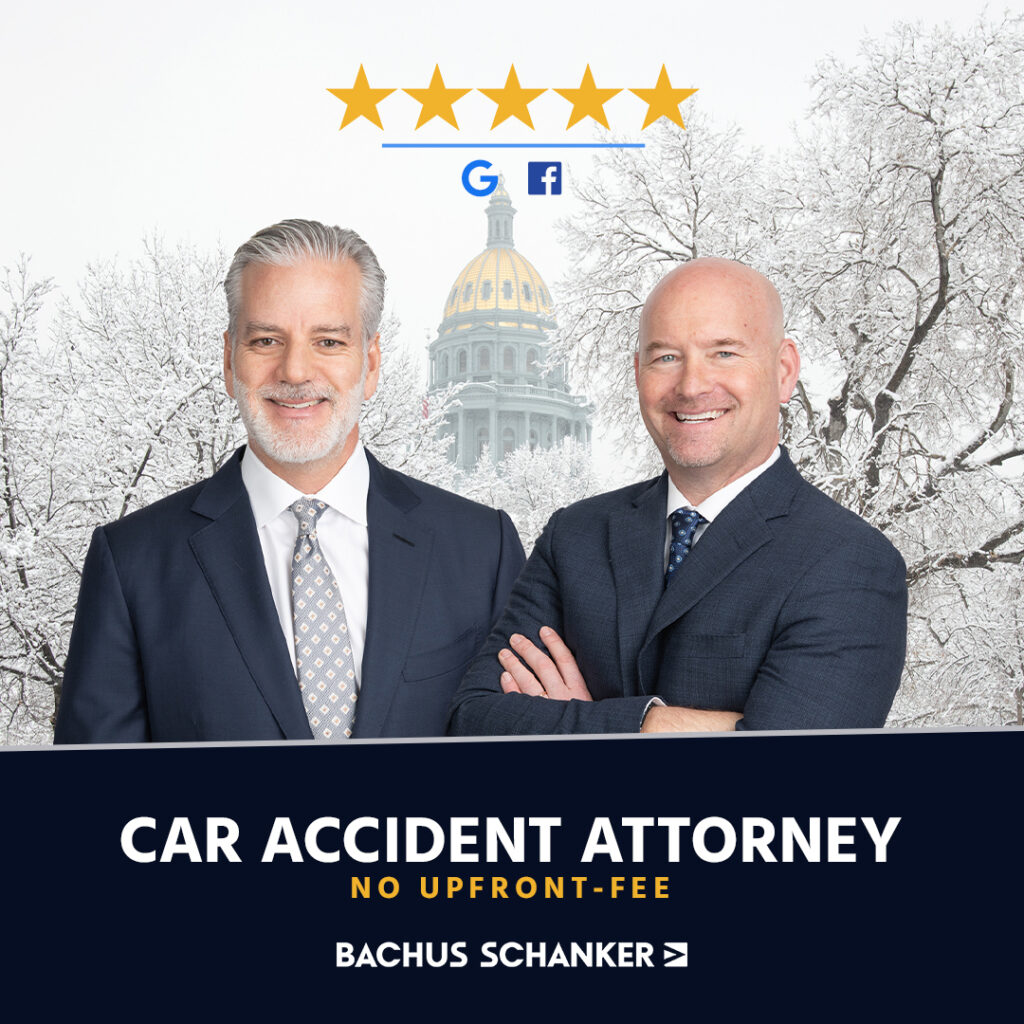
Kyle Bachus & Darin Schanker
Top-rated Colorado-based personal injury lawyers and co-founders of Bachus & Schanker, Kyle Bachus and Darin Schanker, have represented car accident victims and families across Colorado for more than 30 years, earning a reputation as some of the best car accident attorneys for serious injury cases. The firm is structured to handle car accident cases of all types and severities, with a team organized to provide focused support and guidance throughout the process. Kyle and Darin guide victims through the legal process with the support of a dedicated team of car accident specialists and Victim Advocates, ensuring care and advocacy from start to finish so clients can stay focused on healing.
Both Kyle and Darin are nationally recognized for their trial skills and leadership in the legal community. They are members of the Million Dollar Advocates Forum, an exclusive group of attorneys who have achieved million and multi-million-dollar verdicts and settlements, a distinction earned by fewer than 1% of U.S. lawyers. In addition, they have been named Colorado Super Lawyers every year for nearly two decades, included in the Lawdragon 500 Leading Plaintiff Lawyers in America, named Top One Percent by the National Association of Distinguished Counsel, Top 10 Personal Injury Attorneys in Colorado by America’s Best Advocates, and recognized as top civil plaintiff attorneys by The National Trial Lawyers. Beyond the courtroom, they support the Colorado community through the Bachus & Schanker Cares Foundation, which sponsors local nonprofits and initiatives. See Kyle Bachus and Darin Schanker on Super Lawyers.
Notable Colorado Car Accident Settlement Results
$20 Million
$15 Million
$7 Million
Related Car Accident Resources









Bachus & Schanker Client Testimonial: Auto Accident Case

Legal Support Across Colorado and Nationwide
Serving Clients Nationwide
Uber And Lyft ACCIDENT LEGAL REVIEWS
#1 Amazon Best Seller in the Legal Industry
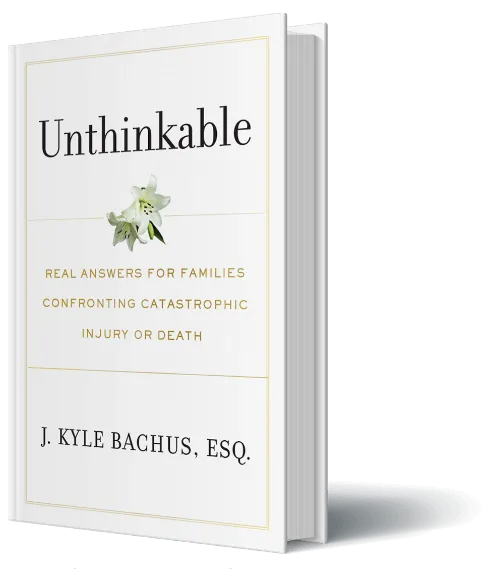
Attorney Kyle Bachus knows first-hand how difficult it can be to suddenly lose a loved one in an accident. It’s also devastating when you or a family member suffers severe injuries that forever change your lives. Kyle wrote this book as a resource from his personal experience for families who have suffered a traumatic loss.
A Spanish edition of the book is also available, offering the same support and guidance to Spanish-speaking families.
You Deserve Fair Compensation
Don’t let the insurance companies intimidate you into accepting less than you deserve. We’re ready to fight for you.