
 Call Us!
Broken Bone Lawyer
If you sustain a bone fracture due to another party’s fault, you may be eligible for compensation. The other party who acted negligently, resulting in your injury, may be required to offer a settlement for the damages you incurred. This is because a broken bone can significantly affect your life.
It’s crucial to work with a broken bone lawyer in such a circumstance to build a strong case and maximize compensation. Bachus & Schanker has lawyers skilled in helping injured victims in Colorado receive the compensation they deserve.
What Types Of Accidents Commonly Cause Broken Bones?
The common personal injury accidents that cause broken bones are motor vehicle accidents, slips and falls, and workplace accidents.
Motor Vehicle Accidents
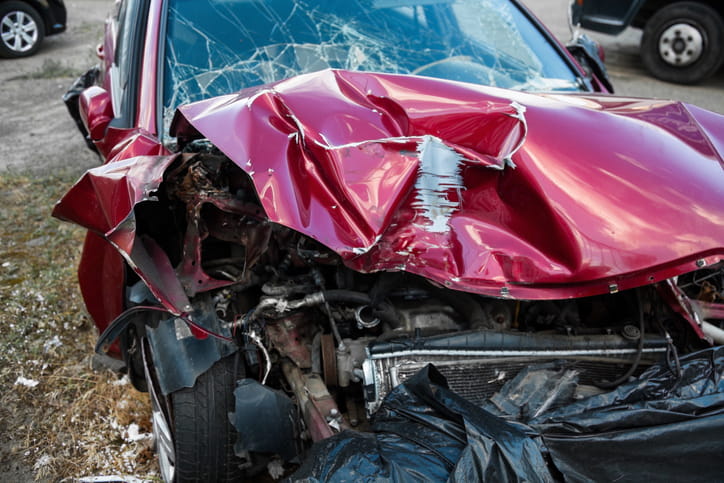
A car crash can create immense force subjected to the body, exceeding a bone’s structural strength, leading to a fracture. This can happen in various ways, including:
Direct Impact
This is when the body strikes a hard surface in the car, such as the dashboard, steering wheel, airbag, window, door, or loose object, resulting in a fracture.
Crushing Force
The intense pressure of a collision can make a car’s structure collapse inward, for example, the dashboard moving back or the roof crushing down.
The inward collapse of a car can also cause an occupant to get trapped. For instance, a limb being trapped between a collapsing door and dashboard, or legs being trapped under the dashboard.
The intense, prolonged pressure compressing the body part can cause a crush injury.
Seatbelt Force
When a car suddenly decelerates in an accident, a locking mechanism in the seatbelt’s retractor is usually triggered to keep the occupant properly positioned in the seat. The belt’s webbing will then distribute the collision forces across the body’s strongest body parts — the pelvis and rib cage, minimizing injury.
However, in high-impact accidents, seat belt force can exert extreme pressure on the body, exceeding a bone’s strength, leading to fractures, especially in cars that don’t have modern seat belts.
Twisting And Bending
The forces in a crash can cause the body to bend or twist in unnatural directions, overwhelming the natural strength and flexibility of bone, resulting in a fracture.
Bracing For Impact
A car occupant will instinctively grip the steering wheel or brace against the dashboard during a crash. Such a defensive movement can transmit significant force to smaller bones, like wrists, arms, and knees.
Slip-And-Fall Accidents
Slip-and-fall accidents cause broken bones when the impact force exceeds a bone’s ability to withstand it. Moreover, the instinctive reflex to brace for impact by extending the arms can lead to wrist, arm, and hand fractures.
Workplace Injuries
Broken bones are not an uncommon occurrence in workplaces with unsafe conditions. One may sustain a fracture after a slip-and-fall accident, for example, a fall from height or falling to the ground due to a spill, clutter, or poor lighting.
Other causes are a heavy object falling from a significant height striking a worker, a vehicle accident, a worker being caught in heavy equipment, and repetitive motion.
Types Of Bone Fractures
Bone fractures are classified in different categories, depending on various factors, including skin integrity, cause, and alignment of bone fragments.
The common categories of fractures are:
- Closed/simple fracture: When the broken bone does not protrude through the skin.
- Open/compound fracture: Broken bone protrudes through the skin, creating an open wound.
- Greenstick fracture: A partial fracture that occurs when a bone bends and cracks on one side but does not break completely, commonly reported in children.
- Stable/nondisplaced fracture: When the broken ends of a bone remain in their original alignment.
- Displaced fracture: When bone fragments move out of their normal alignment, creating a gap between the broken ends.
- Comminuted fracture: When a bone shatters into three or more fragments.
- Segmental fracture: A bone breaks in at least two places, creating a separate/floating section between the breaks.
- Avulsion fracture: When a ligament or tendon pulls a piece of bone away from the main bone.
- Transverse fracture: The fracture line runs approximately at a 90-degree angle to the long axis of the bone, creating a straight break across the bone.
- Oblique fracture: A broken bone where the fracture line runs diagonally at 30 degrees or more relative to the axis of the bone.
- Depressed fracture: A type of skull fracture characterized by pieces of the skull bone being pushed inward toward the brain.
- Compression fracture: When pressure or impact causes one or more of the spinal bones (vertebrae) to collapse or flatten.
- Spiral fracture: When a bone breaks and the fracture line wraps around the bone like a spiral, most commonly caused by a sudden twisting motion.
- Stress fracture: A tiny crack(s) in a bone caused by repeated stress or overuse.
Why Choose Our Broken Bone Accident Law Firm?
Bachus & Schanker is led by top-rated broken bone accident attorneys recognized among the best in Colorado. With decades of experience and thousands of cases handled within Colorado and nationwide, our team brings a proven track record of results to every case. They have represented clients in accident cases involving severe fractures and broken bone injuries across Colorado and nationwide.
At our firm, hands-on case management and personalized attention are central to how cases are handled. Attorneys remain directly involved throughout the process, with a focus on responsiveness, attention to detail, and clear communication at every stage of the case.
The benefits of working with our legal team include:
- Broken bone accident cases taken on a contingency fee basis – no legal fees unless we win your case
- Support of our victim advocates team
- Personalized attention from attorneys who understand broken bone accidents law
- Proven track record of maximizing settlements and verdicts for clients
- Experience handling cases in Colorado and across the United States
When you need experienced legal representation after suffering a fracture in an accident, choose Bachus & Schanker, recognized as some of the best broken bone accident lawyers in Colorado.













The Long-Term Effects Of Bone Fractures
A bone fracture can substantially affect your life for a long time.
You may deal with:
- Nerve damage: When nerves are damaged, you may experience long-term numbness, tingling, or muscle weakness in the affected area.
- Chronic pain: You may experience persistent pain at the fracture site, due to nerve damage, improper healing, scar tissue, joint problems, and infection.
- Reduced mobility: A fracture that damages the joint cartilage, leading to post-traumatic arthritis, can cause reduced mobility.
- Permanent deformity: Malunion (when the bone heals in an improper position) can lead to permanent deformity.
What Damages Can You Recover For A Broken Bone Injury?
When you sustain a broken bone injury due to someone else’s negligence, you can recover economic damages like medical bills (current and future), lost wages (income already lost and lost earning potential), and property damage. You can also claim non-economic damages, such as pain and suffering, emotional distress, and loss of enjoyment of life.
To recover these damages, you need to prove that:
- The other party had a legal responsibility to act with reasonable care toward you.
- They breached that duty of care. Police reports, witness statements, surveillance footage, photos and videos of the scene, maintenance records, and expert testimony can help you prove this, and how the breach of duty of care caused your injury.
- You suffered damages. Use medical records, employment and financial records, and personal journals to prove this.
The injury’s severity, the losses incurred, and the degree of fault is usually considered when determining the average settlement for a broken bone in a car accident or any other incident.
According to Colorado’s Title 13 Section 80-101 and 80-102, you have two years from the date of the injury to file a claim and three years if you were injured in a car accident.
How Can A Lawyer Help With A Broken Bone Injury Claim?
It’s vital to work with a broken bone lawyer. Your attorney will help you investigate the case, guide you on the evidence to gather, file a claim with the other party’s insurance company, negotiate with the insurer, and file a lawsuit if a fair settlement can’t be reached.
At Bachus & Schanker, we are passionate about helping injured victims in Colorado receive maximum compensation. If someone else’s negligence results in you sustaining a broken bone, contact us for a free case evaluation to understand how you can protect your rights.
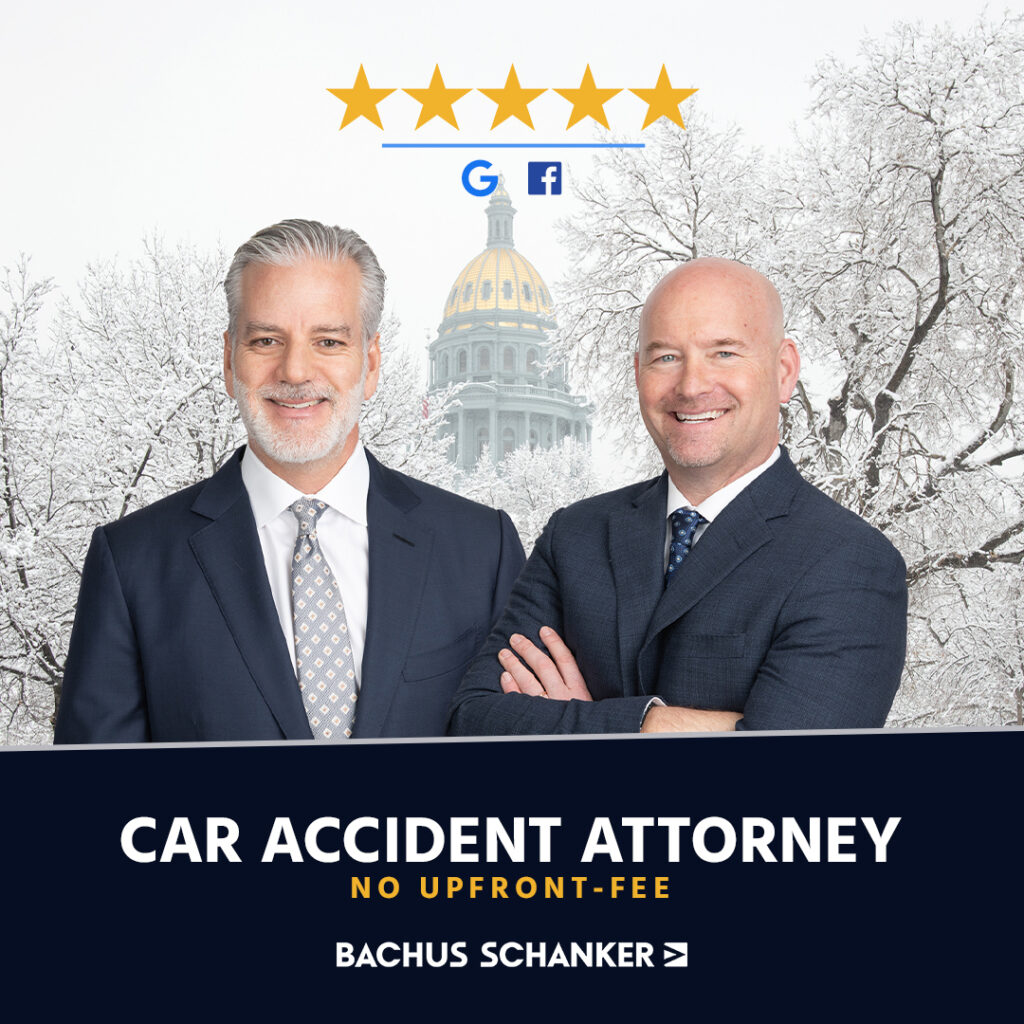
Kyle Bachus & Darin Schanker
Top-rated Colorado-based personal injury lawyers and co-founders of Bachus & Schanker, Kyle Bachus and Darin Schanker, have represented car accident victims and families across Colorado for more than 30 years, earning a reputation as some of the best car accident attorneys for serious injury cases. The firm is structured to handle car accident cases of all types and severities, with a team organized to provide focused support and guidance throughout the process. Kyle and Darin guide victims through the legal process with the support of a dedicated team of car accident specialists and Victim Advocates, ensuring care and advocacy from start to finish so clients can stay focused on healing.
Both Kyle and Darin are nationally recognized for their trial skills and leadership in the legal community. They are members of the Million Dollar Advocates Forum, an exclusive group of attorneys who have achieved million and multi-million-dollar verdicts and settlements, a distinction earned by fewer than 1% of U.S. lawyers. In addition, they have been named Colorado Super Lawyers every year for nearly two decades, included in the Lawdragon 500 Leading Plaintiff Lawyers in America, named Top One Percent by the National Association of Distinguished Counsel, Top 10 Personal Injury Attorneys in Colorado by America’s Best Advocates, and recognized as top civil plaintiff attorneys by The National Trial Lawyers. Beyond the courtroom, they support the Colorado community through the Bachus & Schanker Cares Foundation, which sponsors local nonprofits and initiatives. See Kyle Bachus and Darin Schanker on Super Lawyers.
Notable Colorado Car Accident Settlement Results
$20 Million
$15 Million
$7 Million
Legal Support Across Colorado and Nationwide
Serving Clients Nationwide
Related Car Accident Resources














#1 Amazon Best Seller in the Legal Industry
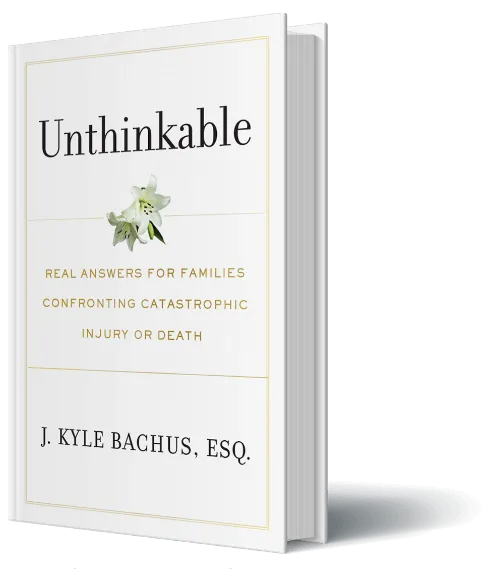
Attorney Kyle Bachus knows first-hand how difficult it can be to suddenly lose a loved one in an accident. It’s also devastating when you or a family member suffers severe injuries that forever change your lives. Kyle wrote this book as a resource from his personal experience for families who have suffered a traumatic loss.
A Spanish edition of the book is also available, offering the same support and guidance to Spanish-speaking families.
You Deserve Fair Compensation
Don’t let the insurance companies intimidate you into accepting less than you deserve. We’re ready to fight for you.